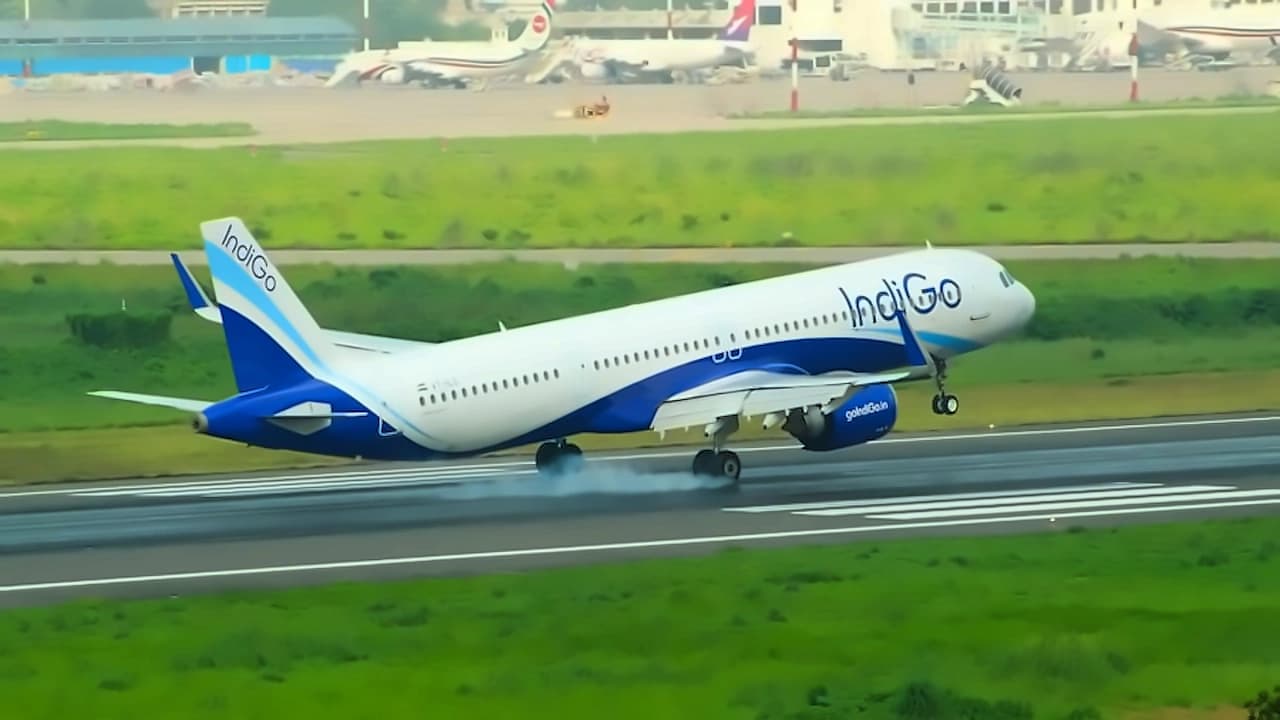
London's Verdict
Here's the headline that caught everyone's attention: London's Commercial Court has ordered SpiceJet to pay approximately $8 million (around ₹70 crore) to aircraft engine lessor Sunbird France 02 SAS. The total award comes to $7,959,235, excluding interest and costs, over unpaid lease rentals and maintenance charges for three CFM56 engines .
But here's the thing—this isn't just about one unpaid bill. It's a window into the much deeper turbulence the airline has been navigating for years.
Why Didn't SpiceJet Even Show Up?
The most striking part of this story? SpiceJet didn't even mount a defence. The airline initially engaged British solicitors but never filed a formal response to Sunbird's application. The court noted that SpiceJet had been "fully informed" of the proceedings but "chosen not to participate" despite having "every opportunity to participate and be heard" .
The court's finding was blunt: SpiceJet had "no realistic prospect" of successfully defending the claim and "no viable defence" . Why? Because aircraft leasing agreements have payment obligations that are "absolute and unconditional," regardless of any disputes . When you sign those papers, you pay—or you don't fly.
The Perfect Storm: What Went Wrong
The non-payment didn't happen in a vacuum. It's the result of a perfect storm that hit SpiceJet starting around 2020.
First, the COVID-19 pandemic devastated the aviation industry. Passenger traffic for SpiceJet slumped 52% in the first five months of 2021 compared to 2019 . Sales plunged around 60% at the start of FY21 during lockdown .
Then there was the Boeing 737 MAX grounding. Thirteen of these aircraft were grounded for over a year, but the airline still had to pay hefty lease payments on planes it couldn't operate . The full year of MAX grounding inflated costs and hammered the bottom line .
The financial damage shows up clearly in the numbers. SpiceJet reported a net loss of ₹934.8 crore in FY2020 . By FY2022, things had deteriorated further—the EBITDAR margin turned negative at (1.14)%, and the interest coverage ratio collapsed from 2.08 times to just 0.26 times .
The Balance Sheet Reality Check
Let's look at where things stand now. SpiceJet's latest balance sheet tells a sobering story. Total assets stand at ₹6,594.50 crore, but total liabilities are higher at ₹6,671.92 crore . The current ratio is just 0.32 times—well below the healthy 1.0 mark, indicating severe liquidity stress .
Cash and equivalents? A mere ₹38.82 crore . Meanwhile, lease liabilities total ₹3,329.32 crore, with current lease obligations alone at ₹2,256.01 crore . Trade payables of ₹2,388.43 crore indicate delays in settling payments to vendors and suppliers .
Auditors have raised concerns about SpiceJet's ability to continue as a "going concern," citing mounting losses, the widening gap between current liabilities and assets, and acute liquidity stress .
From Fleet Leader to Market Laggard
The financial distress has hit operations hard. The fleet dropped from 88 planes at the end of March 2022 to 61 at the end of March 2025 . Only about 40% or 25 of SpiceJet's planes were operational as of June 2025 .
This matters because market share follows capacity. From a pre-COVID position of around 13-15% in 2019, SpiceJet's market share plummeted to as low as 2.6% in October 2025 . Meanwhile, Akasa Air, which launched in August 2022, quickly surpassed SpiceJet—holding 5.2% market share in October 2025 .
In a telling milestone, Akasa Air surpassed SpiceJet in quarterly revenue for the first time in Q1 FY26: ₹1,399.6 crore versus ₹1,059.8 crore .
The Human Cost
Financial distress isn't just about numbers on a spreadsheet. Employees have faced salary delays for two consecutive months, with payments made in "graded format" . Salaries for captains and first officers weren't even 50% of pre-COVID levels . Scores of pilots left due to irregular salaries, and 150 cabin crew were sent on leave without pay for three months .
On the customer front, SpiceJet was the least punctual airline among all scheduled domestic carriers at six metro airports in January 2025, with an on-time performance of just 54.8% . Customer reviews describe the airline as "pathetic" and "worst airline ever," with complaints about delays ranging from 3-12+ hours and last-minute cancellations .
Fighting Back: The Turnaround Plan
Despite these challenges, SpiceJet isn't throwing in the towel. The airline has executed several capital raising initiatives, including a Qualified Institutional Placement (QIP) of ₹3,000 crore in September 2024, an additional ₹736 crore funding round, and promoter equity infusion of ₹500 crore .
The company has also restructured significant liabilities, including clearing $24 million owed to Credit Suisse in full and restructuring ₹442 crore with Carlyle Aviation Partners .
Operationally, SpiceJet implemented its "SpiceJet 3.0" turnaround plan. Headcount was reduced from over 8,000 to around 6,484 employees, expected to generate approximately ₹100 crore in annual savings . The airline aims to unground 10 aircraft by April 2026 and induct 10 Boeing 737s on damp lease .
Signs of Recovery
There are green shoots. In Q3 FY26, revenue jumped 77% quarter-on-quarter to ₹1,384 crore . Net loss reduced by 56% to ₹197 crore (before forex) . Domestic market share increased to 4.3% in December 2025 from 1.9% in September, driven by a 56% capacity expansion with the addition of 16 aircraft .
Credit rating agencies have taken notice. CRISIL upgraded the rating to 'A4+', and Acuité upgraded the long-term credit rating to 'BB (Stable)' from 'BB- (Stable)' . CRISIL noted that the liquidity position appears adequate to meet operational expenses, debt repayment, and lease commitments .
What Lies Ahead
The $8 million payment to Sunbird is just one piece of a much larger puzzle. SpiceJet faces multiple disputes with aircraft and engine lessors, and such legal rulings can damage relationships in an industry heavily dependent on trust and timely payments .
The airline's ability to execute its turnaround plan will determine whether it can regain its footing or continue losing ground to well-funded competitors like Akasa Air. With an order book of 226 Boeing 737 MAX aircraft by 2032, Akasa has a clearer growth trajectory .
For now, SpiceJet is flying through turbulence, but the recent recovery efforts suggest the pilot hasn't given up on reaching calmer skies. The question is whether there's enough fuel—and trust—to get there before the next storm hits.