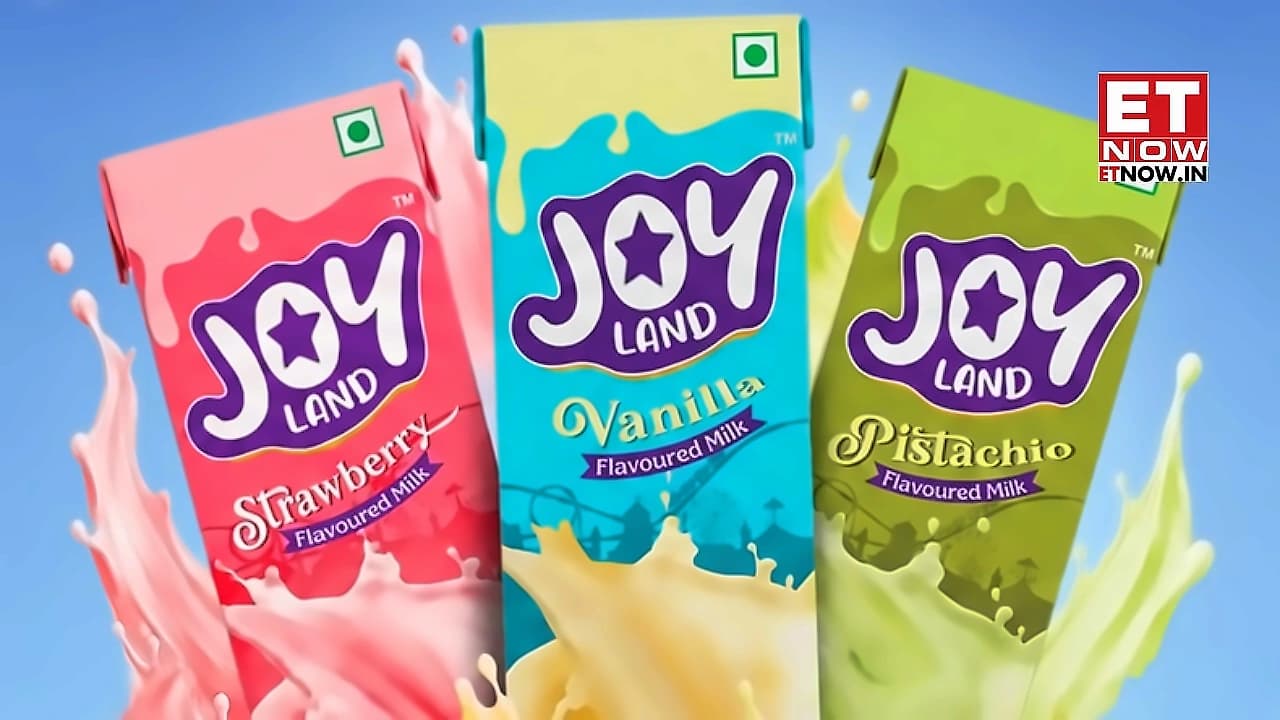
Reliance Consumer Products Limited (RCPL), the FMCG arm of Reliance Industries, has launched Joyland flavoured milk in Tamil Nadu at Rs 20, marking its first entry into the ready-to-drink dairy market. Available in Strawberry and Vanilla flavours, Joyland represents a strategic expansion beyond the company's existing beverage portfolio, which includes the relaunched Campa soft drinks. The company plans to progressively roll out Joyland across India, building it into a broader dairy beverages portfolio with more flavours and categories to follow.
Why Dairy, and Why Now?
The move into dairy beverages is driven by market opportunity and portfolio diversification. India's flavoured milk market has grown significantly, with Euromonitor data cited by Mint projecting the market to reach Rs 8,360 crore in 2026, up from Rs 7,600 crore in 2025 and Rs 4,420 crore in 2021. By my calculation, this represents approximately 13.6% annual growth from 2021 to 2026, though growth appears to be moderating to around 10% in 2026. Another estimate from IMARC values the market at Rs 76.4 billion (about Rs 7,640 crore) in 2025 and forecasts about 19% annual growth to 2034.
For RCPL, this entry extends its "Total Beverage" portfolio and aligns with its stated strategy of offering "global quality products at affordable prices accessible to all". The company has been aggressively building a diversified FMCG presence, with staples and beverages anchoring the revenue mix while food and home & personal care categories scale up.
Joyland adds a new category to this mix, potentially contributing to the beverages segment, which delivered Rs 2,900 crore in Q1 FY27, more than 50% of the prior year's beverage revenue. Annual Report +3
The Rs 20 Price Point: Disruptor or Parity?
Joyland's Rs 20 price tag is a critical element of its market entry.
Economic Times notes that the Rs 20 price point is not disruptive because other popular brands sell at similar price points. The competitive landscape includes established players such as Amul Kool, Mother Dairy, Nandini, Sunfeast Smoodh, and Cavin's.
A direct price comparison is complicated by the lack of disclosed pack size for Joyland. Official price lists show Aavin flavoured milk (Tamil Nadu's state cooperative) at Rs 30 for 200 ml. Online listings show Amul Kool Cafe at Rs 35 for 200 ml, while Smoodh (which appears to be a Parle Agro product, not ITC's as some reports suggest) offers an 80 ml carton at Rs 10 and a 150 ml PET bottle at Rs 20. If Joyland is a 200 ml pack, Rs 20 would represent a significant discount to Aavin and Amul. If it is closer to 150 ml, it is more in line with parity. Without pack size confirmation, the per-millilitre pricing advantage remains uncertain.
Why Tamil Nadu First?
RCPL's choice of Tamil Nadu as the launch market is strategic. The state is a significant consumer market for milk-based beverages. Open Magazine reports that when ITC launched Sunfeast Wonderz Milk in 2018, it began in Tamil Nadu and Karnataka, which then accounted for nearly a quarter of the national market for ready-to-drink dairy beverages. The state is also described as a "flavoured milk battleground" where Amul, ITC, and state cooperatives like Aavin are entrenched.
Politically, Tamil Nadu is sensitive dairy territory. In 2023, Amul's small-scale milk procurement in Krishnagiri drew protests from the state cooperative Aavin, which argued it infringed on a milk shed it had nurtured for decades. Joyland sidesteps this procurement battle by selling a flavoured treat rather than staple milk. Additionally, RCPL can leverage its existing distribution network and retail presence in the state for immediate rollout. The company's recent acquisitions in South India, such as Udhaiyam and Manna in staples, may also provide regional distribution strength, though these are not dairy businesses. Transcript
Competitive Advantages and Disadvantages
Reliance brings formidable distribution scale to the fight.
This network, built for Campa and other FMCG products, provides immediate shelf access for Joyland. The company also benefits from Reliance Retail's 20,160 stores and JioMart's digital platform, which covers 5,500 pin codes.
However, Reliance faces disadvantages in dairy heritage and consumer trust. Amul, backed by the Gujarat Cooperative Milk Marketing Federation, is India's largest dairy organisation with a vast cooperative procurement network and nationwide presence. Mother Dairy has a strong integrated supply chain and trusted brand in North India. State cooperatives like Aavin and regional players like Cavin's have deep local roots and political backing. Joyland is a new brand in a category where parents often prioritise freshness and safety for children—a trust factor that takes time to build.
Revenue Potential and Margin Impact
Joyland's revenue contribution to RCPL is likely to be modest in the near term. Using the projected 2026 market size of Rs 8,360 crore, even a 5% market share would imply retail-value sales of around Rs 418 crore. This would represent less than 2% of RCPL's FY26 gross revenue of approximately Rs 22,000 crore.
Joyland's value is therefore more strategic than financial in the immediate future—it establishes a dairy beverages platform for future expansion. Annual Report
Margin implications are uncertain. Reliance has not disclosed FMCG-specific EBITDA margins. The only margin disclosed is 7.9% for the digital grocery business, down 80 basis points year on year due to continued investment in dark stores and technology. At Rs 20, Joyland's pricing leaves limited room for heavy promotion, and dairy raw material costs can be volatile. Early margins are likely to be thin or negative as the company invests in trial and distribution. Transcript
Capital expenditure and working capital requirements for Joyland have not been disclosed. Management has said beverages growth depends on building manufacturing and supply chain infrastructure. The company is investing in vertically integrated food parks across the country to gain cost advantages from scale and backward integration. A greenfield beverage plant, described as one of the largest in Asia and an integrated food park, was partially commissioned in Q1 FY27. However, dairy processing requires different capabilities—milk procurement, pasteurisation or UHT treatment, and potentially cold chain logistics. Whether Joyland will be produced in these food parks or through contract manufacturers remains unconfirmed. Transcript +2
Supply Chain and Cold Chain Challenges
Dairy sourcing presents a different challenge compared to soft drinks. Amul and Mother Dairy have established farmer networks and integrated supply chains. ITC's Aashirvaad Svasti dairy, currently limited to Bihar, West Bengal, and Jharkhand, has built a farmer-driven procurement network covering about 33,300 farmers and 70,000 animals. Reliance has not disclosed its milk sourcing strategy for Joyland. It may choose to buy milk solids from cooperatives or private dairies, or use contract processors, which would be faster than building a farmer network but offers less cost control. Annual Report +1
Cold chain logistics are another critical unknown. Joyland's pack size, shelf life, and whether it requires refrigeration have not been disclosed. If Joyland is shelf-stable (UHT-treated), it can leverage RCPL's existing ambient distribution network. If it requires chilled distribution, the company would need refrigerated transport and storage, which would slow geographic expansion and increase costs. Reliance Retail's store network and JioMart could support controlled-temperature handling, but specific cold-chain capacity for FMCG has not been detailed in filings.
Operational synergies with Campa's infrastructure are mixed. Distribution and trade relationships carry over directly, but manufacturing does not. Carbonated soft drink lines cannot produce dairy beverages. RCPL has used packaging partners for Campa, such as Vinayak Beverages, Jallan Food and Beverages, and Ceylon Beverage International. A similar co-packing model could accelerate Joyland's rollout, but partners would need dairy licences and hygiene controls. Ceylon Beverage's experience with flavoured milk in cans suggests potential capability, but there is no confirmation of a can-based Joyland or a partnership for dairy.
The Road Ahead
Joyland's entry signals Reliance's intent to be a comprehensive beverages player, moving beyond carbonated drinks into value-added dairy. The company's distribution scale, retail infrastructure, and financial backing provide a strong foundation. However, success will depend on execution in areas where it has less heritage: dairy sourcing, quality consistency, cold chain logistics, and building consumer trust in a new brand.
The phased rollout from Tamil Nadu suggests a cautious approach, testing the market and supply chain before national expansion. Investors should watch for disclosures on Joyland's pack size, shelf life, manufacturing arrangements, and early market reception. While Joyland is unlikely to move the needle on Reliance's group-level financials in the near term, it represents an important strategic step in the company's journey toward a Rs 1 lakh crore FMCG business. The flavoured milk battle is just beginning, and Reliance has thrown its hat into a ring that is about to get a lot more crowded.