The Scale of the Allegation
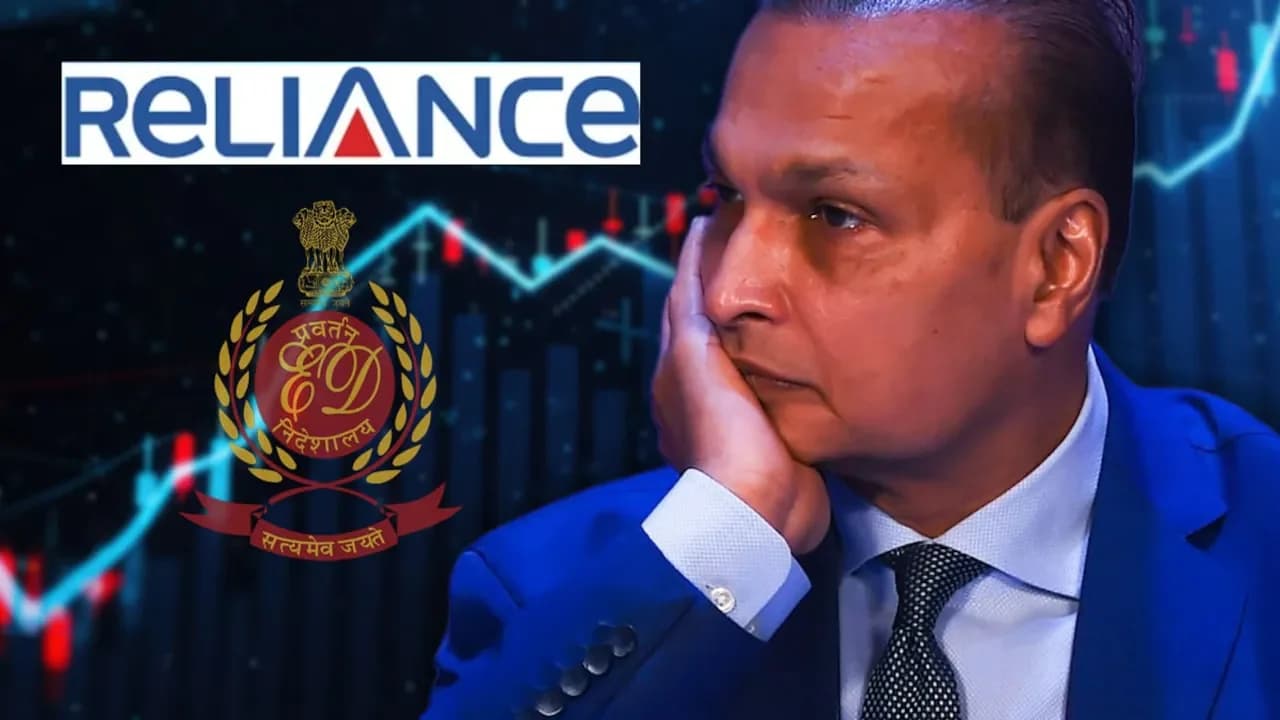
The Enforcement Directorate (ED) has launched one of India's most significant financial crime investigations against the Reliance Anil Ambani Group, centering on Reliance Home Finance Limited (RHFL) and Reliance Commercial Finance Limited (RCFL). The agency alleges that these two entities systematically diverted a staggering ₹15,548 crore of public funds raised from banks and financial institutions. Instead of deploying these funds for legitimate lending purposes, the money was allegedly routed through a sophisticated web of shell and dummy entities controlled by the group before ultimately reaching other Reliance Group companies.
The investigation stems from multiple First Information Reports (FIRs) registered by the Central Bureau of Investigation (CBI) following complaints from several public and private sector banks, including Yes Bank, Union Bank of India, and Bank of Maharashtra. These complaints detailed how funds borrowed by RHFL and RCFL turned into non-performing assets (NPAs), with more than ₹11,000 crore eventually defaulting. What began as a banking fraud investigation has now expanded into a comprehensive money laundering probe under the Prevention of Money-Laundering Act (PMLA), 2002, and the Foreign Exchange Management Act (FEMA), 1999.
The Diversion Mechanism
The alleged fund diversion operated through a carefully structured multi-layer mechanism designed to obscure the money trail from regulatory scrutiny. RHFL and RCFL raised substantial public funds through corporate loans and other financial instruments from banking consortia. Rather than using these funds for their stated purposes, the companies allegedly sanctioned loans to intermediary and conduit entities with negligible financial strength and no genuine business operations.
These shell companies were not independent entities. Their directors were employees or close associates of the Reliance Group, and their bank accounts and books were maintained by officials from flagship group companies including Reliance Infrastructure Limited, Reliance Power Limited, and Reliance Capital Limited. This centralized control allowed for seamless fund movement across entities while maintaining the appearance of arm's-length transactions.
The ED has described this arrangement as a "pre-planned and organized scheme". Corporate loans disbursed by RHFL and RCFL were allegedly routed to entities with little or questionable business activity and later diverted to related group companies or connected interests. The layering mechanism—moving funds through multiple entities in a structured manner—helped hide the actual end use of borrowed funds and made tracing the money trail extremely difficult for investigators.
The Beneficiary Entities and Asset Attachments
The diverted funds ultimately reached major group companies including Reliance Infrastructure Limited, Reliance Power Limited, Reliance Communications Limited, and Reliance Capital Limited. This inter-company fund flow effectively used public money meant for legitimate lending purposes to support group operations and potentially service existing debt obligations of other group companies.
The ED's latest attachment action provides concrete evidence of this fund flow. The agency attached equity shares of Reliance Power Limited held by Reliance Infrastructure Limited, along with certain loan amounts receivable from Sasan Power Limited and Reliance Power Limited. These loan receivables represent traces of diverted funds that were moved through inter-company transactions and ultimately recorded as receivables on the books of group entities.
The causal relationship between these loan receivables and the total attachment value of ₹1,021 crore is straightforward: the ED identified these receivables as proceeds of crime under PMLA provisions, justifying their attachment along with the Reliance Power shares. The attachment value represents the ED's assessment of the combined market value of the attached shares plus the book value of the loan receivables.
The ED's enforcement actions have been unprecedented in scale. As of July 11, 2026, the total value of assets attached in cases linked to the Reliance Anil Ambani Group has reached ₹20,367 crore under PMLA provisions and ₹77.86 crore under FEMA. The attachments span multiple categories including immovable properties across 12 states, bank account balances, fixed deposits, mutual funds, and cash.
Impact on Reliance Infrastructure
The attachment of equity shares of Reliance Power Limited held by Reliance Infrastructure Limited represents a significant impairment of investment assets on Reliance Infrastructure's balance sheet. Based on available financial data, Reliance Infrastructure's investment portfolio stood at approximately ₹5,928.73 crore as of March 2024, representing a substantial portion of its total asset base.
The attachment effectively converts liquid investment assets into restricted assets, significantly reducing the quality and liquidity of Reliance Infrastructure's asset base. This is particularly concerning given that investments had already declined from ₹8,493 crore in March 2020 to ₹5,928.73 crore by March 2024, indicating the company was already relying on these investments for liquidity management.
The immediate liquidity crunch is severe. The attachment removes a key source of potential liquidity that could have been accessed through share sales or pledging. This is critical given that Reliance Infrastructure's current assets had already shown a downward trend to ₹8,854.83 crore by March 2024. The company's net debt has also increased sharply to approximately ₹2,600 crore as of March 2026 (up from ₹591 crore in March 2025), creating additional debt servicing pressure at a time when its leverage position is deteriorating.
Governance Breakdown and Arrests
The scale and systematic nature of the alleged fund diversion point to fundamental governance failures at multiple levels within RHFL and RCFL. SEBI's investigation revealed that RHFL, despite being a housing finance company, disbursed more than 50% of its loans as Group Project/Corporate Loans (GPCLs), violating the basic framework of National Housing Bank (NHB) guidelines. The company's management ignored repeated warnings from NHB, demonstrating an evident failure to prioritize its core objective of providing housing finance.
A substantial portion of loans disbursed by RHFL went to entities with weak or negative financials. Despite clear indicators of financial distress, RHFL approved loans worth hundreds of crores without securing adequate collateral or adhering to due diligence protocols. The Credit Approval Memos (CAMs) showed glaring deviations from standard procedures, including waiver of critical assessments such as the borrower's financial health, escrow account establishment, and security creation.
The arrest of eight senior officers and close associates of the Reliance Anil Ambani Group reflects a complete breakdown of internal controls and ethical standards at the highest levels. The arrested individuals include former CEOs who served as key decision-makers responsible for managing operations. Devang Mody, who served as CEO of RCFL from April 2017 to December 2018, and Ravindra Sudhalkar, who served as ED and CEO of RHFL from October 1, 2016, to March 31, 2022, were directly involved in approving loans to intermediary and conduit companies despite knowing such lending violated regulatory guidelines.
CBI-ED Coordination and Legal Proceedings
The investigation demonstrates effective coordination between the CBI and ED, significantly accelerating the pace and expanding the scope of asset attachments. The CBI registered seven FIRs against various Reliance Group entities based on complaints received from various Public Sector Banks and LIC. These FIRs established the predicate offences necessary for ED's subsequent money laundering investigations.
The legal framework connecting CBI FIRs to ED PMLA investigations is grounded in the scheduled offence framework. Under PMLA, money laundering investigations are fundamentally dependent on the existence of a predicate or scheduled offence. The offences registered by CBI under IPC sections and Prevention of Corruption Act provisions are classified as Part A scheduled offences under PMLA, which require no monetary threshold to trigger money laundering investigations.
This coordination enabled rapid chargesheet filing. The CBI filed its first chargesheet in the RCom case on May 29, 2026, against 16 accused persons, followed by the RCFL chargesheet on July 7, 2026, against seven accused persons, and the RHFL chargesheet on July 9, 2026. This rapid sequencing reflected efficient inter-agency coordination.
The ED has filed four prosecution complaints under PMLA and one complaint under FEMA. Eight senior officers and close associates of the Reliance Anil Ambani Group have been arrested so far under PMLA and all of them are in judicial custody. In compliance with Supreme Court orders, the ED has constituted a Special Investigation Team that is expeditiously conducting the investigation in these cases.
Financial and Market Implications
The cumulative impact of the ED prosecution complaints and asset attachments creates a challenging financial environment for the Reliance Anil Ambani Group. The four prosecution complaints filed under PMLA and one complaint under FEMA create substantial operational disruptions as senior management teams are forced to dedicate substantial time and resources to legal defense.
While specific credit rating actions are not detailed in available reports, the prosecution complaints create significant negative implications for credit assessments. The cumulative asset attachments dramatically reduce the asset base available to creditors, increasing perceived default risk. The regulatory and legal overhang, combined with serious corporate governance concerns, typically leads to negative outlook revisions or potential downgrades.
The investigation has severely restricted access to debt and equity capital markets. Bond investors, particularly institutional investors with strict investment guidelines, are likely to avoid Reliance Group paper due to governance concerns and legal uncertainties. Any debt issuances would need to offer substantially higher yields to attract investor interest, significantly increasing the cost of debt capital.
Market observers note that "the scale of the attachments could complicate ongoing restructuring negotiations with lenders". The group faces a more challenging landscape as it attempts to resolve disputes, negotiate with lenders, and revive suspended operations. Regulators and creditors are monitoring developments closely, underscoring the prolonged financial and legal stress surrounding one of India's most significant corporate debt episodes.