The Fresh CBI Case: A New Chapter in an Old Crisis
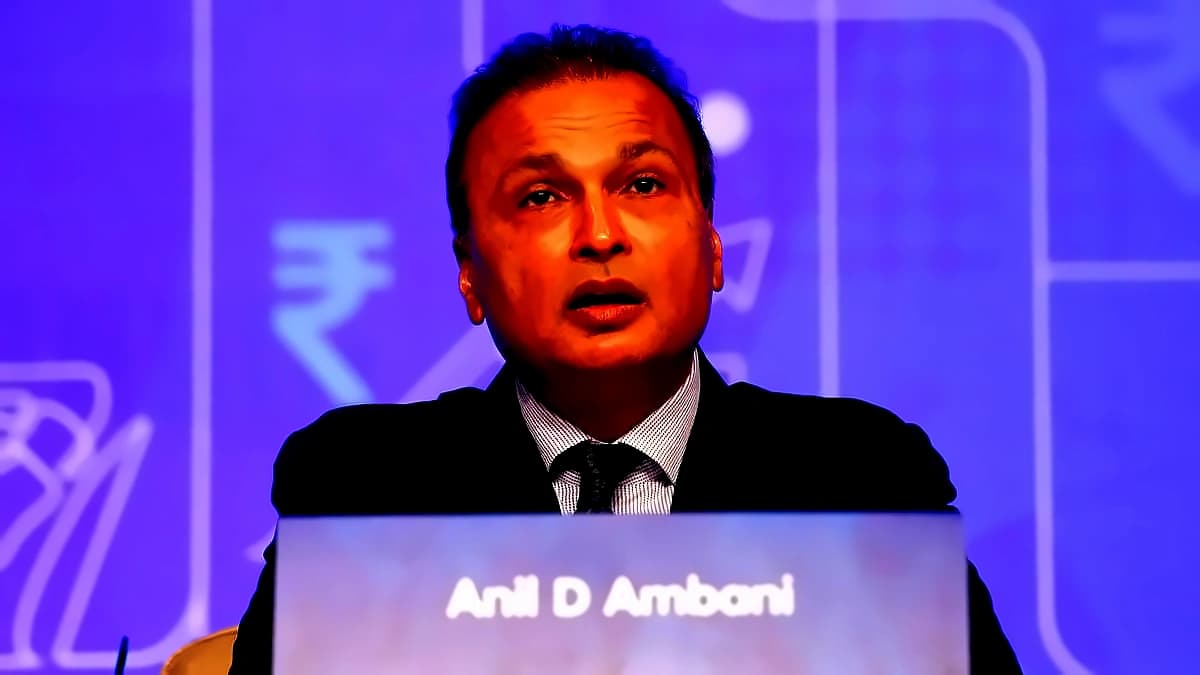
The Central Bureau of Investigation (CBI) has registered a fresh First Information Report (FIR) against Reliance Capital Limited and its former chairman Anil Dhirubhai Ambani for allegedly causing a loss of ₹2,684.57 crore to the Life Insurance Corporation of India (LIC). The FIR, registered on September 18, 2026, stems from a written complaint by LIC alleging that between April 2012 and March 2018, it subscribed to five Non-Convertible Debentures (NCDs) issued by Reliance Capital aggregating ₹3,900 crore. LIC claims the accused entered a criminal conspiracy, committed cheating, criminal breach of trust, and diverted funds through misrepresentation, causing wrongful loss to the insurer.
This is not an isolated incident. The CBI has already registered eight FIRs against Reliance Group companies, including Reliance Communications, Reliance Home Finance, and Reliance Commercial Finance, on complaints from public sector banks, the Employees' Provident Fund Organisation (EPFO), and LIC. In August 2026, the CBI registered another case against Reliance Capital for allegedly causing a loss of ₹1,816.22 crore to the EPFO through NCD investments made in 2013-2014. The agency has filed six chargesheets and arrested seven persons across these cases, which are being monitored by the Supreme Court.
Regulatory Standing: A Company Already Under Supervision
The CBI probe is unlikely to create additional regulatory consequences for Reliance Capital because the company's regulatory position is already severely compromised. In November 2021, the Reserve Bank of India (RBI) superseded the entire board of Reliance Capital due to defaults in meeting payment obligations to creditors and "serious governance concerns which the board has not been able to address effectively". The RBI appointed Nageswar Rao Y as Administrator and initiated the Corporate Insolvency Resolution Process (CIRP) under the Insolvency and Bankruptcy Code.
Under the IBC framework, Section 14 imposes a moratorium that prohibits all recovery actions against the corporate debtor, including asset seizures and collateral calls. This insolvency protection shields Reliance Capital's operating assets from the CBI case. The Enforcement Directorate (ED) has attached assets worth ₹20,367 crore under PMLA provisions in the Reliance Anil Ambani Group cases, but these attachments primarily target promoter group assets—including personal properties, family trust holdings, and group company properties—rather than Reliance Capital's operating assets under the Administrator's control.
The resolution process is already underway. In November 2023, the RBI cleared a resolution plan for Reliance Capital, paving the way for IndusInd International Holdings Limited (IIHL), a Hinduja Group firm, to acquire the company with an offer of ₹9,650 crore. The CBI case could complicate the resolution timeline and affect asset valuations, but it is unlikely to trigger new regulatory actions against a company already under RBI administration and insolvency proceedings.
Anil Ambani's Legal Liabilities and Loss of Control
Anil Ambani faces serious legal liabilities from the CBI cheating case. The FIR includes charges for criminal conspiracy (Section 120B IPC), cheating (Section 420 IPC), criminal breach of trust (Section 406 IPC), criminal misconduct, and falsification of accounts. If charges are framed and evidence supports the allegations, he faces arrest risk, lengthy criminal trial proceedings, potential asset freezing by the ED if money laundering is established, and court-imposed travel restrictions.
However, Anil Ambani has already lost control over Reliance Capital. He ceased to be Chairman/Non-Executive Director in November 2021 when the RBI superseded the board. The SEBI has already banned him from the securities market for five years (till August 2029) for diverting funds from Reliance Home Finance Limited. Under the insolvency resolution process, his ownership stake will be significantly diluted or eliminated as creditors take control through the resolution plan. The fresh CBI case further cements his loss of control by adding criminal liability that could result in imprisonment, strengthening the case for permanent disqualification from directorship positions, and making any future return to management roles virtually impossible.
Governance Failures That Enabled the Fraud
The alleged LIC investment fraud was enabled by systemic governance failures at Reliance Capital spanning board oversight, internal controls, and risk management frameworks. The RBI explicitly cited "serious governance concerns which the board has not been able to address effectively" when it superseded the board in November 2021. This indicates fundamental failures at the highest level of governance.
Price Waterhouse & Co (PwC), the statutory auditor, resigned in June 2019 citing serious governance issues, including the company's failure to convene audit committee meetings within expected timeframes and unsatisfactory response to financial issues flagged. Reliance Capital dismissed these concerns as "completely baseless and unjustified," demonstrating a culture of defensiveness rather than accountability.
Perhaps the most significant governance failure was Reliance Capital's approach to related party lending. Reliance Home Finance made over 50% of its lending to other companies, primarily in real estate and infrastructure sectors, with significant exposure to struggling group companies like Reliance Infrastructure and Reliance Power. When these entities failed and defaulted on loans, it triggered a chain reaction that dragged down Reliance Capital. This incestuous lending structure represented a fundamental governance failure.
SEBI's investigation into Reliance Home Finance Limited found that funds designated for the company were being siphoned off as loans to financially unstable entities linked to Ambani, which the regulator described as "a systemic breach of corporate governance". This conduct violated Section 166 of the Companies Act, 2013, which lays out fiduciary duties of directors to act in the company's best interests and avoid conflicts of interest.
Impact on Strategic Partnerships and Investor Sentiment
The CBI investigation has had a devastating impact on Reliance Capital's relationships with financial institutions. The relationship with LIC has been fundamentally damaged—LIC filed a criminal complaint with the CBI and attempted to sell its ₹3,400-crore Reliance Capital bonds to Asset Reconstruction Companies (ARCs) but found no takers. Banking relationships have been severely damaged, with the CBI registering eight FIRs against Reliance Group companies on complaints from public sector banks including State Bank of India, Punjab National Bank, and Bank of Baroda.
The impact on investor sentiment has been catastrophic. Reliance Capital shares have been delisted from both BSE and NSE as part of the approved resolution plan, with the liquidation value for equity shareholders determined to be NIL. The entire existing share capital has been cancelled and extinguished for NIL consideration, with IIHL and its nominees becoming the sole shareholders. Shares last traded on February 26, 2024, at ₹11.79, representing a decline of over 98% from peak levels. Retail investors, who owned 57% of the company, have suffered complete losses.
The reputational damage to the Reliance Capital brand is catastrophic. The name is now synonymous with financial fraud and governance failures. The post-resolution entity under Hinduja Group ownership faces significant brand rehabilitation challenges and will likely require complete rebranding to distance itself from the fraud legacy.
Sector-Wide Implications and Regulatory Response
The CBI action against Reliance Capital has triggered sector-wide reassessment of risk among NBFCs and financial institutions. Other Anil Ambani group companies saw immediate stock declines following regulatory actions, with Reliance Power falling 4.99%, Reliance Home Finance 4.93%, and Reliance Communications 4.92% to lower circuit limits. The case has led to increased caution across the NBFC sector, with investor flight, funding constraints, and wider credit spreads for NBFC bonds.
The regulatory response has been swift and comprehensive. In July 2024, the RBI issued Master Directions on Fraud Risk Management in NBFCs, establishing a framework for prevention, early detection, and timely reporting of fraud. In November 2025, the RBI issued NBFC Governance Directions 2025, mandating board independence, board committees, and appointment of Chief Compliance Officers and Chief Risk Officers. The RBI has also issued Credit Risk Management Directions 2025 and amended Concentration Risk Management Directions in January 2026.
Financial institutions are implementing enhanced risk assessment frameworks focusing on governance quality, financial health, and operational robustness. Banks are adopting strategies including enhanced due diligence, exposure reduction, higher collateral requirements, pricing adjustments, and enhanced monitoring of NBFC exposures. Leading NBFCs are proactively strengthening their governance frameworks, investing in technology for fraud detection and risk management, and enhancing transparency and disclosure.
The long-term implications for the NBFC sector include structural changes toward consolidation, business model evolution focusing on core competencies, and continued regulatory evolution with enhanced supervision and stricter enforcement. The Reliance Capital case serves as a stark reminder of the importance of strong governance, robust risk management, and ethical conduct in the financial services sector.