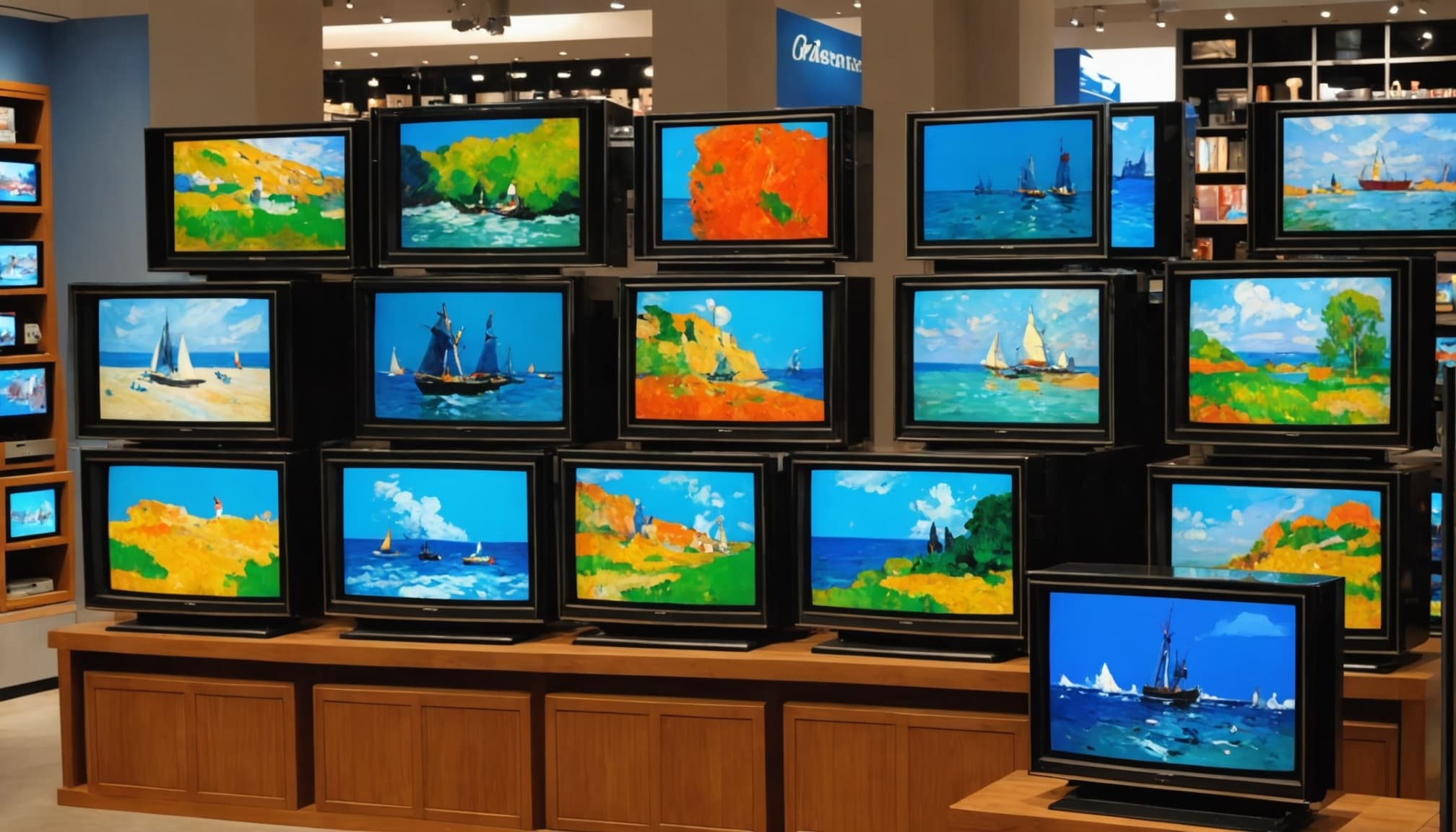
India's consumer durables market is undergoing a structural transformation. Premiumisation is no longer a seasonal trend—it's becoming the new normal. LG Electronics India exemplifies this shift. The company's 55-inch-plus TV segment delivered 53% growth in Q1 FY27, now contributing approximately 50% of its overall TV business Transcripts +1. This isn't just about selling more units; it's about selling higher-value products. LG launched 16 new QNED models and introduced Micro RGB TV technology, enabling its TVs with Microsoft Copilot and Google Gemini for a personalized AI experience Transcripts. The results have been encouraging, reflecting in improved market share. Management describes this as a "structural shift towards larger premium formats" that defies seasonal patterns Transcripts.
The premium segment's resilience is particularly striking given the pricing environment. Across categories, prices have risen 11-15% since January . Yet, demand elasticity for premium products remains remarkably low. LG's premium washing machines and 5-star ACs have grown faster than the industry, with consumers "scaling up in every category"—8kg and above in washing machines, 5-star inverter models in air conditioners Transcripts. This behavior suggests that value-conscious consumers are willing to pay more for better specifications, energy efficiency, and advanced features.
Haier's Premium-Dependent Growth
Haier Appliances India's growth story is heavily tied to premium categories. The company targets 35% growth during the Diwali season and expects to close 2026 with revenue of around Rs 14,000 crore, representing 28-30% annual growth . However, this growth isn't evenly distributed. Premium categories such as side-by-side refrigerators, large-screen televisions, premium washing machines, and premium air conditioners are driving most of Haier's expansion . The mass segments remain under stress, highlighting the polarized nature of consumption.
Haier's premium product launches are ambitious. The company introduced the M96 Series QD Mini LED AI TV in 100-inch size, priced at INR 3,99,999, and the M92 Series in 75" and 65" sizes starting at INR 1,05,990 . These ultra-premium offerings position Haier in the highest segment of the television market. The company also launched a new AI-enabled air conditioner series, strengthening its positioning as an innovation-led brand rather than focusing purely on pricing .
What's driving consumers to embrace these premium products despite price increases? Haier's President NS Satish observed that consumers are willing to increase EMIs from Rs 2,000 to Rs 2,500 for better specifications . This shift is enabled by financing innovations like no-cost EMI options, which allow consumers to split costs without added interest. For example, a Haier 10 Kg Fully Automatic Front Load Washing Machine with advanced features like One-Touch AI Wash and Direct Motion Motor can be brought home through a No-Cost EMI plan starting as low as ₹6,675 per month over 12 months . This financing effectively reduces the perceived price barrier, allowing consumers to focus on long-term value rather than upfront cost.
Dreame's Robot Vacuum Entry
Dreame Technology India represents a different dimension of premiumisation—the emergence of entirely new premium categories. The robot-vacuum market is growing 60-70% annually, driven by changing urban lifestyles, dual-working couples, larger homes, and demand for greater convenience . Dreame has achieved remarkable global success, ranking No.1 in Global Robot Vacuum Sales and Revenue in Q1 2026 according to IDC, with an annual growth rate exceeding 100% for six consecutive years .
Dreame's product ecosystem spans premium, mid-range, and entry-focused models. Higher-end models like the Dreame X40 Ultra are designed as largely hands-off devices with fully automated base stations that empty collected dust, wash and rinse mop pads during cleaning, and dry them after use . Mid-range models like the Dreame L10 Prime focus on delivering optimum navigation precision and effective vacuum-and-mop performance at a more affordable price point . Entry-focused models such as the D10 Plus Gen 2 prioritize consistent daily vacuuming with automatic dustbin emptying, suitable for users transitioning from manual cleaning to automated maintenance .
Dreame's strategy in India includes offline expansion through a partnership with Croma, marking a pivotal step in its growth strategy . The company also plans to launch a new flagship robot vacuum ahead of the festive season, capitalizing on the extended promotional window from September through mid-November .
Capacity and Inventory Strategy
Capturing festive demand requires more than just premium products—it demands capacity and inventory discipline. Haier Appliances India is running double shifts at its Ranjangaon and Noida plants while adding new refrigerator and washing-machine lines and expanding AC capacity . The company has also planned around 30 days of additional inventory after summer supply disruptions caused lost opportunities . This proactive approach is critical. Summer taught Haier that demand outstripped supply due to supply-chain disruptions from Red Sea issues . The company has now pre-ordered components much ahead of the peak festive shopping period, with factories running at full capacity and half the production already completed .
LG Electronics India's third plant in Sri City, expected to become operational by December 2026, represents a transformational investment of INR 5,001 crore . While this plant won't support the current festive season, it will strengthen future capabilities. Upon full commissioning, the facility will manufacture 800,000 refrigerators, 850,000 washing machines, 1.5 million air conditioners, and 2 million AC compressors annually . The plant will enhance LG's presence in South India and improve supply chain efficiency, particularly for the region which contributes 38-40% of total business Transcripts. It's worth noting that LG's current localization rate is 55.8%, with a target of 65% over the next 3-4 years—not the 95% figure sometimes mentioned in market discussions Transcripts +1.
Marketing and Sales Conversion
Marketing expenditure plays a crucial role in capturing festive demand. Haier has earmarked Rs 55-60 crore for Diwali marketing and brand building . This investment supports a 360-degree integrated campaign featuring products across categories to drive awareness and build recall . The strategy is particularly focused on washing machines and LED TVs, where Haier currently holds around 8% market share but expects faster growth than the company overall .
LG Electronics India has stepped up digital and retail engagement to drive premium product adoption during the extended festive promotional window. The company employs consumer promotion schemes offered to trade partners, adjusting temporary supports based on market dynamics Transcripts. During peak demand periods such as the Cricket World Cup, LG increased marketing investments to capitalize on tailwinds Transcripts. Promotional intensity is actively managed—aggressive during Diwali, followed by rationalization post-festival Transcripts.
Financing, exchange offers, and discounts are critical for sales conversion, especially for price-sensitive consumers. No-cost EMI options, zero down payment, and long-term EMI schemes are standard festive offerings . Exchange offers reduce effective purchase price by providing credit for old appliances, while discounts and cashbacks create urgency and perceived value . These tools are particularly effective when combined with strong brand positioning and premium product portfolios.
Category Growth Dynamics
Not all categories grow equally during the festive season. LG expects washing machines to lead festive growth, followed by LED TVs, refrigerators, and ACs . This hierarchy reflects seasonal consumption patterns, technology upgrade cycles, and market penetration levels. Washing machines benefit from monsoon-induced consumption and early festive stocking InvestorPresentations +1. LED TVs are key festive demand drivers, with consumers moving decisively toward larger screens and premium technologies like OLED and QNED InvestorPresentations +1. Refrigerators benefit from premiumization and replacement demand, while ACs, though more summer-driven, are positioned for growth with 5-star inverter models and low penetration (13%) providing long-term opportunities Transcripts +1.
Category-specific margins vary significantly. LED TVs deliver the highest margins (19% EBIT for LG) driven by premiumization and richer mix Transcripts +1. Washing machines face margin pressure from elevated commodity costs, though premium mix and deeper localization provide support Transcripts +1. Refrigerators face pressure from raw material costs and foreign exchange volatility, with premium models providing margin support Transcripts +1. ACs face significant margin pressure from input costs and currency headwinds, with long-term normalization expected through in-house compressor production and operational efficiency Transcripts +1.
Crompton Greaves Consumer Electricals Ltd's Butterfly kitchen appliances business leverages the festive season through brand revitalization, product innovation, and geographic expansion. The company refreshed its brand identity anchored in 'Celebrating Change' and launched innovation-led products across mixer grinders, gas stoves, pressure cookers, and cooking appliances . Butterfly has strong presence in South India, which is the highest-income consumer durable market in India after metros . The business delivered Rs 943.15 crore in revenue in FY 2025-26, representing 9.03% growth, with EBITDA of Rs 56.33 crore growing 31.97% YoY .
Haier's faster growth expectations in washing machines and LED TVs compared to overall company growth reflect the technology-led nature of these categories. The company expects more than 50% growth in LED TVs and 40% growth in washing machines, compared to 28-30% overall company growth . This faster category growth versus competitors enables market share gains from the current 7-8% base . The strategic focus on premium segments and technology-led upgrades positions Haier to achieve its market share targets in these categories.
The Road Ahead
The premiumisation trend in India's consumer durables market shows no signs of slowing. Companies that effectively combine premium product portfolios, strategic capacity expansion, disciplined inventory management, integrated marketing approaches, and flexible financing options will be best positioned to capture festive demand and accelerate market share gains. The extended festive window from September to mid-November provides both opportunity and challenge—requiring sustained engagement, varied promotional tactics, and robust supply chain management.
Success will depend on understanding category-specific dynamics, responding to consumer behavior shifts, and maintaining the delicate balance between volume and value growth. As consumers continue to demonstrate willingness to pay for better specifications, energy efficiency, and advanced features, the companies that can deliver compelling value propositions while managing costs and margins will emerge as winners in India's evolving consumer durables market.