Polycab India's Q1 FY27 results tell a story of two halves. Revenue surged 39% year-on-year to ₹8,209 crore, comfortably beating the CNBC-TV18 poll estimate of ₹7,902 crore.
The stock reacted with a 1.3% decline to ₹9,202, reflecting investor caution despite the revenue beat.
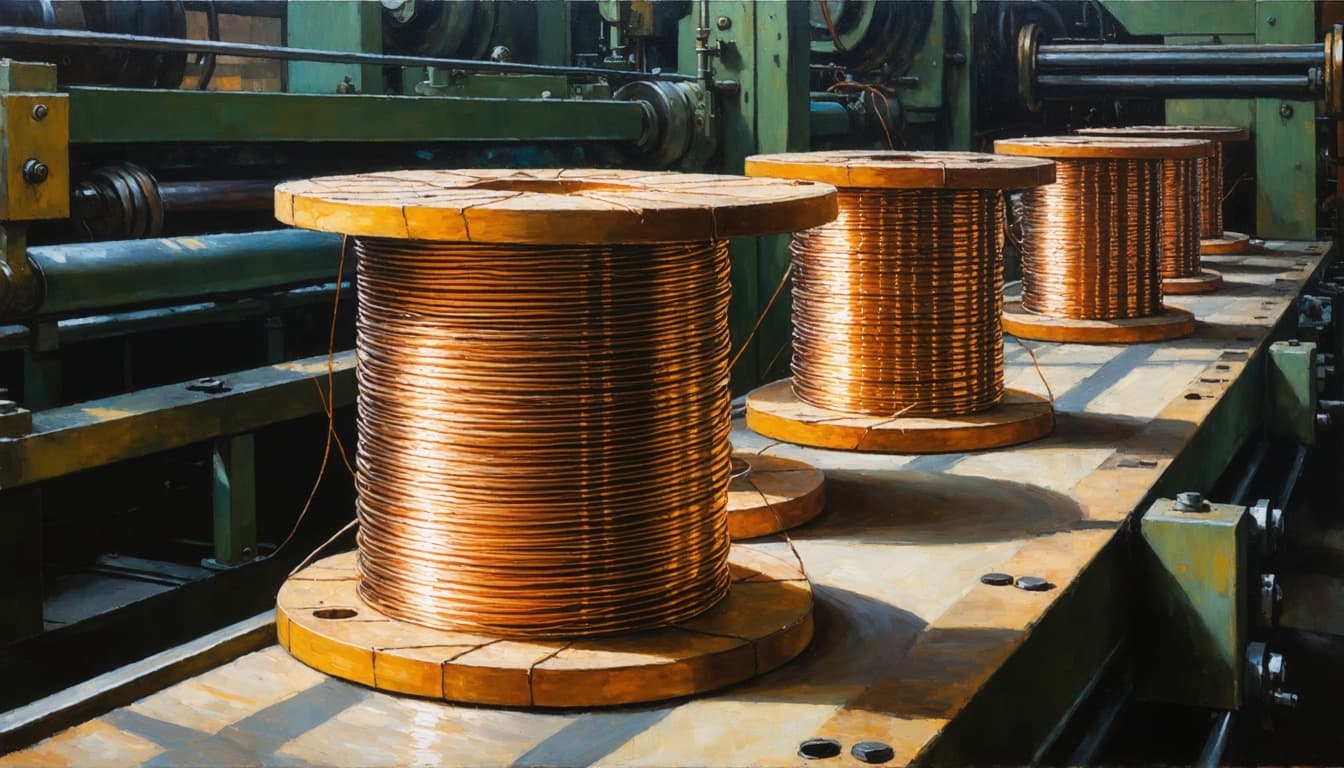
The margin contraction stems from record-high copper prices during the quarter—LME copper touched above ₹13,000 per ton—creating significant input cost pressure. While Polycab implemented pricing pass-throughs, the lag between cost increases and price adjustments inevitably squeezed margins. Additionally, higher advertising and promotional spending for the B2C business, along with heavy capacity expansion investments under Project Spring, weighed on profitability. Yet the fact that margins held at 13.8%, better than feared, suggests effective cost management and operational discipline.
Wires & Cables: The Growth Engine
The wires and cables business, Polycab's core franchise, delivered stellar performance with 43% domestic revenue growth. This wasn't just about volume—though over 25% volume growth contributed significantly—but also about favorable commodity price impacts and improved project execution. The cables segment outpaced wires in growth terms, reflecting strong demand from infrastructure projects, power transmission, and renewable energy installations. Transcripts
Project Spring, Polycab's multi-year strategic roadmap, played a crucial role. The company invested ₹410 crore in capex during the quarter, in line with its annual guidance of ₹1,200-1,600 crore. A large portion flowed into the cables and wires business, enhancing capacity and operational efficiency. With capacity utilization at 70-75%, Polycab has significant headroom to grow without immediate constraints. Transcripts +3
Structural differences between wires and cables segments became evident. Wires, with their higher margin profile (15-16% EBITDA vs. 9-11% for domestic cables), benefited from stronger channel sales and geographic expansion into emerging markets like Maharashtra, Telangana, Karnataka, and Tamil Nadu. Channel sales, representing 90-91% of domestic revenue, showed robust momentum compared to more cyclical institutional sales. Transcripts +2
FMEG & Solar: The New Growth Drivers
The FMEG segment emerged as a standout performer, achieving 71% year-on-year growth. Solar products doubled and became the largest category within the FMEG portfolio, riding the wave of government initiatives like the PM Surya Ghar Yojana and state-level rooftop solar subsidy programs. InvestorPresentations
Despite overall margin contraction, the FMEG segment expanded its EBIT margins to 8%. Better operating leverage from improved plant utilization and a strategic shift toward premium products played key roles. Polycab deliberately moved its FMEG portfolio toward higher-margin categories including switchgears, solar products, conduit pipes, and premium fans. The company also implemented premiumization strategies across categories, introducing IoT-enabled and voice command products targeting evolving consumer needs. Transcripts +3
The FMEG business has now turned profitable and is expected to contribute significantly to Polycab's profitability going forward.
EPC Business: The Cyclical Challenge
The EPC segment presented a contrasting picture with an 11% revenue decline. However, this decline requires context—it's attributed primarily to project execution cycle timing rather than fundamental business issues. Different project phases create quarterly variation: during certain quarters, the focus is on material supply (delivering better margins), while other quarters involve active project execution (yielding softer margins). Transcripts +1
The EPC business maintains a healthy order book with strong visibility for future growth. Open orders stand at approximately ₹70 billion as of March-end, with additional BharatNet orders of roughly ₹80 billion and RDSS orders of ₹38-40 billion. These orders are executable over 2-3 years, creating quarterly fluctuations based on execution phases. Management expects annual performance to align with guidance over the full year, smoothing out quarterly volatility. Transcripts +1
Infrastructure Tailwinds: The Growth Multiplier
The macro environment couldn't be more favorable. The Union Budget announced a robust ₹12.2 lakh crore allocation for infrastructure, with total investments (including private capex) expected to reach ₹36-37 lakh crores by FY27. Crucially, 57% of these investments flow into sectors that directly drive cable demand—utilities, metals, semiconductors, oil and gas, manufacturing, and logistics. Transcripts
Government infrastructure spending has accelerated significantly. Monthly average spending increased from ₹0.64 trillion (April-November 2024) to ₹1.26 trillion more recently. In the first 8 months of FY26, government capex surged 28.2% YoY to ₹6.6 trillion. The government is front-loading capex, having utilized 59% of the FY26 outlay by November 2025. Transcripts +2
On-ground implementation has improved markedly. Transmission line execution increased from an average of 15,000 circuit kilometers (2015-2020) to an anticipated 21,000-22,000 circuit kilometers per year going forward. For every ₹100 spent on power transmission and distribution, approximately 15-20% translates directly to cable requirements. Emerging sectors like data centers, defense, and EV charging infrastructure are creating new demand pockets beyond traditional infrastructure. Transcripts +2
Strategic Investments: Building for the Future
Polycab is making substantial investments across capacity enhancement, innovation, and distribution expansion. FY26 marked an inflection point with annual capex exceeding ₹14.5 billion for the first time.
Key capacity projects include the EHV plant at Halol, expected operational by FY26-end and contributing to revenue from FY27. This plant is expected to achieve asset turnover of 5x-6x at peak capacity. The company is also investing in special purpose cables for international markets and OFC at the Halol facility, along with expansion of high tension and low tension cable facilities at the Daman plant. Transcripts
Distribution expansion has been equally aggressive. Polycab implemented a super-distributor model for faster scale-up, achieved 2x increase in direct towns coverage through digital tools, and expanded authorized dealers and distributors to over 4,100. The company also strengthened presence in alternate channels including e-commerce, with over 600 products available on platforms like Amazon, Flipkart, JioMart, and Moglix. InvestorPresentations +2
Financial Strength: The Foundation for Growth
Polycab's financial position provides the foundation for these ambitious plans. The company maintains a net cash position of ₹41.9 billion, exceptional return ratios (ROE: 24.81%, ROCE: 31.64%), and a conservative debt-equity ratio of 0.02. This financial flexibility enables self-funding of major capex programs while maintaining shareholder returns. Transcripts +1
The capital allocation strategy is disciplined. Capex is the primary priority, followed by a progressive dividend policy (dividend of ₹47 per share in FY26 with 27.2% payout ratio, targeting >30% by FY30). M&A remains a tertiary priority, with the company continuing to scout for strategic opportunities like the completed Silvan acquisition. Transcripts +2
Market Reaction: Why the Skepticism?
Despite beating revenue and EBITDA estimates, Polycab's stock declined 1.3% to ₹9,202. The reaction reflects several factors.
Second, investors are weighing the 70 bps margin contraction against revenue growth, concerned about sustainability amid record copper prices. Third, the market is taking a cautious view on the segment mix shift—while FMEG and solar growth is exciting, investors question whether these newer segments can match the profitability of the core wires and cables franchise.
The 22% year-to-date stock performance reflects high expectations built into the price. With the stock trading near resistance levels and technical indicators showing some profit-taking potential, the market appears to be adopting a "show me" approach—wanting to see sustained margin improvement and successful execution of the diversification strategy before awarding a higher multiple.
The Competitive Edge: Diversification as a Moat
Polycab's diversified business mix across wires & cables, FMEG, and EPC provides inherent resilience against market cycles. When one segment faces headwinds, others can compensate. For instance, during periods when wires & cables encounters challenges from construction halts or softer trade sentiment, the FMEG segment has demonstrated remarkable resilience with nine consecutive quarters of outperformance versus industry benchmarks. Transcripts +1
Geographic diversification further strengthens this competitive advantage. The company expanded its global footprint from 48 countries in FY2019 to 94 countries in FY26, with international business contributing 4.4% of consolidated revenue and growing 18% year-on-year despite Middle East challenges. This international presence, particularly in markets with aging grid infrastructure like the EU and US, provides access to structural demand drivers less correlated with domestic business cycles. Transcripts +1
The Road Ahead
Polycab enters the rest of FY27 with strong tailwinds but also significant challenges. The infrastructure spending wave provides a powerful growth driver, but the company must navigate record copper prices, export headwinds, and the execution complexity of scaling multiple business segments simultaneously.
Management's near-term EBITDA margin guidance of 12-14% remains a key focal point. The company balances raw material volatility against the positive margin trajectory in the FMEG segment. The upcoming quarters will likely address the impact of US Section 232 tariff adjustments on North American exports and the progress of the BharatNet project within the EPC order book.
For investors, the question isn't about Polycab's ability to grow—that's well-established. The real question is about the quality of that growth—can the company maintain margins while executing its ambitious diversification strategy? Can the FMEG and solar businesses scale profitably to match the core wires and cables franchise? Can international expansion deliver meaningful contributions to the bottom line?
The answers to these questions will determine whether Polycab's current valuation proves justified or whether the market's skepticism is well-placed. For now, the company has delivered strong growth, but the margin pressure suggests the path ahead won't be without challenges.