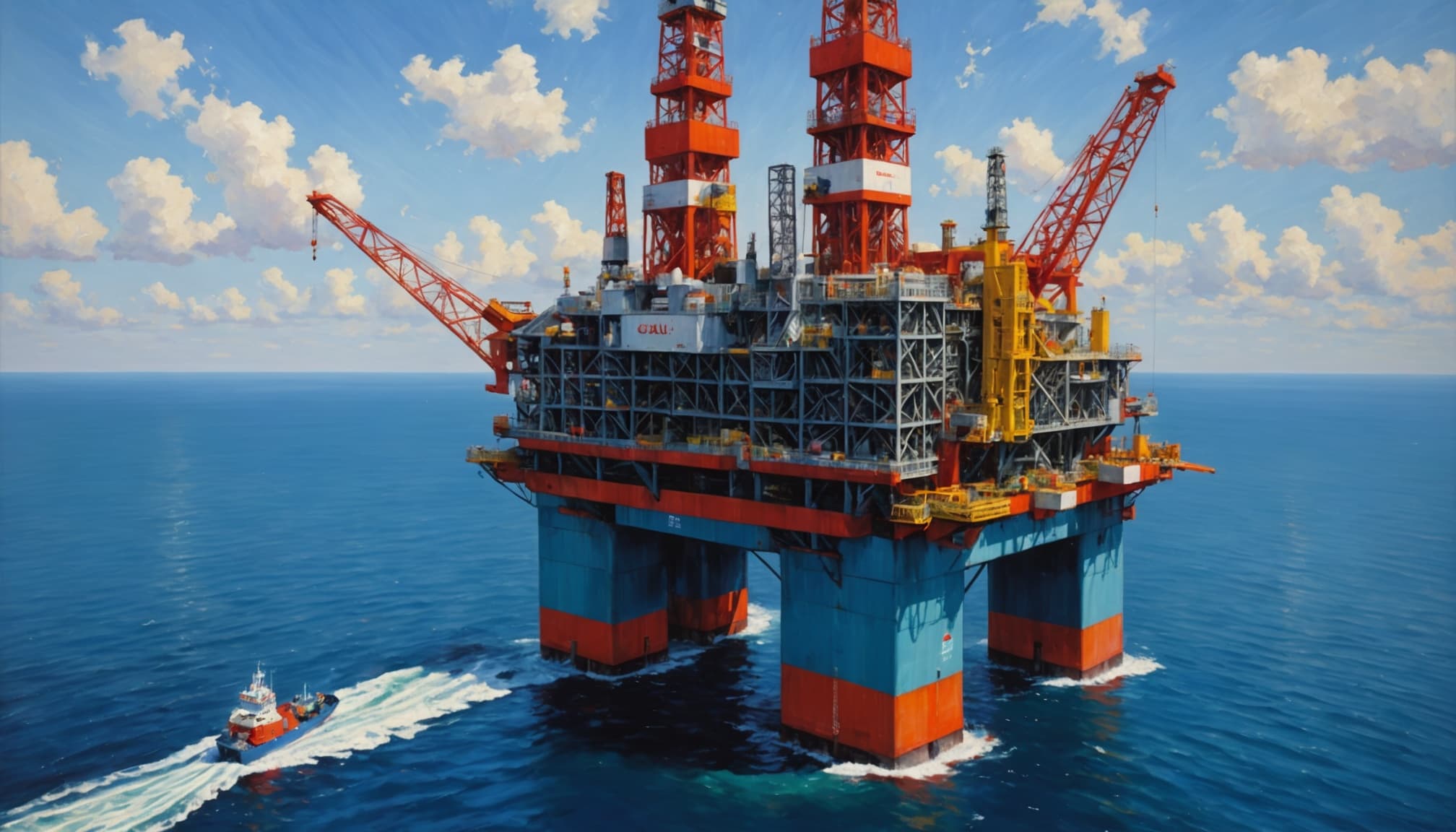
ONGC’s success at the MN-DW18-1-H-D well wasn’t luck. It was the result of a sophisticated, data-driven approach. The company deployed its DeepX Exploration Mission Centre, a specialized team integrating advanced geological modeling with a "One Company, One Data" philosophy. This allowed ONGC to pinpoint precise drilling targets in a basin historically deemed commercially unviable. The well, spudded on July 25, 2026, using the ultra-deepwater drillship Platinum Explorer, hit its mark precisely, encountering gas between 1,441 and 1,452 metres. The well has been flowing gas continuously for three days with "encouraging flow and steady reservoir pressure," a critical technical indicator that suggests a healthy, active reservoir capable of sustained production.
Assessing Commercial Viability
The observed reservoir pressure and flow characteristics are strong positive signals, but they don't guarantee commercial success on their own. In deepwater exploration, steady pressure over several days typically indicates good reservoir connectivity and drive mechanism, which reduces the risk of rapid depletion. However, the ultimate commercial verdict depends on the appraisal phase. ONGC plans to drill three more appraisal wells in the basin to determine the reservoir's extent and estimate recoverable reserves.
If the reserves prove substantial—potentially 1-2 trillion cubic feet—the project could move forward with a target for first gas by FY30-FY31. Without sufficient reserves, the find could remain a technical success but a commercial non-starter.
The Platinum Explorer’s Critical Role
Executing this campaign required world-class equipment, and the Platinum Explorer drillship was the linchpin. Chartered by ONGC in a USD 261 million contract, this sixth-generation drillship is capable of operating in water depths up to 10,000 feet and drilling to 40,000 feet. Its advanced dynamic positioning system and high hookload capacity were essential for maintaining stability and precision in the challenging deepwater environment off the Konark coast. The vessel also hosted specialized support, including Fugro’s FCV3000 Remotely Operated Vehicle (ROV) system for subsea monitoring and intervention. This high-specification asset allowed ONGC to drill efficiently and safely, providing the technical foundation needed to transform geological potential into a confirmed discovery.
Strategic Impact on Production and Imports
The Mahanadi discovery is a strategic asset in India’s quest for energy security. India currently imports over 85% of its crude oil and roughly half of its natural gas.
If the Mahanadi find reaches commercial viability, it could add 3-5 million metric standard cubic metres per day (MMSCMD) to ONGC’s production by the early 2030s. While this represents roughly 4-5% of ONGC’s total projected gas output, its significance lies in being new, high-margin production from a frontier basin. This incremental supply can reduce India’s LNG import bill by an estimated USD 800 million to USD 1.3 billion annually and chip away at the country’s heavy import dependency.
The Proximity Advantage
One of the most compelling aspects of this discovery is its location—just 43 kilometres from the Odisha coast. This proximity offers substantial economic advantages over typical deepwater projects located hundreds of kilometres offshore. The shorter distance drastically reduces the cost and complexity of building the export pipeline, potentially saving USD 100-400 million compared to more remote fields. It also allows for faster monetization, as the pipeline construction timeline could be shortened by 6-9 months. Furthermore, the ability to potentially use onshore processing facilities instead of a costly offshore platform could lower the overall development breakeven price, making the project economically robust even at lower gas prices.
Shared Infrastructure and Regulatory Support
The development of the Mahanadi discovery is being facilitated by a progressive regulatory shift. The Petroleum and Natural Gas Rules, 2025 (PNGR 2025) introduce a framework for infrastructure sharing, allowing operators to jointly use facilities like processing plants and pipelines. This is crucial for the Mahanadi basin, where ONGC has also made the Utkal and Konark discoveries. By developing these finds as a cluster with shared infrastructure, ONGC can reduce capex by 20-30% and accelerate the timeline to first gas by 18-24 months. The government’s Samudra Manthan scheme, which provides up to 50% financial support for deepwater exploration drilling, further de-risks this high-cost frontier activity, encouraging sustained investment.
Future Exploration and Risk Appetite
The success at Mahanadi validates ONGC’s pivot towards high-risk, high-return deepwater exploration and will likely influence its future strategy.
This Mahanadi success boosts confidence in this strategy, potentially increasing the allocation for frontier basins like Cauvery and Andaman. While deepwater exploration carries significant risk—with single well costs around USD 125-150 million—the technical and regulatory frameworks now in place are designed to improve success rates and optimize returns. The Mahanadi discovery is not just a new gas find; it is a proof of concept for India’s ambitious deepwater future.