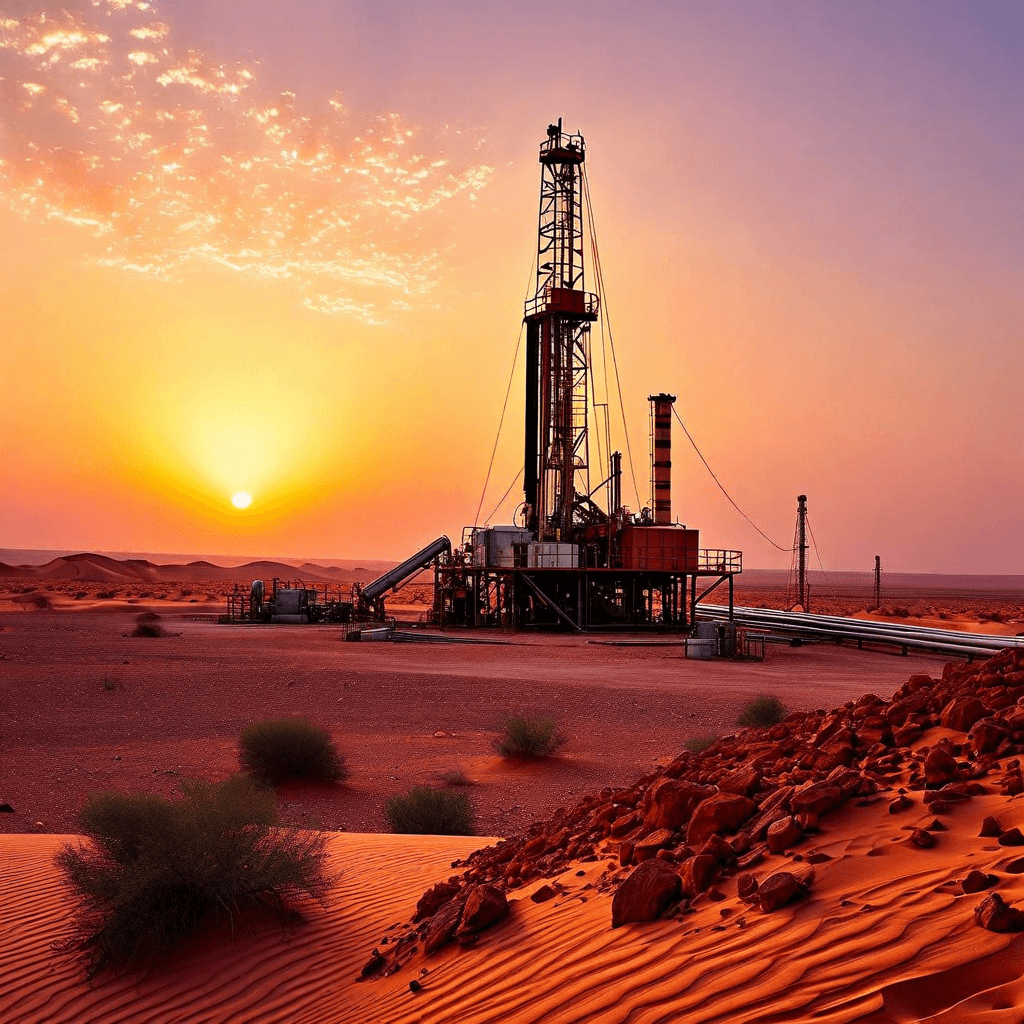
The well recorded an average inflow of about 25,000 standard cubic metres per day (SCMD), with preliminary estimates indicating gas in place of around 75 million standard cubic metres (MMSCM). Others +1
The depth advantage is substantial. Drilling costs increase exponentially with depth, and at 950 metres, this discovery sits in the shallow-to-medium category rather than the 2,000-4,000+ metre range typical of deep conventional finds. Industry data shows shallow borewells (up to 150 feet) cost ₹50-100 per foot, while deep wells (300-500+ feet) cost ₹200-400 per foot. While these figures are for water wells, the exponential cost principle applies equally to oil and gas drilling. Shallow depths require smaller rigs with lower day rates, reduced casing requirements, and shorter drilling durations—all translating to significantly lower capital expenditure per well.
The breakeven price tells the story clearly.
This compares favorably to offshore developments like KG-D6, which delivers gas at a unit development cost of USD 1.8 per thousand cubic feet (approximately USD 6.3/MMBtu equivalent). More importantly, Dandewala's breakeven is well below India's administered price mechanism (APM) ceiling of USD 6.75/MMBtu for nomination fields, providing a healthy margin of safety even at regulated prices.
Infrastructure Proximity: The Capex Multiplier
Perhaps the most compelling aspect of the Dandewala discovery is its location within an already-producing field with established infrastructure. The Dandewala Gas Processing Complex (DND-GPC) is operational, with gas from Dandewala and Bagitibba fields collected at this central location. A 65 km pipeline connects DND-GPC to RRVUNL, and Oil India has an existing Gas Sale Agreement with GAIL India Limited for natural gas sales in Rajasthan.
This infrastructure proximity dramatically reduces development capital expenditure. Where greenfield developments require substantial investment in processing facilities, pipelines, and associated infrastructure, Dandewala primarily requires additional wells and flowline tie-ins to the existing DND-GPC. The processing plant is already capable of treating raw natural gas to remove formation water, heavy hydrocarbons, and moisture. Oil India management has indicated plans to augment DND-GPC capacity from 1.0 MMSCMD to 1.5 MMSCMD, but this expansion likely serves broader field development rather than being solely attributable to the Sanu Formation discovery. AnnualReports +1
The infrastructure advantage extends beyond physical assets. Oil India has already drilled 37 wells in the Dandewala field, with average gas potential around 0.85 MMSCMD. The company operates two chartered hired drilling rigs in Rajasthan with dedicated allied services including cementing, directional drilling, and coring services. This operational footprint means the company can mobilize quickly for appraisal and development without the logistical challenges of establishing operations in frontier areas.
Production Impact: Modest Volumes, Strategic Value
The Dandewala discovery's contribution to Oil India's total production volumes will be modest but meaningful. With gas in place of 75 MMSCM and assuming typical gas field recovery factors of 80-90%, estimated recoverable reserves range from 60-67.5 MMSCM. The initial test flow of 25,000 SCMD represents approximately 2.9-3.5% of the existing field's average production of 0.85 MMSCMD.
Over the next 3-5 years, the Sanu Formation discovery is expected to contribute incrementally to Oil India's gas production. The timeline suggests appraisal drilling in 2026-2027, Field Development Plan preparation in 2027, and first commercial production by Q3 2028. Full production ramp-up would occur in 2029-2030. Given the modest resource size, this discovery will not materially shift Oil India's total production volumes but provides valuable incremental production in a low-cost development environment.
The revenue mix impact will be gradual. Oil India's natural gas segment contributed 13.21% of total revenue in FY26, down from 16.79% in FY24 [stock_agent]. The Sanu Formation discovery is expected to increase the gas segment contribution by 0.6-0.8 percentage points by FY31, reaching approximately 13.8-14.0% of total revenue. While the volumetric impact is modest, the quality of production—low-cost gas from shallow onshore fields—improves the overall margin profile of the gas segment.
Geographic Diversification: Beyond the Northeast
The Dandewala discovery represents a strategic milestone in Oil India's journey from a Northeast-centric operator to a pan-India exploration and production company. Management has explicitly identified Rajasthan as their "next producing field" after traditional strongholds in Assam and Arunachal Pradesh. By the first 9 months of FY26, the company had already drilled 10 wells in Rajasthan, with plans to add another 2-3 wells by year-end. Production from Rajasthan has increased from earlier levels of 100-400 barrels per day to achieving 1,000 barrels per day. Transcripts +2
This geographic diversification delivers multiple strategic benefits. It reduces concentration risk in the Northeast, provides a new growth engine beyond mature fields, and accesses northern India markets through existing infrastructure. The company is actively expanding into multiple new basins including Mahanadi, Kerala-Konkan, Andaman, Tripura, Cambay, and Meghalaya. This multi-basin strategy transforms Oil India from a regional player to a national E&P major with diversified geographic exposure. Transcripts
The Rajasthan presence creates defensible competitive advantages. Oil India has acquired 18,200 LKM of 2D seismic data and 5,000 sq. km of 3D seismic data in Rajasthan, with current acreage of 6,868 sq. km. This data advantage, combined with established infrastructure at DND-GPC and market relationships with GAIL and RRVUNL, creates barriers to entry for new operators. The company's operational excellence—demonstrated by completing one of its fastest drilling operations in Rajasthan in just 23 days—further strengthens its competitive position. Transcripts +1
Policy Support: Favorable Winds for Domestic Production
The government's policy framework creates a highly supportive environment for Dandewala field development. The domestic gas pricing policy under the Administered Price Mechanism (APM) sets a ceiling of USD 6.75/MMBtu for nomination fields, well above Dandewala's estimated breakeven of USD 3-5/MMBtu. The pricing mechanism includes a floor price of USD 4.00/MMBtu, providing downside protection against price crashes, while monthly revisions (versus previous six-monthly adjustments) align better with market conditions.
Recent reforms have materially improved project economics.
More significantly, the calculation methodology changed to allow fixed deductions toward post-wellhead costs—20% for nomination blocks and 15% for other regimes—rather than linking to actual post-production expenses. CLSA analysts estimate the royalty cut could add 9-11% to Oil India's fair value.
Petroleum Minister Hardeep Singh Puri has emphasized the urgency of domestic production, noting that India relies on imports for 88% of crude oil and 50% of natural gas needs. The government has invested ₹7,500 crore in new seismic data acquisition, reduced "No-Go" areas in the Exclusive Economic Zone by 99%, and targets expanding exploration acreage to 1 million sq. km by 2030. These initiatives create a favorable regulatory environment for domestic producers.
The Path Forward: Appraisal to Production
The timeline from discovery to commercial production reflects both the opportunities and challenges of developing the Dandewala find. The immediate priority is appraisal drilling to delineate the reservoir extent and confirm the preliminary gas in place estimate. Based on industry benchmarks for onshore gas field development with existing infrastructure, the development timeline includes 6-12 months for appraisal drilling, 3-6 months for Field Development Plan preparation, 3-6 months for regulatory approvals, 3-6 months for infrastructure tie-in, and 1-3 months for production startup.
This suggests first commercial production by Q3 2028, approximately 26 months from the May 2026 discovery announcement. Revenue recognition would begin concurrently with first gas flow. The existing infrastructure at DND-GPC and the 65 km pipeline to RRVUNL significantly accelerate this timeline compared to greenfield developments, which typically require 18-36 months from FDP approval to first gas.
The Dandewala discovery validates Oil India's "missed opportunities" exploration approach—revisiting subsurface potential through focused technical interventions in mature fields. This strategy, combined with the company's success in OALP Round IX where it secured 9 blocks with a 100% strike rate, positions Oil India to continue expanding its exploration portfolio while maintaining capital discipline.
Strategic Implications
The Dandewala discovery, while modest in resource size, carries strategic weight beyond its 75 MMSCM preliminary gas in place figure. It demonstrates the value of shallow-target exploration in mature basins with existing infrastructure. It validates a data-driven exploration approach that leverages existing geological understanding to identify previously overlooked opportunities. And it provides a template for future development in Rajasthan and similar onshore basins.
For investors, the key takeaway is the transformation in Oil India's cost structure and risk profile. Shallow onshore discoveries like Dandewala, with breakeven prices well below regulated gas ceilings and minimal infrastructure requirements, offer attractive returns with lower capital intensity than deepwater or frontier exploration. As the company continues to execute its pan-India expansion strategy, these low-cost developments will play an increasingly important role in sustaining production growth and improving overall portfolio economics.
The government's supportive policy environment—through gas pricing reforms, royalty reductions, and regulatory streamlining—further enhances the attractiveness of domestic gas production. With India targeting an increase in natural gas's share in the energy mix from 6.5% to 15% by 2030, discoveries like Dandewala will contribute to meeting this demand while delivering value to shareholders.