NMDC Steel’s Q1 FY26 results present an intriguing contradiction. Revenue from operations climbed 8.8% year-on-year to ₹3,661.84 crore, yet EBITDA slipped 2% to ₹399.56 crore, compressing margins from 12.1% to 10.9%. Despite this operational pressure, the bottom line delivered a remarkable 97.6% surge, with net profit reaching ₹50.51 crore compared to ₹25.56 crore in the year-ago period.
The divergence between top-line growth and EBITDA contraction stems primarily from input cost inflation. Material costs consumed ₹2,509.37 crore, representing approximately 68.5% of total revenue. This high material cost base, typical of steel manufacturing, offset the benefits of higher sales volumes and pricing, directly pressurizing operating margins.
So, what powered the near-doubling of net profit? The answer lies largely below the operating line. The company’s debt structure underwent a favorable reset, with the interest rate on its State Bank of India term loan adjusted to 8.40% per annum from January 12, 2026, linked to the three-month MCLR. This competitive positioning within SBI’s current MCLR range (7.85%-8.80%) helped contain finance costs. Additionally, effective tax management played a role, with Profit Before Tax of ₹73.95 crore translating to the stronger net profit figure.
Cost Structure and Margin Dynamics
The steel sector’s inherent operating leverage is evident in NMDC Steel’s cost structure. With material costs dominating the expense profile, the company is highly sensitive to input price fluctuations. The 120-basis point EBITDA margin compression highlights a classic industry challenge: when input costs rise faster than end-product prices, profitability suffers despite revenue growth.
This margin pressure is further contextualized by the company’s current operational phase.
FY25 marked its first full year of commercial operations. During such ramp-up phases, per-unit costs are typically elevated as fixed costs are spread over lower volumes, creating temporary inefficiencies that should normalize as capacity utilization improves.
Financial Flexibility and Divestment Appeal
As the Government of India advances its strategic disinvestment of NMDC Steel, the company’s financial profile becomes a critical factor in attracting potential buyers.
This prudent leverage provides substantial headroom for future capital requirements without jeopardizing financial stability—a key advantage during acquisition negotiations.
The company’s outstanding term loan from SBI is ₹3,177.27 crore against a sanctioned amount of ₹4,476.20 crore, indicating unused debt capacity of approximately ₹1,299 crore. This financial flexibility allows for various transaction structures, including leveraged buyouts, while the strong balance sheet positions NMDC Steel as a “clean acquisition target” with minimal legacy debt concerns.
Net worth of ₹13,228.35 crore provides a robust equity foundation. If NMDC Steel were to leverage up to the industry average, it could potentially access significant additional debt capacity, supporting post-acquisition expansion plans. This strong equity base supports premium valuation multiples during the strategic sale process.
Divestment Process and Strategic Implications
The process, set in motion with the invitation of Expressions of Interest in December 2022, is expected to bring the government approximately ₹11,000 crore. The government also plans to offer NMDC Limited a 10% stake once a strategic buyer is identified, ensuring continued strategic alignment between the entities.
This transfer of management control will enable NMDC Steel to operate with commercial independence, free from government constraints. Strategic buyers are expected to implement performance-driven governance structures with faster decision-making cycles, operational efficiency enhancements, and aggressive growth strategies aligned with market opportunities rather than policy considerations.
The proposed 10% stake for NMDC Limited ensures continued iron ore supply security, creating backward integration advantages. This shifts the relationship from parent-subsidiary to strategic partnership, with NMDC Limited maintaining board representation for critical matters like capacity expansion and technology investments.
Stock Performance and Market Sentiment
Despite the complexity of the ongoing divestment, NMDC Steel’s stock has demonstrated resilience, rising 12.22% over the past year. However, the stock closed 1.63% down on the day of its Q1 earnings announcement, reflecting typical profit-taking after strong results. The stock currently trades at ₹41.00, down from its 52-week high of ₹53.75, with a market capitalization of approximately ₹13,041 crore.
This performance pattern reflects investor optimism about the divestment process tempered by timeline uncertainty. The 12.22% annual return suggests investors are positioning for potential acquisition premium and operational improvements under new management. However, the recent decline from peak levels indicates volatility as the market awaits clarity on the strategic buyer identity and transaction timeline.
Business Model Focus and Competitive Positioning
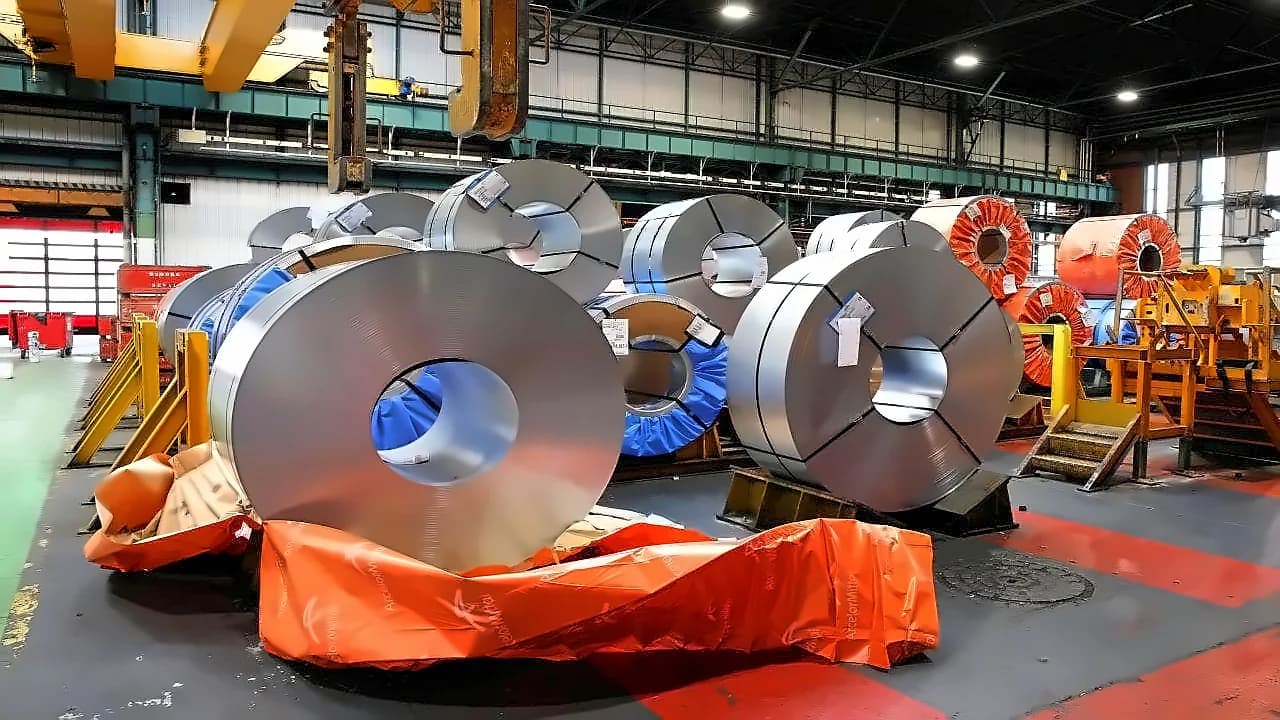
NMDC Steel operates with a sole focus on iron and steel manufacturing, specializing in high-grade Hot Rolled steel products from its state-of-the-art plant in Nagarnar, Chhattisgarh. This focused business model creates higher cyclicality exposure compared to diversified peers but allows for operational specialization and expertise depth.
The company’s competitive positioning received a significant boost from the Directorate General of Trade Remedies (DGTR) recommendation of a 12% safeguard duty on certain steel imports for 200 days.
This superior performance reflects NMDC Steel’s greater sensitivity to import protection due to its focused business model.
The safeguard duty addresses a surge in flat steel imports, which rose over 60% from April 2023 to March 2024. For a focused manufacturer like NMDC Steel, this protection directly supports pricing power, capacity utilization, and margin improvement—critical factors during its operational ramp-up phase.
Operational Efficiency and Valuation Outlook
NMDC Steel’s demerged status from NMDC Limited, formalized in 2022, has created an independent operational entity with clear accountability. This separation provides transparency for potential strategic buyers and allows for focused decision-making without parent company constraints.
Current operational efficiency metrics present a mixed picture. While the debt-to-equity ratio of 0.45 indicates conservative financial management, operating margins stand at -21.03%, reflecting ramp-up phase challenges. ROE is -16.60% and ROCE is -12.98%, below optimal levels but typical for early-stage steel operations.
For strategic buyers, NMDC Steel presents a compelling value proposition. The modern 3 MTPA plant provides a scalability platform with significant improvement potential. The conservative debt structure, policy support through safeguard duties, and structural cost advantages through the NMDC relationship create an attractive acquisition target with substantial operational upside potential.
As the divestment process progresses toward financial bid invitations, NMDC Steel stands at an inflection point. The company’s strong Q1 performance, conservative financial profile, and supportive policy environment position it well for a successful strategic sale that could unlock significant value for both the government and future private owners.