The IPO Debut: 18% Premium and Institutional Frenzy
Milky Mist Dairy Food Limited made a powerful market debut on August 18, 2026, listing at ₹165 per share on both NSE and BSE—a solid 18% premium over the upper IPO price band of ₹140. The ₹1,553 crore mainboard issue saw overall subscription of 56.12 times, but the real story lies in the massive disparity between investor categories. Qualified Institutional Buyers (QIBs) subscribed 155.83 times their allocated portion, while retail investors subscribed only 8.41 times. This 18.5x gap between institutional and retail demand tells a compelling story about what sophisticated investors saw that retail investors may have missed.
The IPO comprised a fresh issue of ₹1,428 crore and an offer for sale (OFS) of ₹125 crore by promoters Sathishkumar T and Anitha S. The OFS component was relatively small at 8% of the total issue, with promoters retaining approximately 79.51% post-offer shareholding. This measured exit signaled promoter confidence while creating initial trading liquidity. The grey market premium (GMP) trajectory proved remarkably accurate—starting at ₹22.50, dipping to ₹19.50 mid-week, and firming to ₹26 by listing day, implying an 18.57% premium that almost perfectly matched the actual 17.86% listing gain.
What Drove the 155.83x QIB Subscription?
The institutional frenzy wasn't random. QIBs conducted deeper due diligence and recognized Milky Mist's positioning as a premium value-added dairy products company rather than a traditional liquid milk business. This FMCG-like positioning comes with superior gross margins of 32.97% in FY26, compared to the thin margins typical of liquid milk players. The company's financial performance provided compelling validation—revenue grew 33.58% year-on-year to ₹3,138.36 crore in FY26, but the real headline-grabber was the 176% surge in profit after tax to ₹127.01 crore. This disproportionate profit growth came from operating leverage benefits, with total expenses as a percentage of revenue declining from 96.50% to 95.16%. RHP +3
The anchor investment of ₹465.29 crore from 19 investors at the upper price band of ₹140 played a crucial role in building institutional confidence. This commitment represented 29.96% of the total issue and sent a strong validation signal to other QIBs. With anchors locked in for 30-90 days, this provided stability during initial trading and supported the listing premium. The company's market leadership also attracted institutional attention—Milky Mist is the largest private packaged paneer brand in India's organized market with an estimated 19% share in FY26.
Capital Allocation: Debt Reduction and Growth Investments
The IPO proceeds are being deployed across four strategic objectives. The largest allocation of ₹496.86 crore targets debt repayment, representing approximately 38.4% of total borrowings of ₹1,671.85 crore. This is expected to generate annual interest savings of around ₹60.91 crore, reducing annual interest costs by 57.6% from ₹105.79 crore to approximately ₹44.88 crore. The interest coverage ratio should improve from 2.50x to approximately 5.90x, significantly enhancing financial flexibility. However, this debt reduction comes with a trade-off—ROE is expected to dilute from 32.12% to approximately 9.65-10.20% in the short term due to the significant equity base expansion, though management expects recovery over 3-5 years as deployed capital generates returns. RHP +2
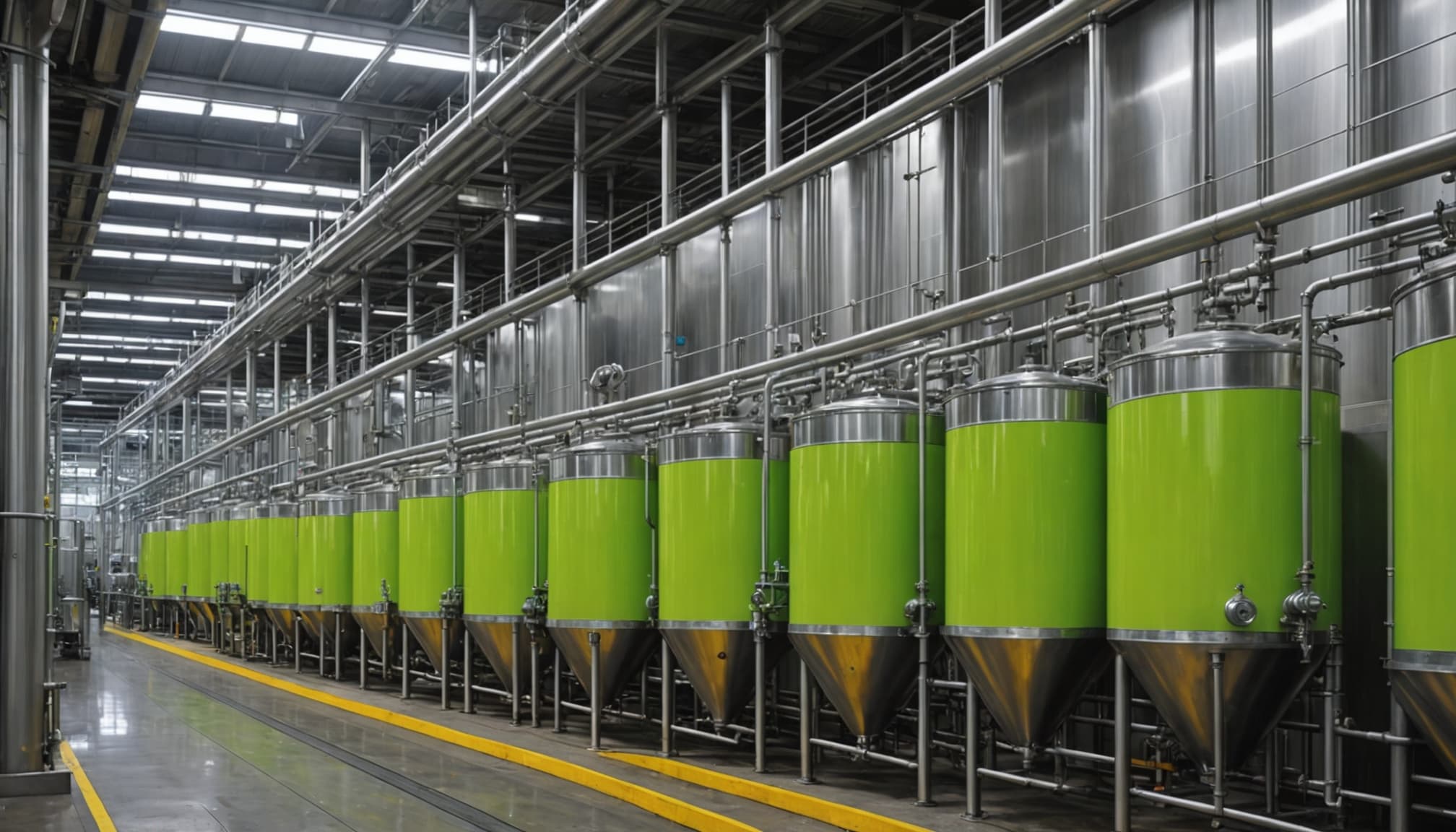
The second major allocation of ₹469.24 crore funds the expansion and modernization of the Perundurai manufacturing facility. This includes ₹394.50 crore for new product lines and expansion, ₹25.08 crore for warehouse facilities, and ₹49.66 crore for truck procurement. The expansion will significantly boost capacity—cheddar cheese capacity will increase approximately 669% from 15.6 to 120 tons per day, yogurt capacity will grow 250% by adding 60 tons per day, and new product lines for whey protein concentrate (10 TPD) and lactose (44 TPD) will be established. While specific IRR projections aren't disclosed in the RHP, the company's historical ROCE improvement from 8.14% to 11.73% over three years provides context for expansion ambitions. RHP +4
The third allocation of ₹155.31 crore targets deployment of cooling equipment—30,000 ice cream freezers, 24,000 visi coolers, and 12,000 chocolate coolers. This represents a 159.2% increase from the current 41,459 units to 107,459 units. The investment aims to enhance product visibility, deepen retail penetration, and reinforce brand presence at point of sale. Milky Mist already operates through an integrated network of 74,654 farmers, 4,001 secondary distributors, and 375,000+ retail outlets. This cooling equipment expansion could increase retail reach by an estimated 60% and generate incremental revenue of ₹330-495 crore annually based on industry benchmarks. RHP +6
Operational Excellence: The 176% PAT Surge Story
The exceptional 176% PAT growth with only 34% revenue growth in FY26 was achieved through comprehensive operational efficiency initiatives. The company implemented advanced manufacturing automation across production processes, including fully automated paneer manufacturing with robotic packaging, automatic cheese-making machines producing up to 1,000 slices per minute, and automated UHT lines for long-shelf life products. Energy and resource management initiatives included 31 MW of renewable power generation (29 MW solar, 2 MW wind) and water recycling capacity of 2.15 million liters per day. RHP +3
Technology integration played a crucial role. The company implemented comprehensive ERP systems spanning raw material management, financial management, business intelligence, supply chain management, and sales force automation. IoT-enabled real-time fleet tracking and AI-powered route optimization reduced transportation costs to 3.11% of revenue—among the lowest compared to listed peers. The integrated farm-to-consumer model, with 74.34% of raw milk procured directly from 74,654 farmers within a 400-kilometer radius, eliminated intermediaries and ensured quality control through a three-tier testing process analyzing 31 parameters before milk enters processing. RHP +4
Growth Sustainability: Risks and Challenges
Despite the strong debut and growth trajectory, Milky Mist faces significant risks that could impact its ability to sustain 34% revenue growth and improved margins. The company derives 69.23%, 71.00%, and 73.68% of revenue from South India for Fiscal 2026, 2025, and 2024 respectively, creating geographic concentration risk. The value-added dairy products industry is highly competitive, with large multinationals like Nestle India and Britannia Industries possessing greater financial resources and brand recognition. Pricing pressure is persistent, requiring increased discounts and rebates to maintain market share, with limited ability to pass on increased input costs due to competitive constraints. RHP +4
Operational risks include supply chain disruptions, raw milk procurement cost volatility influenced by feed and fodder prices, and the capital-intensive nature of the business requiring substantial ongoing investment. Management explicitly acknowledges that inability to effectively manage growth or implement growth strategies could adversely affect business operations. The company also faces contingent liabilities of ₹229.01 crore as of March 31, 2026, including guarantees, EPCG license obligations, and disputed liabilities. RHP +6
The Verdict: Strong Debut, Execution Test Ahead
Milky Mist Dairy Food's 18% listing premium reflects institutional recognition of its differentiated business model, strong operational efficiency, and growth potential in the expanding value-added dairy products market. The 155.83x QIB subscription versus 8.41x retail subscription highlights the sophistication gap in analyzing the company's FMCG-like characteristics versus traditional dairy peers. JM Financial's pricing strategy, positioning the company as a premium value-added dairy player rather than commodity milk business, proved effective in capturing institutional demand at the upper price band while leaving room for listing premium. RHP +1
The small OFS component of ₹125 crore (8% of issue) played a neutral to slightly positive role, creating liquidity while maintaining strong promoter commitment at 79.51% post-offer. The grey market premium's accuracy in predicting the listing price demonstrates strong market sentiment alignment. However, the real test lies ahead—whether the company can execute its expansion plans, maintain margin improvements, and sustain growth rates in a competitive and capital-intensive industry. The debt reduction will improve financial flexibility, but ROE dilution in the near term is inevitable. The success of the ₹469.24 crore capacity expansion and ₹155.31 crore distribution infrastructure investment will determine whether Milky Mist can justify its premium valuation and deliver on the growth expectations that drove the institutional frenzy. RHP