Strategic Evolution: From Equity Investment to Infrastructure Partnership
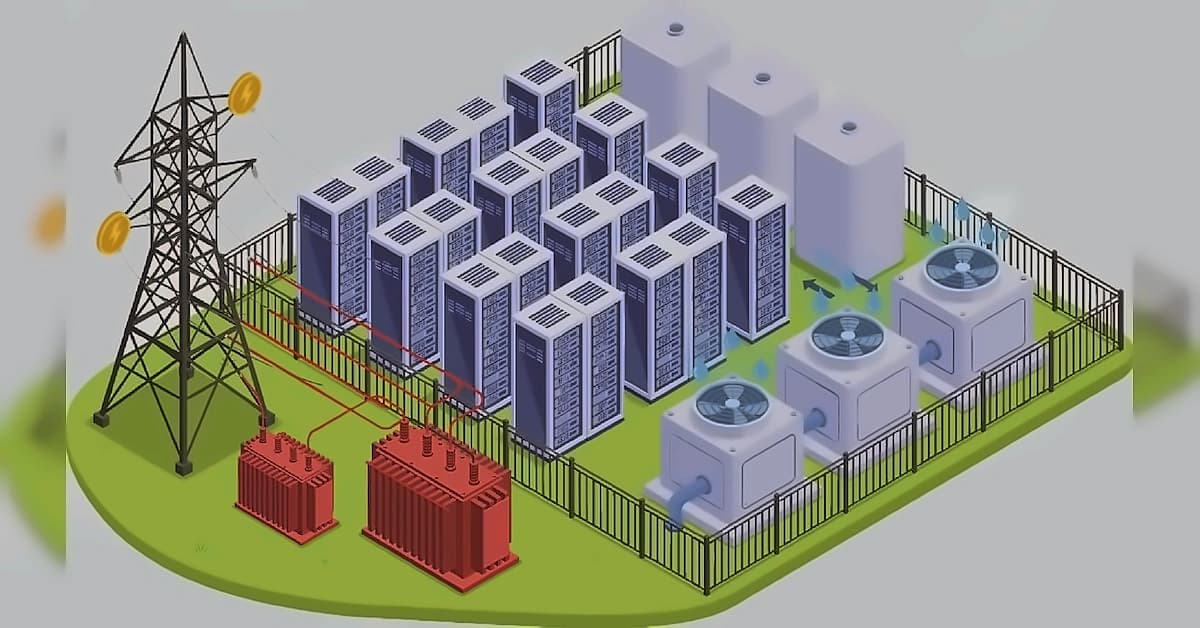
The Meta-Reliance relationship has undergone a remarkable transformation over six years. In 2020, Meta invested $5.7 billion for a 9.99% stake in Jio Platforms, primarily targeting consumer market access and WhatsApp payments integration in India's massive digital ecosystem. By 2025, this evolved into a $100 million joint venture—Reliance Enterprise Intelligence Limited—focused on developing enterprise AI solutions using Meta's open-source Llama models. The latest chapter, announced in June 2026, centers on a 168-megawatt AI-enabled data center in Jamnagar, Gujarat, marking Meta's first built-to-suit data center capacity in India.
This progression reflects fundamentally shifting strategic priorities. For Meta, the focus has moved from consumer market penetration to physical AI infrastructure, recognizing that controlling the compute layer is essential for AI dominance. For Reliance, the transformation is equally profound—evolving from a digital services enabler to a comprehensive AI infrastructure provider leveraging its industrial capabilities across energy, real estate, and telecommunications.
Revenue Streams and Margin Structures: Infrastructure vs. Digital Services
The financial implications of this evolution are substantial. Reliance's traditional Jio Platforms business generates revenue through ARPU-based telecom services and digital offerings, with typical telecom EBITDA margins of 30-40%. The data center infrastructure business presents a dramatically different economic profile.
Under the agreement with Meta, Reliance provides end-to-end services including design, construction, renewable power supply, network connectivity, and fully managed operations. Morgan Stanley estimates AI data centers generate $1.5-1.6 million in annual revenue per megawatt, suggesting the 168 MW facility could generate $252-269 million annually. More importantly, infrastructure services typically command 60-70% gross margins compared to telecom's 30-40%, with long-term contracts providing predictable cash flows.
The structure is particularly advantageous for Reliance because capital expenditure for data center infrastructure is borne by Reliance Industries or Reliance Intelligence, while Jio Platforms operates as an asset-light service provider. This separation allows Reliance to capture high-margin infrastructure returns while maintaining flexibility in its digital services business. Transcripts +1
Cost Structure Advantages: Leasing vs. Ownership
For Meta, the leasing model delivers compelling economic benefits. Building and operating a 1 GW AI data center requires approximately $38 billion in upfront capital expenditure. Scaling this to 168 MW represents roughly $6.4 billion in avoided capital investment. More significantly, Meta's agreement to cover full energy and water costs is more than offset by India's cost advantages.
India's 21-year tax holiday for foreign cloud providers, extending through 2047, creates substantial savings.
Combined with lower power costs ($0.06-0.08/kWh vs. $0.12-0.20 in Singapore), 40-60% lower labor costs, and construction costs of $6-7 million per MW versus $10-14 million in developed markets, Meta achieves 40-45% lower total cost of ownership over five years through leasing versus ownership.
Competitive Positioning in India's AI Infrastructure Boom
The Meta-Reliance partnership enters a market experiencing explosive growth. India's data center capacity is projected to expand from 1.5 GW to over 8 GW by 2030, driven by AI workloads, cloud adoption, and data localization requirements. Global tech giants have committed $67.5 billion collectively, with Microsoft investing $17.5 billion, Amazon $35 billion, and Google $15 billion in Indian AI infrastructure.
However, the competitive dynamics differ significantly.
The end-to-end services model—integrating design, construction, renewable power, connectivity, and operations—creates differentiation in a market where many competitors offer basic colocation. Reliance's vertical integration, combining energy assets, telecommunications networks, and construction capabilities, creates barriers to entry that pure-play data center operators cannot match.
For Indian conglomerates like Adani and Tata, the Meta-Reliance partnership presents both competitive threats and opportunities. Adani has announced plans for $100 billion in AI infrastructure investment by 2035, while Tata Consultancy Services is building 1 GW of capacity with a $6-7 billion investment. However, Reliance's first-mover advantage with Meta validates the business model and creates reference customer credibility that will be difficult to overcome.
The emergence of Blackstone-backed AirTrunk, with its planned $30 billion investment for 5 GW of capacity by 2030, adds another competitive dimension. While AirTrunk brings significant scale and institutional capital, Reliance's integrated service model and local market knowledge provide competitive advantages that pure-play operators cannot easily replicate.
Policy Incentives and Market Dynamics
India's policy framework creates powerful incentives for expansion. The 21-year tax holiday for foreign cloud providers, combined with state-level incentives including capital subsidies, reduced electricity tariffs, and stamp duty waivers, makes India exceptionally attractive. The policy requires foreign companies to route services through Indian data centers and use Indian resellers for domestic transactions—a structure the Meta-Reliance partnership already satisfies.
The massive capacity expansion from 1.5 GW to 8+ GW by 2030 creates both opportunities and challenges for pricing power. While supply growth could pressure margins, Reliance's integrated service model and first-mover advantages provide some protection. The company's ability to offer end-to-end solutions, combined with Meta as an anchor tenant, creates premium positioning that should sustain above-market pricing.
Compared to other jurisdictions, India's policy package is unmatched in duration and comprehensiveness. While China offers aggressive R&D tax deductions and Japan provides 40-50% R&D credits for strategic technologies, India's combination of tax holidays, market scale, cost advantages, and regulatory alignment creates sustainable competitive advantages.
Sustainability and Renewable Energy Integration
Meta's commitment to nearly 1 GW of renewable energy through partnerships with CleanMax (837 MW) and Fourth Partner Energy (88 MW) complements the Jamnagar facility's power requirements. This dual-sourcing strategy provides risk mitigation while locking in long-term power prices 20-30% below standard industrial tariffs.
For Reliance, the decision to power the facility with renewable energy and cool it with desalinated seawater represents a sophisticated cost-benefit calculation. While AI-enabled data centers require 45-55% higher capital investment than traditional facilities, the operating cost savings are substantial. Seawater cooling reduces operating costs by 40% compared to traditional methods and eliminates freshwater consumption—critical in water-stressed regions. Over five years, the sustainable approach delivers $222-327 million in savings despite higher upfront costs.
The sustainability commitments also align with Meta's global environmental goals. The company emitted 14.1 million metric tons of CO2e in 2023, up 38% from 2021 levels, putting pressure on its 2031 target to reduce Scope 1 and 2 emissions by 42%. The India renewable commitments could provide 170-200% of the carbon reductions needed to achieve these targets.
Future Expansion and Global Network Integration
The decision to expand beyond the initial 168 MW will depend on multiple factors: sustained AI demand growth (currently 100%+ year-over-year), capacity utilization thresholds, and Reliance's proven scalability. Reliance's Jamnagar complex offers unparalleled expansion potential—with 5,000+ acres, 10 GW of renewable capacity by 2026, and $110 billion committed to AI infrastructure, the company can support multi-gigawatt expansion.
The two-year construction timeline creates near-term capacity challenges that Meta must manage through existing global network optimization and interim partnerships. However, once operational, the Jamnagar facility will play a crucial role in Meta's global AI infrastructure network, reducing cross-region data transfer costs by 80-90% and improving latency for Indian users by 70-85%.
The partnership represents a strategic template for how global tech companies can leverage India's unique combination of policy incentives, market scale, and operational advantages to build the next generation of AI computing capacity. As Meta pursues its goal of building "tens of gigawatts this decade, and hundreds of gigawatts or more over time," the Reliance partnership provides a scalable, cost-efficient pathway to capture the massive opportunity in India's AI market while establishing a strategic beachhead for broader Asia-Pacific expansion.