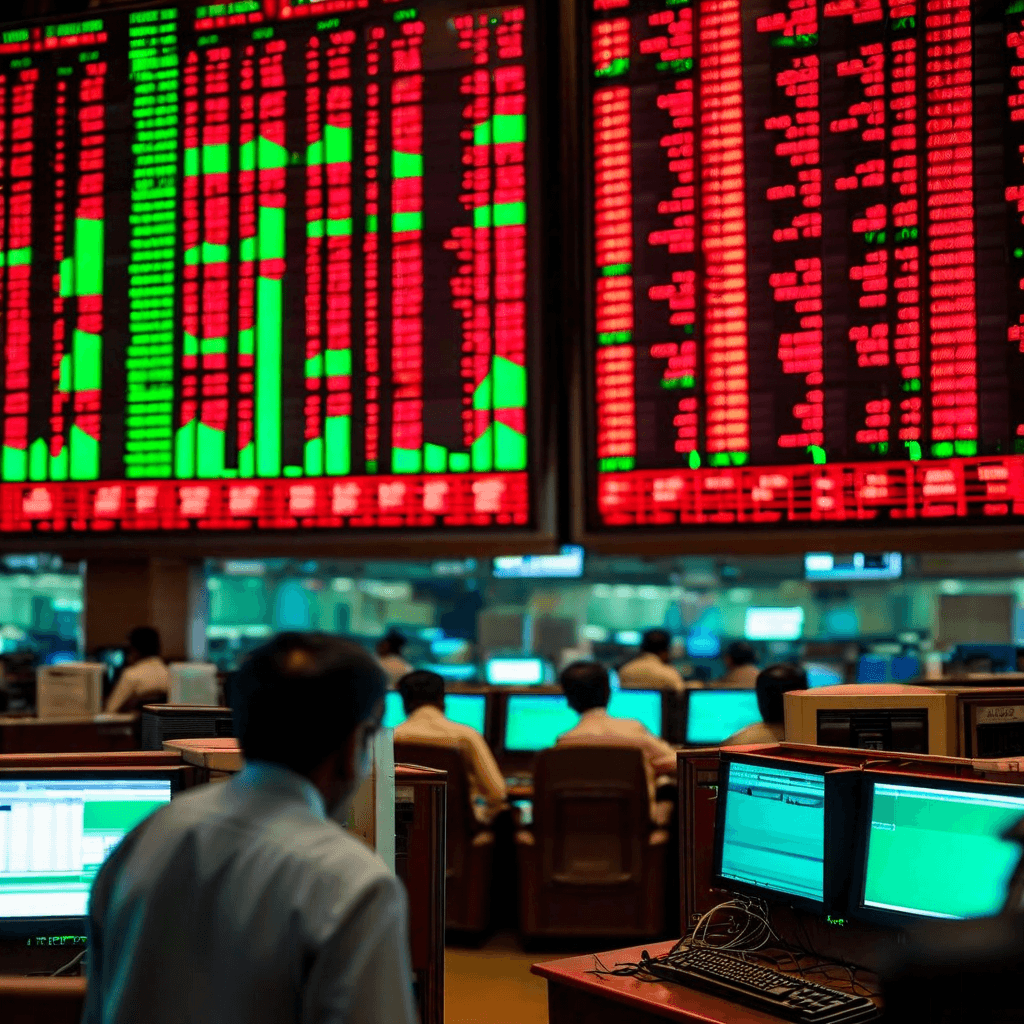
Kaynes Technology India shares plummeted 19.44% to ₹3,336.5 despite reporting a 26.2% YoY revenue increase to ₹1,242.64 crore in Q4 FY26. The sharp decline reflected investor disappointment with profitability metrics. While revenue grew, EBITDA margins contracted 150 basis points to 15.6%, and employee expenses surged 94.7% YoY to ₹908 crore, reflecting capacity expansion costs. Finance costs also rose 38.7% to ₹409 crore. InvestorPresentations
The 21.5% decline in consolidated profit after tax to ₹91.2 crore further dampened sentiment. With a P/E ratio of 72.02, the stock left little room for earnings disappointments. Investors questioned whether Kaynes could maintain historical margins as it transitions toward semiconductor OSAT operations with a ₹28 billion investment plan. The 6-month stock performance of -47.68% indicates sustained concerns about scalability and return on capital.
Exchange Powerhouse: BSE's Record Run
BSE delivered exceptional Q4 FY26 results, with earnings surging 61% to ₹795 crore and revenue jumping 85% YoY to ₹1,563.51 crore. This marked the 13th consecutive quarter of record revenues. Transaction charges led the growth, soaring 114% YoY to ₹1,311 crore, driven by derivatives segment expansion. The company achieved a record net margin of 48% for FY26. Transcripts +2
These strong fundamentals propelled the stock to its 52-week high of ₹4,040, with a 22% gain over one month.
Strategic product launches, including Focused IT Index derivatives, and expanding member base to 586 from 391 a year ago further support the growth narrative. InvestorPresentations +1
Sugar Shock: Export Ban Hits Millers
The Directorate General of Foreign Trade amended India's sugar export policy from "Restricted" to "Prohibited" until September 30, 2026, citing domestic supply concerns and food security amid weakening sugarcane yields and El Niño risks. The ban triggered immediate selling pressure across sugar stocks.
Balrampur Chini Mills declined 1.49% to ₹540.70, Dalmia Bharat Sugar fell 5.64% to ₹345.40, and Bajaj Hindusthan Sugar dropped 5.07% to ₹17.78. The impact varied based on export dependence. Dalmia, with higher export exposure, faced sharper declines. The exemption for EU exports under CXL arrangements and US exports under Tariff Rate Quota provided partial relief to mills with established preferential market access, though volume limitations constrain total export potential.
This margin compression comes at a challenging time—Balrampur's EBITDA margin already stands at 14.41%, while Bajaj Hindusthan struggles with negative margins and high debt. Ethanol diversification offers some offset, but the near-term outlook remains pressured.
Pharma Gains: Alembic's Regulatory Wins
Alembic Pharmaceuticals gained 2.33% to ₹785.70 after receiving tentative USFDA approval for Darolutamide Tablets (300 mg), a prostate cancer treatment. The drug addresses non-metastatic castration-resistant prostate cancer, metastatic castration-sensitive prostate cancer, and use in combination with docetaxel. With an estimated US market size of $3.16 billion, this represents one of the larger opportunities in Alembic's generics pipeline.
The stock's positive reaction contributed to its 9.51% one-month gain. However, commercial launch awaits patent expiration—the primary US patent expires in November 2029, with formulation patents extending to 2038. Alembic's early filing position positions it for potential 180-day exclusivity, with revenue potential ranging from ₹2,600-5,200 crore annually at 10-20% market share.
Separately, Alembic received the Establishment Inspection Report (EIR) for its injectable facility (F-III) at Karakhadi following a February 9-18, 2026 inspection. The successful closure with only two minor observations (none related to data integrity) enables uninterrupted injectable product supply to international markets and supports strategic expansion plans for injectables and oncology products.
Banking Rally: HDFC Bank Leads Recovery
Banking stocks spearheaded the market rally, with the Nifty Bank index gaining 1.26%. HDFC Bank rose 2.66% to ₹769.55, outperforming the broader market by over two percentage points. The buying interest followed reports of possible tax relief on foreign bond investments aimed at attracting FII flows and supporting the rupee, which hit a record low of 95.76 against the dollar.
Value buying also played a role. HDFC Bank trades at an attractive P/E of 14.57 with a healthy dividend yield of 2.07%, despite underperforming the Sensex by 28+ percentage points over three years. The Bank Nifty index showed bullish candlestick patterns, though it faces resistance near 54,200 and needs to decisively cross 54,800 for sustained uptrend.
Tech Sell-Off: AI Disruption Fears
IT stocks emerged as top NIFTY losers despite the overall market rally. HCL Technologies fell 1.68% to ₹1,124, Tech Mahindra declined 2.30% to ₹1,343.40, Infosys dropped 2.50% to ₹1,095, and Tata Consultancy Services slipped 1.18% to ₹2,246. The Nifty IT index fell 1.99%, extending losses to 24.63% over one year.
This raised concerns that AI automation could replace traditional IT services and consulting, potentially disrupting the outsourcing model. Infosys and TCS hit their lowest levels since 2020, while HCL Tech fell to levels last seen in September 2023.
Sector Rotation: Defensive Shift
The trading session witnessed clear sector rotation from IT stocks into banking, metals, and pharmaceutical stocks. The Nifty Metal index gained 2.04%, while Nifty Pharma added 2.74%, hitting record highs recently. This rotation reflects risk-off sentiment amid geopolitical uncertainties, elevated crude prices, and rupee weakness.
Pharma benefits from rupee depreciation as export-oriented companies see enhanced earnings in rupee terms. Metals rallied on supply disruptions from the West Asia conflict and strong industrial demand expectations from China and infrastructure spending. The broader market added approximately ₹3 lakh crore in market capitalization, with the SENSEX gaining 790 points (1.06%) to close at 75,398.72 and the NIFTY advancing 277 points (1.18%) to 23,689.60.