LG Electronics India reported its highest-ever quarterly revenue of ₹8,054 crore in Q4 FY26, growing 8% year-on-year. Yet, net profit declined 8% to ₹693 crore. EBITDA margins contracted sharply from 14.07% to 11.75%, with EBITDA falling 10% to ₹946 crore. This divergence between revenue growth and profitability reflects the complex operating environment the company navigated during the quarter.
The company's performance varied significantly across segments. Home Appliances, the largest contributor at ₹6,516 crore (up 5.7% YoY), saw EBIT decline 12.7% to ₹775 crore with margins at 11.9%. In contrast, Home Entertainment delivered robust 19.6% revenue growth to ₹1,537 crore, with EBIT nearly stable at ₹206 crore and margins holding at 13.4%.
What Crushed the Margins?
Two primary headwinds drove the 230 basis point EBITDA margin contraction: rupee depreciation and elevated commodity prices. The company explicitly acknowledged both factors in its earnings commentary, though the precise quantitative breakdown remains undisclosed.
These investments represent a deliberate trade-off—accepting near-term margin compression to build market presence for premium products and strengthen distribution networks.
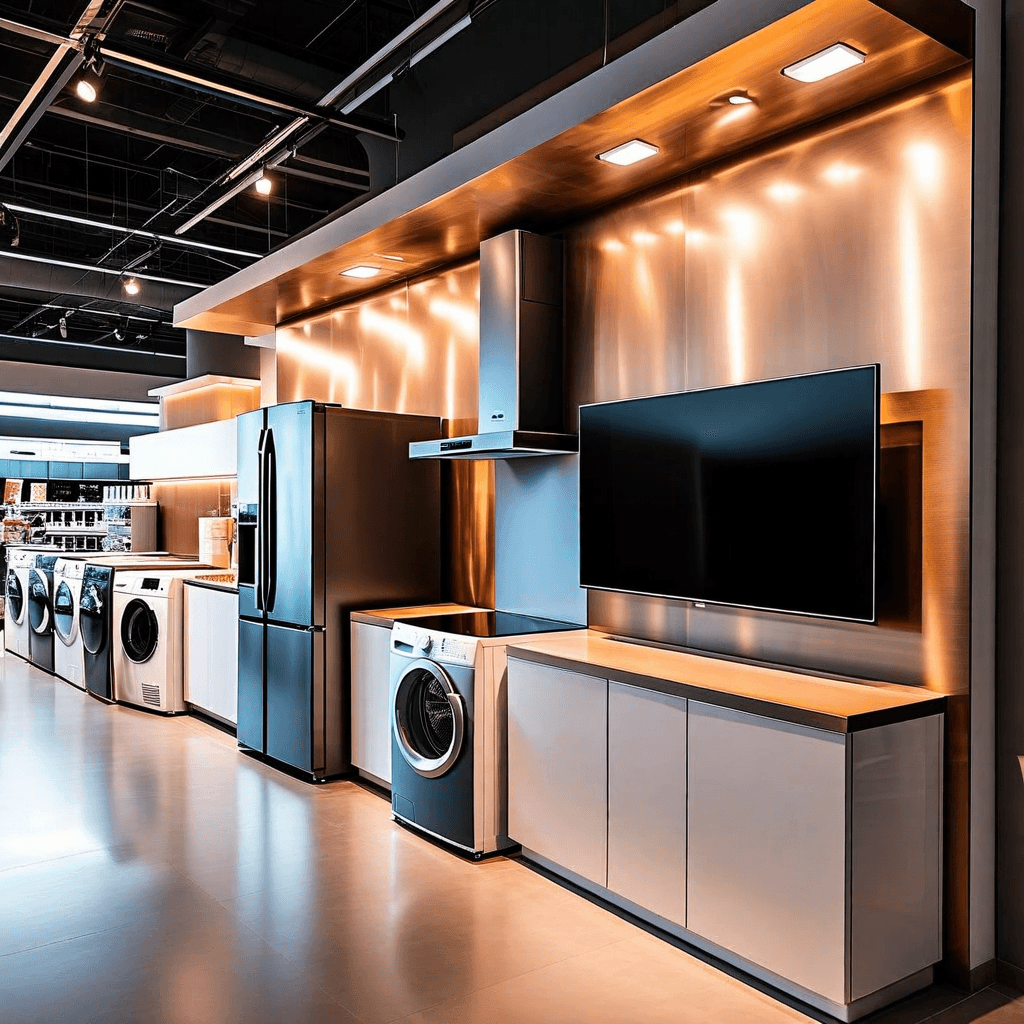
The commodity exposure differs significantly across product categories. Compressor-based products like air conditioners and refrigerators face high sensitivity to copper and aluminum prices. These products also showed greater vulnerability to revenue seasonality, with fixed cost absorption structurally impacting margins when demand fluctuates. Premium electronics, particularly TVs, carry different risks—primarily display panels (29% of TV costs), semiconductors, and currency depreciation due to high import content in bill of materials. Transcripts +3
Why Did Home Entertainment Outperform?
The Home Entertainment segment's resilience stems from several factors. Most notably, LG Electronics India commands a dominant 60% market share in OLED TVs as of YTD March 2026. This premium positioning provides pricing power that helps absorb cost pressures. The 19.6% revenue growth in this segment also generated operating leverage, spreading fixed costs over a larger revenue base.
Premium products inherently carry higher margins, providing more cushion against cost inflation. The company's ability to maintain market leadership in the premium TV category, despite broader margin pressures, demonstrates the strength of its brand equity and product differentiation. In contrast, the Home Appliance segment operates in a more competitive mass-market environment where pricing power is limited and price elasticity is higher.
The Import Dependency Challenge
LG India's cost structure remains sensitive to currency movements due to significant import dependency. Overall localisation stands at 58% as of May 2026, up from 45.1% in FY22. This progress is substantial, but roughly 42% of components are still imported, creating exposure to rupee depreciation. InvestorPresentations
The sensitivity varies by segment. TVs import "a lot of BOM cost," particularly display panels and semiconductors, making this segment highly vulnerable to currency fluctuations. Compressor-based appliances have different exposure profiles—more dependent on metals like copper and aluminum, which have seen significant price volatility. The company's management acknowledged that cost pressures from currency depreciation and geopolitical risks persist into FY27. Transcripts +1
FY27 Strategy: Three Pillars of Recovery
Management has outlined a clear three-pronged approach to margin recovery in FY27. First, cost discipline and operational efficiency improvements across non-marketing areas. Second, deepening localisation to reduce import dependency. Third, industry-wide price increases of 7-14% implemented in April 2026 to offset commodity cost inflation.
This represents a significant improvement from the 11.75% margin achieved in Q4 FY26, though the recovery path depends heavily on external factors.
Export Expansion as a Growth Lever
LG India plans to double its export value in FY27, with the Essential Series—launched in October 2025—targeting sales of 1 million units. Exports currently contribute 6-7% of total revenue to 54 countries, primarily refrigerators, washing machines, air conditioners, and compressors. The Essential Series will now be exported to 22 countries across Asia, the Middle East, and Africa.
This export strategy serves multiple purposes. It provides revenue diversification, improves capacity utilisation at manufacturing facilities, and potentially adds higher-margin revenue if export products carry premium positioning. The company is investing ₹5,000 crore in a new Sri City plant in Andhra Pradesh, with production testing starting October 2026 and mass production from December 2026. This facility aligns with the "Make in India for Global" vision and is expected to support both domestic demand and export commitments.
The Two-Track Approach: Premium Plus Essential
LG India is executing a balanced two-track strategy. Track one focuses on expanding the premium portfolio—large-panel TVs, French-door refrigerators, fully automatic washing machines, and 5-star-rated air conditioners. Track two strengthens the Essential line-up, targeting Tier 2 and Tier 3 markets and first-time buyers through value engineering and smart design. InvestorPresentations
This strategy influences the revenue-quality mix. Premium products drive higher margins but lower volumes. Essential products generate volume growth at lower price points. The challenge is balancing the mix to achieve both revenue growth and margin recovery. Management expects Essential Series to sell over 1 million units in FY27, providing scale benefits that could improve operating leverage.
The Geopolitical Wildcard
Perhaps the most critical factor for FY27 margin recovery is the external environment. Management expects commodity and currency pressures to be temporary, easing as geopolitical uncertainties stabilise. This assumption underpins their optimistic margin outlook. InvestorPresentations
Commodity price forecasts for 2026 suggest some relief. The World Bank projects base metal prices to remain broadly stable in 2026 after modest gains in 2025, with metals and minerals expected to be broadly stable to slightly lower. Copper, a key input for appliances, is expected to see prices consolidate or decline modestly in 2026 as supply growth from new mines and slower Chinese industrial activity cap upside.
This uncertainty creates a wide range of possible outcomes for LG India's margin recovery trajectory.
What Lies Ahead
The near-term outlook suggests gradual margin normalisation as industry-wide price increases take effect and commodity pressures potentially ease. Q4 FY26 EBITDA margins improved 7.0% quarter-on-quarter to 11.7%, showing early signs of recovery. Management remains optimistic about margin improvement while maintaining sharp focus on inflation and input costs. InvestorPresentations
The success of LG India's FY27 strategy hinges on several factors. The Sri City plant reaching scale will accelerate localisation and reduce import dependency. The Essential Series export expansion must gain traction in target markets. Premium demand must sustain to support margin quality. And critically, geopolitical conditions must stabilise to allow commodity prices to moderate.
If these factors align, LG India could achieve its guidance of early teen-digit EBITDA margins in FY27. If headwinds persist longer than expected, margin recovery may be delayed. The company has demonstrated resilience through a challenging quarter, but the path forward depends as much on global macroeconomic conditions as on its strategic execution.