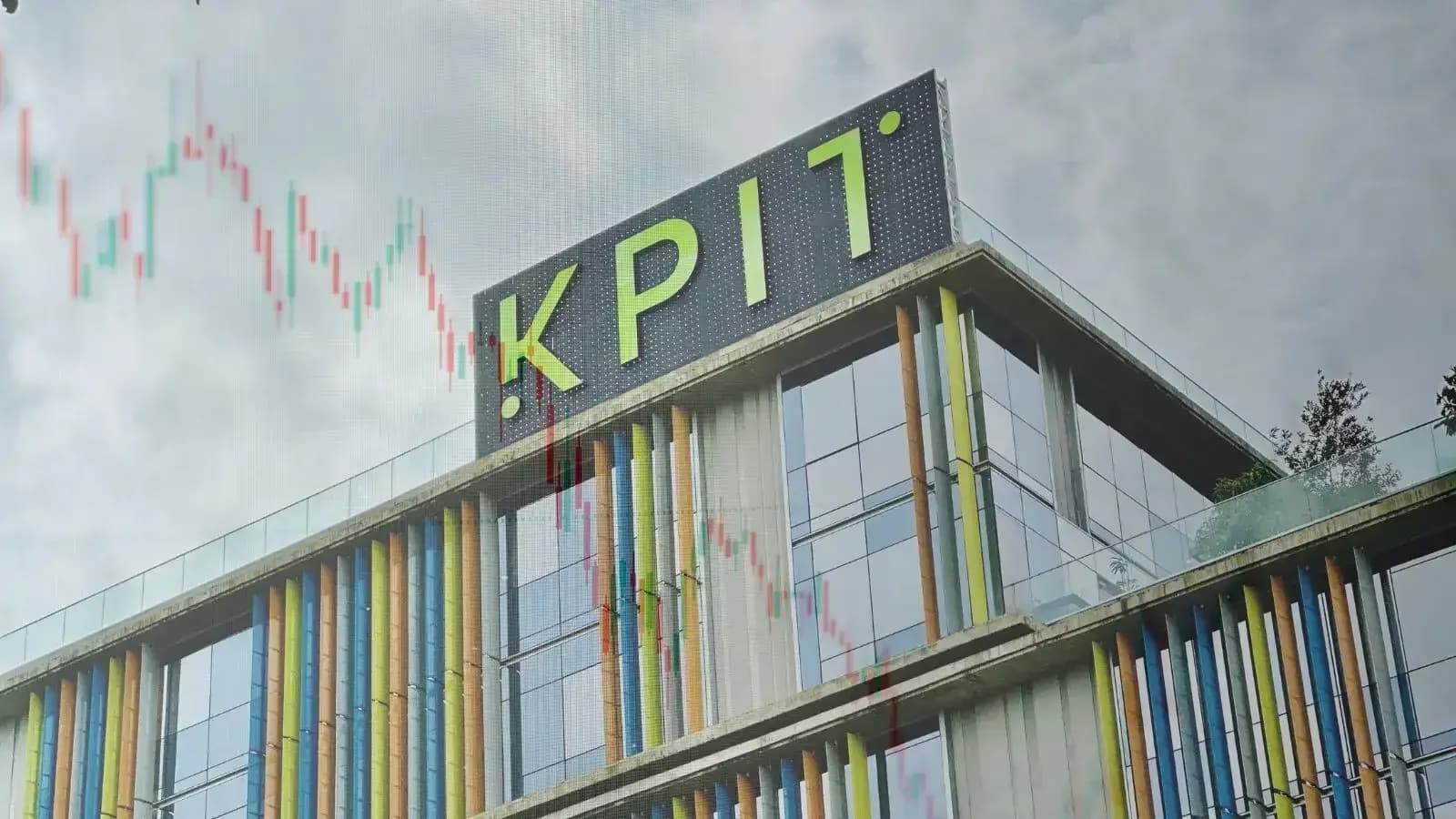
KPIT Technologies delivered a jolt to investors in late June 2026. The company warned of an unexpected revenue decline in Q1FY27—its first in 23 consecutive quarters. The culprit? Sudden spending cuts by major European automakers like BMW and Volkswagen, who issued profit warnings and immediately slashed discretionary technology budgets. The stock crashed 16-17% in a single day, hitting a 52-week low and wiping out nearly Rs 5,061 crore in market capitalization. This wasn't just a bad quarter; it broke a six-year growth streak and raised uncomfortable questions about management's visibility into its largest clients.
Why Europe Matters: The Concentration Risk
The pain is acute because KPIT is heavily exposed to Europe. The region contributes roughly 48% of total revenue, with the UK & Europe segment alone accounting for 53.67% in Q3FY26. BMW alone represents about 12% of KPIT's revenue. When these giants sneeze, KPIT catches a cold. The European automotive sector is facing a perfect storm: economic stagnation (Germany's GDP contracted in 2023 and 2024), EV transition costs, intensifying Chinese competition, and production costs that are 30% higher than in China. Volkswagen, for instance, is planning up to 100,000 job cuts and even considering factory closures. This regional concentration means KPIT's fortunes are tied to Europe's cyclical health, making it vulnerable to sudden shifts like the one that just occurred.
The Immediate Impact: Margins Hit Harder Than Revenue
The numbers look manageable on the surface—KPIT expects only a 1% year-on-year decline in USD-reported revenue for Q1FY27. But the real damage is on the bottom line. EBITDA and net profit margins are expected to decline sequentially by more than the revenue drop. This is classic negative operating leverage: fixed costs like employee salaries and infrastructure remain constant while revenue falls, and there's no time to optimize costs in a single quarter. Analysts have slashed targets, with JM Financial cutting its price target by 28% and warning that FY27 will likely be a "soft year" with recovery pushed further into FY28.
The Off-Highway Bet: Diversifying Beyond Passenger Cars
KPIT isn't sitting idle. The company is strategically pivoting toward the off-highway commercial segment—trucks, agriculture, mining, and construction equipment. This segment grew 18% year-on-year in FY26, and KPIT secured a major $50+ million strategic partnership with a global off-highway equipment leader for software-defined transformation. Management sees this as an "early move" in a market that's less cyclical than passenger vehicles. However, the timeline is realistic: meaningful revenue contribution from this segment is expected over a 2-3 year horizon, not an immediate fix for Q1FY27's weakness. Transcripts +2
Product Business: The Stability Engine
Perhaps the most promising near-term stabilizer is KPIT's shift toward products and solutions. The company is intentionally moving away from time-and-material contracts toward fixed-price, outcome-based deals. Over 80% of new contracts are now fixed price, and the fixed-price revenue mix has increased to 66% from 59% year-over-year. Management projects 30% year-on-year growth in the solutions and products business for FY27, with a long-term target of 50% of revenue from this segment. Products like the KPIT Mobility Intelligence Product (Beacon) are already deployed in multiple OEMs, creating more predictable recurring revenue streams that are less dependent on individual client project decisions. Transcripts +2
AI and Autonomous Driving: The Long-Term Growth Engine
KPIT is making substantial bets on the future. The company has built a separate organization for AI technology development, invests 5% of revenue in R&D on top of technology investments, and has deployed $400 million in strategic M&A to create a "full stack story". More than 75% of ongoing programs now incorporate AI-driven applications. However, the autonomous driving space faces near-term headwinds—many new architecture programs are delayed, and growth has been "lower than expected". The real near-term opportunity lies in digital cockpit solutions, where demand is robust across US, Europe, and Japan. KPIT is currently engaged with 3 OEMs for digital cockpit work and expects to expand to 5 OEMs soon. Transcripts +4
Competitive Moats: Why KPIT Can Win
Despite the current turbulence, KPIT maintains strong competitive advantages. The company has 25+ years of automotive expertise across 2,000+ vehicle production programs, making it the "most preferred partner" for many OEMs. Its strategic partnership with Cymotive, an Israeli cybersecurity firm co-founded by CARIAD (Volkswagen's software arm), is particularly significant. The $60-120 million acquisition strengthens KPIT's end-to-end cybersecurity offerings just as UN Regulation 155 mandates certified cybersecurity management systems across the vehicle lifecycle. This creates a compliance-driven revenue stream that's less cyclical than discretionary engineering projects. InvestorPresentations +1
The Market's Skepticism: Why the Stock Crashed
Investors didn't buy management's assurance that this is a "short-term phenomenon". The skepticism is understandable. Management admitted the impact was "not seen coming earlier" and was "realized only in recent weeks"—raising questions about visibility into its largest clients. Moreover, KPIT indicated Q2FY27 revenue would be similar to Q1FY27, extending the weak period. The stock had already declined 58% from its 52-week high before this news, suggesting structural issues beyond just one bad quarter. Passenger vehicles, which make up roughly three-quarters of KPIT's revenue, had already posted multiple consecutive quarters of sequential decline even before the European OEM shock.
Recovery Indicators: What to Watch For
The path to recovery will have clear milestones. In the near term (Q2-Q3 FY27), investors should watch for revenue stabilization and margin recovery as cost optimization measures take effect. Medium-term signals include double-digit sequential growth in Q3 and Q4 FY27, EBITDA margin recovery to 20%+ levels, and the off-highway segment becoming a meaningful revenue contributor. Long-term success will be measured by achieving 50% of revenue from products and solutions, successful integration of strategic acquisitions like Cymotive, and market cap recovery toward previous highs of Rs 20,000+ crore.
The European OEM Timeline: When Does Spending Return?
European automakers aren't likely to resume meaningful technology investments overnight. The European automotive software market is projected to grow from USD 6.94 billion in 2026 to USD 12.59 billion by 2034 (CAGR 8.53%), but this growth will be back-ended. Near-term (2026-2027) will focus on cost optimization and efficiency improvements with measurable short-term results. Medium-term (2028-2030) should see gradual return to strategic investments as macro conditions stabilize and EV transition costs decrease. KPIT expects H2FY27 recovery, but analysts believe this may be optimistic—the real convergence between KPIT's expectations and European OEM spending patterns likely won't occur until FY28.
The Outsourcing Paradox: Pain Today, Gain Tomorrow?
Here's the irony that offers long-term hope: cost-cutting by European OEMs typically leads to increased outsourcing. Historical precedents, including COVID-19, show that client outsourcing and offshoring activity accelerates after initial slowdowns. The industry faces a massive talent shortage—reports predict over 1 million tech professional shortages in the US and UK alone. Modern vehicles require software that accounts for 50% of development costs, creating complexity that OEMs cannot handle in-house. As they cut internal costs, they'll increasingly turn to partners like KPIT who can take full ownership of programs and deliver end-to-end solutions. The question isn't whether outsourcing will increase—it's whether KPIT can capture its fair share when the tide turns.
The Verdict: A Test of Resilience, Not a Collapse of Fundamentals
KPIT Technologies is facing a genuine test. The European OEM slowdown is real, the margin pressure is severe, and the recovery timeline is uncertain. But the core business remains intact. Client relationships are strong with no major contract cancellations. The strategic investments in AI, cybersecurity, off-highway vehicles, and products position KPIT well for the next phase of automotive industry transformation. The stock's 49% decline from its 52-week high offers an improved risk-reward for long-term investors who can weather near-term volatility. This isn't a structural failure—it's a performance-linked tactical dip in a company that remains a niche player in the secular growth story of Software-Defined Vehicles. The next 2-3 quarters will be critical. If KPIT can execute on its H2FY27 recovery guidance and demonstrate that its strategic bets are paying off, the current pain could prove to be a valuable buying opportunity in a long-term winner.