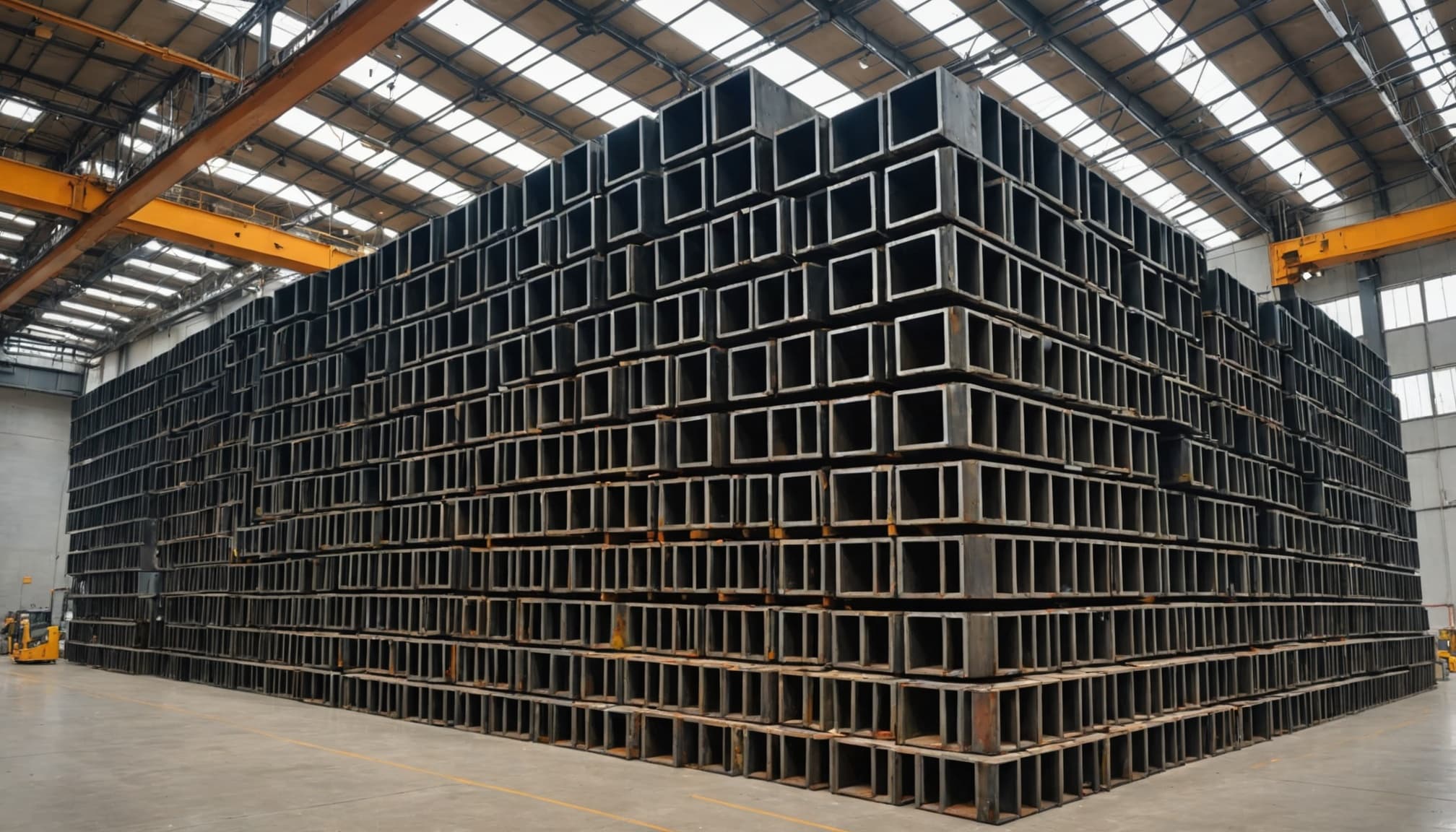
The B2B commerce platform, which turned profitable in Q1 FY27 with ₹14.2 crore profit, represents India's largest steel-selling platform with 2.4 million metric tonnes of annual distribution. The IPO proceeds will be strategically deployed to accelerate growth across multiple business verticals while strengthening the company's competitive positioning in the rapidly digitizing B2B commerce landscape.
Capital Deployment Strategy
The ₹1,300 crore fresh issue proceeds will be allocated across four strategic priorities. The largest allocation of ₹500 crore (38.5%) will strengthen JSW One Finance, the company's NBFC subsidiary, to augment its capital base for expanding embedded lending operations. This capital will support the subsidiary's current monthly disbursement of approximately ₹500 crore in working capital loans to MSME customers. A significant ₹350 crore (26.9%) is earmarked for technology and platform development to enhance digital capabilities, AI-powered order matching, and logistics optimization. Another ₹125 crore (9.6%) will fund marketing and brand-building activities through JSW One Distribution to accelerate customer acquisition. The remaining ₹325 crore (25%) will be available for general corporate purposes, including potential inorganic growth opportunities.
Revenue Diversification and Margin Expansion
JSW One Platforms' growth strategy focuses on expanding beyond its core steel and cement focus into broader construction materials including pipes, tubes, bitumen, and paints.
The embedded financing business through JSW One Finance represents a high-margin revenue stream with lending spreads of 8-12%, while also creating customer lock-in through integrated credit solutions.
Valuation and Competitive Positioning
This valuation positions the company between IndiaMART, which trades at 18x P/E, and consumer e-commerce platforms like Nykaa at 8.5x EV/Revenue. The company's strong competitive differentiation justifies this premium valuation through several key advantages: deep integration with JSW Group's manufacturing capabilities providing structural supply chain advantages, a full-stack business model combining commerce, financing, logistics, and private labels, and embedded financing that creates customer stickiness. The platform serves 95,611 registered customers across 6,963 serviceable pin codes, with FY26 GMV of ₹18,597 crore representing 48% YoY growth.
SEBI Regulatory Requirements and Timeline
The DRHP filing triggers SEBI's comprehensive review process under the enhanced ICDR Amendment Regulations 2026, which mandate strengthened disclosure requirements. Key requirements include detailed financial disclosures covering three years of audited financials, KPI disclosures for three years preceding the filing, comprehensive risk factor disclosures without promotional language, and extensive related party transaction disclosures given JSW Group's 81.52% stake. The company must also demonstrate compliance with eligibility criteria including minimum net tangible assets of ₹3 crore in each of the preceding three years and positive net worth. Given the recent profitability turnaround and complex group structure, SEBI may seek additional clarifications, potentially extending the timeline to 6-9 months from DRHP filing to IPO launch. The observation letter from SEBI is valid for 12 months, providing flexibility in timing the market launch.
Financial Metrics Supporting IPO Timing
JSW One Platforms' financial performance provides compelling justification for the IPO timing. Revenue has grown from ₹1,422 crore in FY24 to approximately ₹4,000 crore in FY25, and further to ₹5,743.4 crore in FY26, representing 45% YoY growth. More critically, the company has demonstrated a clear profitability trajectory, narrowing losses from ₹227 crore in FY24 to ₹217 crore in FY25 to ₹106.4 crore in FY26, before achieving profitability of ₹14.2 crore in Q1 FY27. GMV has scaled from ₹12,500 crore in FY25 to ₹18,597 crore in FY26, demonstrating strong platform traction. The company has raised approximately ₹780 crore across two funding rounds, achieving unicorn status with a $918 million valuation in May 2025 at a 6.0x revenue multiple. The IPO represents an opportunity to access significantly larger capital than private markets can efficiently provide at potentially better valuations, while also creating liquid currency for future acquisitions and providing exit opportunities for early investors.
Strategic Rationale for Public Markets
The decision to pursue public markets versus continued private funding is driven by several factors. The ₹3,054 crore IPO size significantly exceeds typical private funding rounds of $50-300 million, making public markets the optimal choice for accessing this scale of capital.
Beyond capital, public listing provides strategic advantages including acquisition currency for inorganic growth, enhanced brand credibility with customers and partners, and straightforward ESOP monetization for talent retention. The timing aligns with strong India IPO market conditions, with 220 IPOs raising ₹1.78 lakh crore in 2025, and growing investor interest in B2B commerce platforms as peers like Zetwerk and OfBusiness also pursue public listings.