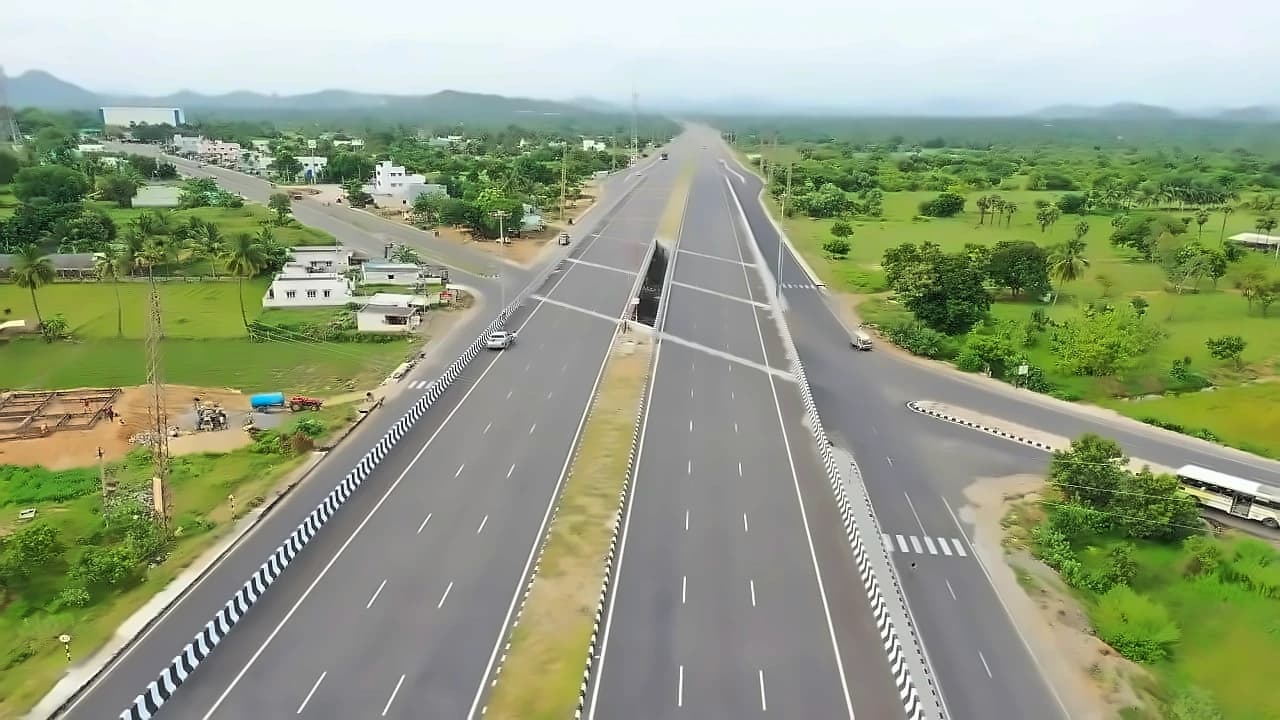
India is quietly pulling off one of the most sophisticated energy plays in the world. Despite importing 90% of its crude oil, the country has become a powerhouse exporter of refined petroleum products. The engine behind this transformation? A massive capacity expansion by Indian Oil Corporation that’s about to reshape global refining dynamics.
The Expansion: Numbers That Move Markets
The company’s total refining capacity will jump from 80.75 million metric tonnes per annum (MMTPA) to 98.05 MMTPA by December 2026—an addition of 17.3 MMTPA. The breakdown is precise: Panipat grows from 15 to 25 MMTPA, Vadodara from 13.7 to 18 MMTPA, and Barauni from 6 to 9 MMTPA. With Rs 53,500 crore already deployed and projects 87-93% complete, the timeline is aggressive but on track. InvestorPresentations
This expansion is the primary driver behind projections that India’s petroleum product exports will surge 25% from the FY25 baseline of $44.4 billion. The math is straightforward but powerful: India’s current installed capacity stands at 258.1 MMTPA against domestic consumption of 239 MMTPA. However, Indian refineries routinely operate at 105-115% of nameplate capacity, pushing actual production to nearly 300 million tonnes annually. That creates roughly 61.5 million tonnes of exportable surplus—the foundation of India’s export engine.
The Export Revenue Shift: From 5% to 15%
IOCL currently exports about 5.111 MMT of petroleum products, representing roughly 5.4% of total sales. Management has explicitly targeted increasing this export share to 15% of total revenues. The causal mechanism is volume-based: the 17.3 MMTPA capacity addition creates substantial surplus production. Even after accounting for domestic demand growth (India’s GDP is growing 2x+ higher than global averages), a significant portion of this incremental capacity will be available for export. InvestorPresentations +1
The financial implications are substantial. IOCL’s current export revenue runs around $4 billion annually. Tripling the export share to 15% could push this to $12+ billion annually. At current refining margins—Gross Refining Margins have recovered to $8.41 per barrel from $3.69 last year—this expansion could generate payback periods of 3-5 years, aligning with industry standards for capacity expansion projects.
The Reliance Comparison: David vs. Goliath Dynamics
The competitive landscape is dominated by Reliance Industries and its 70 MMTPA Jamnagar complex—the world’s largest single-site refinery. Reliance currently accounts for nearly 70% of India’s refined fuel exports, leveraging massive scale advantages, operational flexibility (processing 200+ crude grades), and established export infrastructure. Transcripts
The comparison reveals different competitive advantages.
Reliance’s single-site concentration creates infrastructure efficiencies and dedicated export capabilities that IOCL is still developing. However, IOCL’s multi-refinery network provides geographic diversification and domestic market access that Reliance cannot match. InvestorPresentations +1
The Allocation Dilemma: Domestic First, Export Second
The critical factor determining export success is domestic demand. IOCL management has been explicit: “We don’t work with a fixed export target, and our priority remains domestic first”. This isn’t just corporate policy—it’s government mandate. During supply disruptions, PSU OMCs absorb losses (around Rs 550 crore daily) to protect retail consumers, demonstrating the domestic-first commitment.
The constraint mechanism is mathematical. Current domestic consumption stands at 243.2 MMT against 258.1 MMTPA capacity. With refineries running at 110% utilization, actual production reaches ~284 MMT, leaving ~41 MMT for exports. Post-expansion, capacity grows to 275.4 MMTPA, but if domestic demand grows 4-5% annually (reaching 260-265 MMT by 2027-28), the exportable surplus could remain constrained around 38-43 MMT. IOCL management has warned: “If the demand rises significantly in India, then we may not have a major exportable surplus on a sustained basis”.
The Global Context: Perfect Storm of Opportunity
The timing of IOCL’s expansion is strategically brilliant. Global refining capacity additions remain severely constrained—only ~1 million barrels per day expected in 2026, heavily skewed toward Asia with India leading at ~560kbd. Meanwhile, refinery closures in developed countries have removed 4.8 million BBL/d of capacity since 2020. AnnualReports
Geopolitical disruptions have amplified these constraints. The Strait of Hormuz disruption in March 2026 blocked roughly 20% of global seaborne oil trade, creating what the International Energy Agency called the largest supply disruption in history. Russian supply constraints from sanctions and drone attacks have further tightened markets. These factors have driven refining margins to multi-year highs, with diesel margins rallying and gasoil cracks reaching $35.4. Transcripts
For Indian refiners, this creates a window of opportunity. Limited global capacity additions combined with supply disruptions support elevated refining margins, making exports economically viable. IOCL’s expansion comes online precisely during this supply-demand imbalance, allowing the company to capture peak margins while establishing market position. AnnualReports
Operational Excellence: Running Beyond Capacity
The foundation of India’s export success is operational excellence. Indian refineries achieve 105-115% capacity utilization through sophisticated debottlenecking—systematic elimination of process constraints—and advanced process optimization. IOCL’s Q4 FY26 utilization reached 113.9%, with record crude throughput of 19.7 MMT. InvestorPresentations
Reliance’s Jamnagar complex demonstrates the gold standard: achieving record throughput of 80.5 MMT in FY25 while maintaining high utilization despite geopolitical disruptions. The refinery’s ability to process 200+ crude grades provided crucial flexibility during the Strait of Hormuz crisis, allowing rapid sourcing from Venezuela, Russia, Brazil, and Mexico when Middle East supplies were disrupted. Transcripts +1
The Financial Equation: Returns and Risks
IOCL’s expansion represents a substantial capital commitment with significant return potential. The capital intensity runs approximately Rs 4,350 crore per MMTPA of capacity addition. At current refining margins and projected export volumes, the investment could generate payback periods of 3-5 years under base case assumptions.
However, risks loom. Refining margins are cyclical—Boston Consulting Group noted downstream earnings dropped 50% in 2024 from 2023. Domestic demand growth could constrain exportable surplus. And global capacity additions could accelerate, easing current supply tightness.
The strategic value extends beyond immediate returns. This expansion positions IOCL to capture export opportunities during the current window of constrained global supply, while strengthening India’s position as a global refining hub. The foreign exchange earnings potential—adding $8-12 billion annually to India’s export revenues—provides significant macroeconomic benefits.
The Verdict: Calculated Risk in a Constrained World
IOCL’s expansion is a bet on the continuation of favorable global refining dynamics. The company is investing heavily during a period of structural supply tightness, aiming to capture elevated margins while establishing export market position. The success of this strategy depends on sustaining favorable margins, achieving targeted export volumes, and maintaining high capacity utilization.
The competitive landscape will evolve as IOCL’s expanded capacity comes online. While Reliance’s Jamnagar complex will maintain advantages from single-site concentration and established export infrastructure, IOCL’s larger total capacity and domestic foundation provide different strengths. The next 2-3 years will reveal whether this $11 billion bet transforms India’s refining landscape or faces headwinds from normalizing margins and rising domestic demand.
For now, the pieces are aligning: constrained global supply, geopolitical disruptions supporting margins, and strategic capacity expansion timed to capture the opportunity. India’s paradox—importing 90% of its crude while becoming a refined product export powerhouse—may just be the beginning of a larger transformation in global energy dynamics.