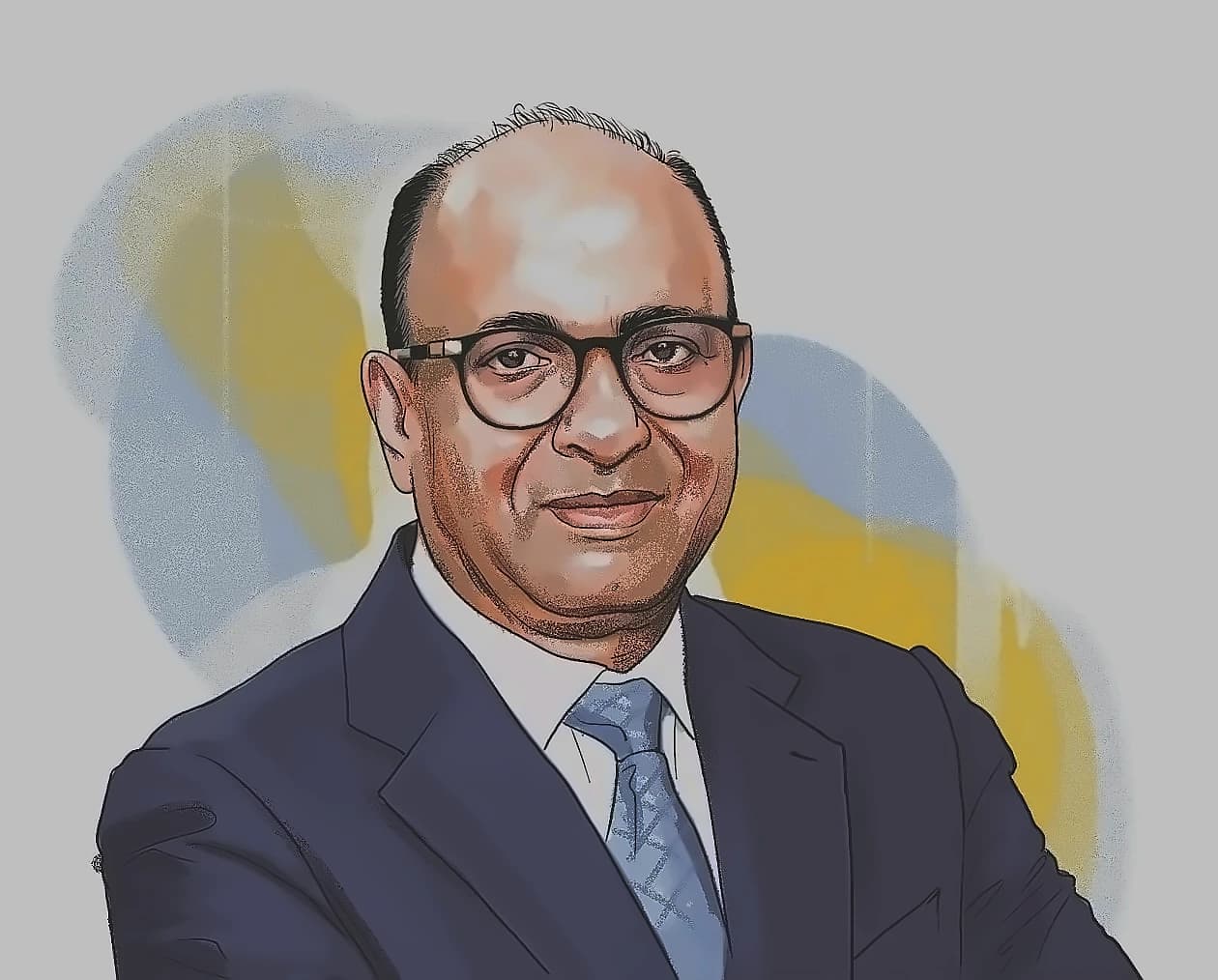
** The decision followed an enquiry report submitted by an Enquiry Officer, a former judge of the Bombay High Court, dated November 18, 2026. The bank also decided to invoke applicable malus and clawback provisions retrospectively from March 24, 2020—the date Kathpalia was first appointed as MD and CEO.
The bank has not disclosed the specific findings of the enquiry or the exact breaches that triggered the termination. However, the action follows a series of governance issues that surfaced in 2025. Kathpalia resigned on April 29, 2025, after the bank disclosed accounting discrepancies involving derivative trades, which resulted in an estimated USD 230 million (approximately ₹1,959.98 crore) hit to its accounts. This disclosure triggered a crisis at the private-sector lender, weighing on its share price and attracting regulatory scrutiny.
Subsequently, disciplinary proceedings were initiated against Kathpalia under the bank's internal code of conduct. He was placed under suspension with effect from June 18, 2025, pending completion of the proceedings. The latest decision formally ends his employment with the lender and follows the conclusion of the internal inquiry.
The Regulatory Context
Neither the bank's filing nor the coverage cites specific Reserve Bank of India (RBI) supervisory findings as the direct basis for the clawback. The action rests on the internal enquiry report. However, the bank's malus and clawback policy follows the RBI compensation framework, which took effect on April 1, 2020. This framework requires Indian commercial banks to write malus and clawback clauses into the contracts of Key Managerial Personnel and Whole-Time Directors. Other
A malus clause allows a bank to cancel unpaid variable pay after a control failure, while a clawback clause lets the board demand back pay already paid out once a control failure, non-compliance, or misreporting comes to light later. The bank's policy applies to whole-time directors, the CEO, senior management personnel, material risk takers, and risk controllers. The arrangements have a 3-year look-back period. Other +1
Why March 24, 2020?
The bank has invoked clawback provisions from March 24, 2020, which is the date of Kathpalia's initial appointment as MD and CEO. This timing means the clawback potentially covers his entire tenure at the helm. The filing does not state that the misconduct began in 2020, nor does it specify the period during which the alleged breaches occurred.
Using the appointment date keeps the bank's recovery options as wide as possible while the quantum is worked out. It suggests the Board wants to examine all variable pay during his tenure, but it doesn't show how long the misconduct lasted. Some earlier reports suggested a clawback period between December 2023 and March 2025, but the November 2026 decision is wider than that reported window.
The Quantum of Recovery
The bank has not disclosed the amount it intends to recover from Kathpalia. The filing doesn't give an amount or say how the provisions will be applied. Earlier reporting indicated that the recovery could cover fixed salary, performance bonuses, and stock options paid to both Kathpalia and former Deputy CEO Arun Khurana.
According to the bank's annual reports, Kathpalia's total fixed pay was about ₹7.50 crore a year. He also exercised stock options: 66,000 in FY21, 68,000 in FY23, 1,98,000 in FY24, and 2,48,000 in FY25. Variable pay for FY2021-22 was approved at ₹4.875 crore, and for FY2022-23 at ₹6.00 crore, with significant portions deferred and linked to shares. Annual Report +2
Actual recoverable value would depend on what counts as recoverable (cash, vested and exercised ESOPs, or only deferred pay), on tax treatment, and on legal challenge. Employees can challenge such actions legally, and any dispute over an amount that hasn't been disclosed could run for years.
Financial Statement Impact
The bank hasn't disclosed accounting treatment, so the impact on financial statements is based on general accounting principles. Unvested deferred pay and options that are cancelled (malus) could reverse expense already booked. Recovery of cash already paid would most likely be recorded when it is virtually certain. Until then, there may be no P&L effect. Disputed recoveries would typically be treated as contingent assets, which are generally not booked until realisation is virtually certain. Annual Report
Even a recovery in the tens of crores would be small against Q2 FY27 consolidated net profit of ₹1,241.79 crore (Q1 FY27: ₹1,037.05 crore). The clawback should have no direct impact on net interest margin (NIM), which was 3.23% in Q2 FY27 against 3.57% in Q1 FY27, or return on assets (RoA), which was 0.87% in Q2 FY27. The ₹1,959.98 crore derivative-accounting hit that preceded this action was far larger. [stock data] Investor Presentation
Leadership Stability and Succession
The termination looks unlikely to disrupt leadership. Kathpalia left the CEO role in April 2025, and a new team has been in place for months. Rajiv Anand has been MD & CEO since August 25, 2025, on a three-year term to August 24, 2028. He was an external appointee, the first outside CEO in over a decade.
After the April 2025 resignations, the RBI approved a Committee of Executives under Board oversight, which was wound up after Anand's appointment.
The bank had onboarded a Head of Retail Banking, Head of Global Markets, Chief Risk Officer, and Chief Information Officer. Other +1
The RBI also approved Ganesh Sankaran (Wholesale Banking) and Jagdeep Mallareddy (Consumer Banking) as Executive Directors for three years, from August 4, 2026 to August 3, 2029. This gives the CEO a visible bench. The Board has been strengthened with several independent directors added in 2026, including Nilesh Vikamsey, Ravindra Garikipati, and Mini Ipe. Other +1
Operational Risks and Governance Remediation
The key operational risks include litigation from Kathpalia, outcomes of the SFIO and SEBI probes, and the unresolved external review of the derivative accounting. The SFIO investigation began in December 2025, and SEBI's insider-trading probe was still open as of November 2025 reporting, with Kathpalia and Khurana barred from securities markets until it concludes. Other
On internal controls, the bank has taken significant remediation steps. The Board set up an executive-level Project Management Group to strengthen systems, processes, and internal financial controls, reduce manual accounting entries, and tighten reconciliation controls. The bank says these measures have been "implemented effectively." Issues remediated include derivative trades of ₹1,959.98 crore, microfinance interest and fee income of ₹846.40 crore, and manual entries in Other Assets and Other Liabilities of ₹595.00 crore. Annual Report +1
However, the FY25 auditor gave an adverse opinion on internal financial controls because of material weaknesses. The bank has not yet disclosed whether these weaknesses have been fully resolved. A subsidiary, Bharat Financial Inclusion Ltd, also found irregular vendor payments of ₹34.17 crore tied to microfinance NPA management, with its auditor issuing a qualified opinion citing governance lapses and management override of controls. Annual Report +1
Investor Confidence and Competitive Positioning
The termination is unlikely to change the valuation or customer behaviour much. The bank's problems are already priced in. The share price closed at ₹1,003, up 8.59% on Friday, with a 20.93% one-year return. The 2025 reference point was a 27% one-day fall to ₹655.95 on the derivative disclosure, and brokerages cut ratings and targets. [stock data]
The high P/E reflects depressed earnings, not a rich valuation. Its FY26 return on equity was 1.36%, but the Q2 FY27 presentation shows RoE of 7.37% and RoA of 0.87%, so profitability is recovering. [stock data] Investor Presentation
Deposits of ₹4,28,832 crore were up 10% YoY and 3% QoQ, with a liquidity coverage ratio (LCR) of 127%. This indicates stable deposit growth through the leadership transition. Credit ratings remain supportive, with CRISIL AA+ and IND AA+ on infrastructure and Tier 2 bonds, and Moody's Ba1 on the senior MTN programme. One agency lifted the governance profile to G-3 from G-4 after the leadership overhaul. Investor Presentation +3
Management attributes margin pressure to FCNR(B) mobilisation and acknowledges that digital capabilities lag peers. The termination closes a chapter but doesn't close these gaps. Competitive recovery depends on deposit franchise, margins, asset quality, and digital capability. [stock data] Investor Presentation +1
The Road Ahead
IndusInd Bank's decision to terminate Kathpalia and invoke clawback provisions marks a significant step in its governance overhaul. The action demonstrates a zero-tolerance stance on misconduct and aims to establish institutional accountability. However, the bank still faces challenges: unresolved regulatory probes, potential litigation, and the need to fully restore internal control credibility.
For investors, the key metrics to watch will be the resolution of the SFIO and SEBI investigations, any disclosure on the clawback amount, and evidence of sustained improvement in asset quality and margins. For the bank itself, the priority is to move beyond legacy issues and focus on building a stronger, more trusted institution under its new leadership team. Other