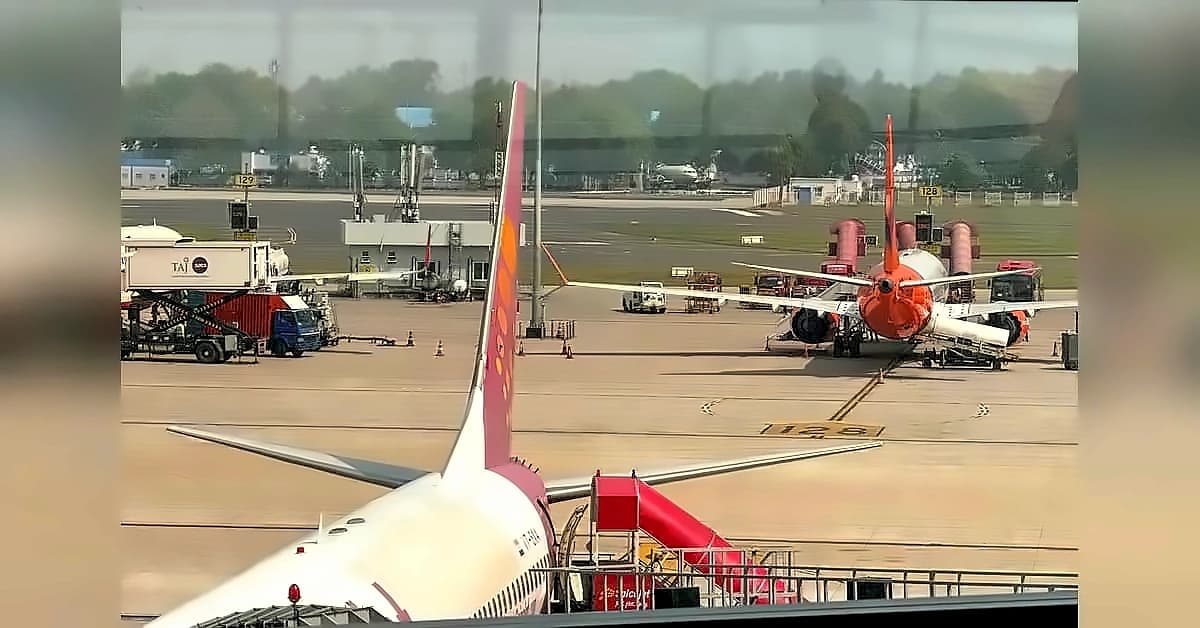
IndiGo's ambitious long-haul international expansion has hit its first significant turbulence. The airline recently announced it will suspend Manchester flights from August 31, 2026, less than a year after launching the route, and return one of six Boeing 787-9 Dreamliners leased from Norse Atlantic Airways. The reason? An "unfavourable cost and operational environment" that has made the route financially unviable despite strong passenger demand.
This isn't a retreat from international ambitions—it's a strategic recalibration. IndiGo is learning that the low-cost model that revolutionized Indian domestic aviation faces very different economics when stretched across continents.
The Perfect Storm of Cost Escalations
Several factors have converged to create a challenging cost environment for IndiGo's long-haul operations. Airspace closures over parts of Europe and the Middle East have forced Indian carriers to take longer, circuitous routes. What should be a 9-10 hour flight from India to Europe now takes 11-13 hours—a 20-30% increase in block time.
Longer flights mean significantly higher fuel consumption. Aviation turbine fuel (ATF) accounts for approximately 40% of an airline's operating expenses, and prices have more than doubled in recent months. IATA's Jet Fuel Monitor indicates over 130% month-on-month increase in fuel prices for the region. This fuel shock compounds with the extended flight durations, creating a double burden on operating costs.
Foreign exchange volatility has added another layer of pressure.
The average exchange rate deteriorated to 88.06 INR/USD in FY26 from 84.43 INR/USD in FY25, with the closing rate reaching 94.56 INR/USD by March 2026. More than 60% of IndiGo's expenses are dollar-denominated, making the airline highly vulnerable to currency depreciation. Transcripts
The Leased Aircraft Strategy: A Costly Bridge
IndiGo's decision to damp-lease six Boeing 787-9 Dreamliners from Norse Atlantic Airways was always intended as an interim solution. The airline couldn't wait for its own Airbus A350 deliveries starting in 2027—it needed to establish market presence now, particularly at slot-constrained European airports like London Heathrow.
The estimated contract value for six aircraft was USD 462 million over the extended term, or approximately USD 77 million per aircraft. Norse Atlantic was entitled to payment for 350 block hours per aircraft each month, with additional charges for excess utilization.
This premium was the price of early market entry. It bought IndiGo valuable time to secure slots, build brand recognition, gain operational experience with wide-body aircraft, and establish partnerships with European carriers. But when cost escalations hit, the lease premium became harder to justify on marginal routes like Manchester.
Demand vs. Economics: The Manchester Paradox
Here's the frustrating part for IndiGo: the Manchester route actually performed well on the demand side.
Passenger load factors were healthy, and cargo performance was particularly strong with loads of 8-10 tons per flight on similar long-haul routes. Transcripts
But demand alone doesn't make a route viable. IndiGo faced limitations on fare increases due to competitive pressures and price-sensitive market dynamics. The airline noted that fully passing through fuel cost increases would have required "substantial fare revisions" that would impact demand. When costs escalate faster than pricing power, even strong demand can't save a route.
The suspension decision suggests that the combined cost escalations pushed the route's total Cost per Available Seat Kilometer (CASK) beyond the maximum threshold that could be covered by realistic fare levels. IndiGo prioritized profitability over market share—a disciplined approach that should serve investors well even if it means temporary retrenchment.
Strategic Shift: Primary Hubs Over Secondary Cities
The Manchester suspension signals a broader strategic pivot. IndiGo is shifting focus toward high-demand primary European hubs like London, Amsterdam, and Paris rather than secondary cities. This makes economic sense for several reasons.
Primary hubs offer higher traffic volumes, better yields, and stronger cargo potential. They're also less sensitive to the cost escalations that have crushed Manchester's economics. When you're paying a premium for leased aircraft and dealing with airspace constraints, you need routes that can generate sufficient revenue to cover these costs.
The airline will continue operating all other long-haul flights as scheduled, maintaining services to Amsterdam, Copenhagen, and London Heathrow. This demonstrates that IndiGo isn't abandoning long-haul—it's concentrating capacity where the economics work.
Financial Implications and Capital Reallocation
Returning one Boeing 787-9 reduces IndiGo's lease commitment by approximately USD 77 million over the contract term, saving roughly USD 5.1 million annually in lease costs. The airline also avoids the associated operating costs for that aircraft—fuel, crew, maintenance, and airport charges.
However, there are one-time restructuring costs associated with contract termination and operational adjustments. And the Manchester route suspension means an estimated revenue loss of INR 200-400 crore annually, plus additional cargo revenue of INR 30-50 crore.
The net effect should be positive for profitability. IndiGo is reallocating capacity from a loss-making route to potentially more profitable ones. The reduced fixed costs improve operating leverage and lower the breakeven load factor required for profitability.
The A350 Future: Better Economics on the Horizon
IndiGo's long-term wide-body strategy centers on 60 Airbus A350-900 aircraft with deliveries starting in 2027.
The A350s will fundamentally improve IndiGo's long-haul economics. Superior fuel efficiency will help mitigate the impact of longer flight times caused by airspace constraints. Extended range capability may provide more routing options to avoid constrained airspace. And owned aircraft eliminate lease premiums while providing asset ownership benefits.
The airline is shifting toward owning aircraft through finance leases rather than operating leases as part of a broader strategy to build asset ownership and reduce long-term costs. This should improve unit economics and financial flexibility over time. Transcripts
What This Means for Investors
IndiGo's Manchester decision should be viewed as a positive signal of management discipline. The airline is demonstrating willingness to cut losses when economics deteriorate, rather than pursuing growth at any cost. This focus on profitability over market share is exactly what investors should want to see.
The disciplined approach to capacity deployment and route selection reflects management's commitment to long-term value creation.
The temporary suspension of Manchester operations doesn't change IndiGo's long-term international ambitions. If anything, it strengthens them by ensuring that expansion happens on a sustainable economic foundation. The airline is learning valuable lessons about long-haul economics that will inform its A350 deployment strategy.
IndiGo remains India's domestic market leader with approximately 64% market share. Its international expansion, while facing near-term headwinds, represents a significant growth opportunity as India's aviation market continues to develop. The current challenges are temporary; the strategic opportunity is enduring.
The Manchester suspension is a tactical retreat designed to fortify the balance sheet. Investors should view this as a commitment to maintaining IndiGo's high-margin profile even if it requires scaling back on secondary international destinations. The long-haul game is a marathon, not a sprint—and IndiGo is pacing itself for the distance.