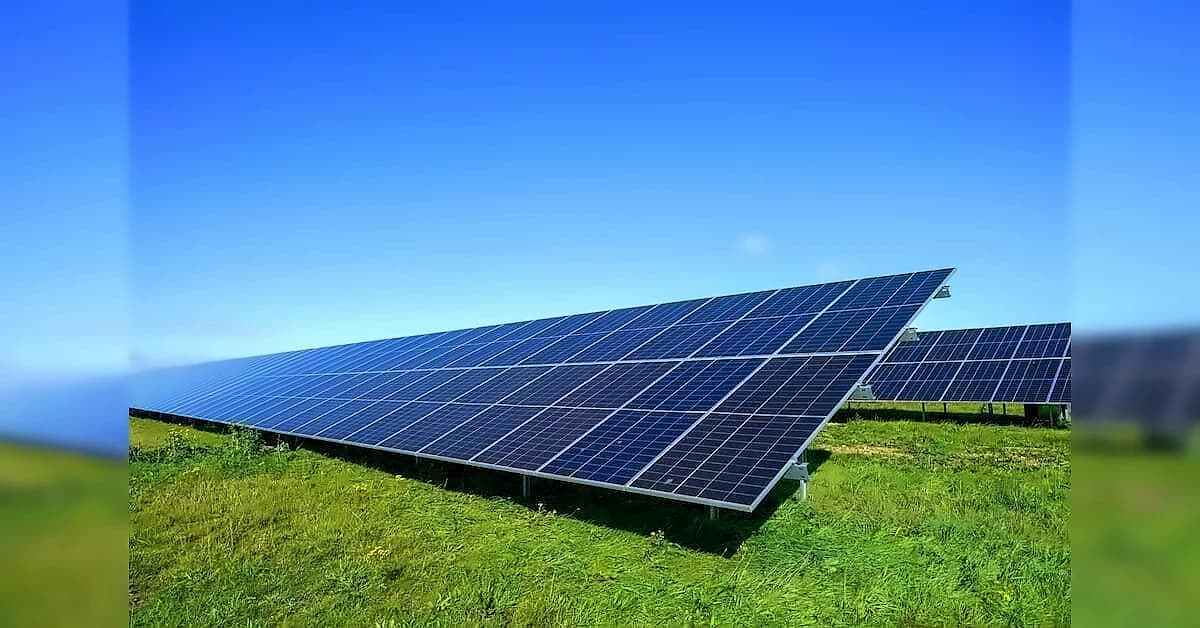
India's solar manufacturing sector delivered a blockbuster performance in FY26, fueled by record domestic installations and a powerful policy tailwind. The country added 45 GW of solar capacity during the year—an 87% jump over the previous year—creating a surge in demand that manufacturers raced to capture. This wasn't just a good year; it was a defining moment that accelerated the industry's structural shift from project developer dominance to manufacturer value capture, with integrated players pulling away from the pack. Transcripts +4
Waaree Energies: The Scale Leader
Waaree Energies emerged as the undisputed leader, reporting FY26 revenue of ₹26,537 crore—a staggering 84% year-on-year surge. This performance wasn't accidental. It was built on a foundation of massive scale advantages that smaller competitors simply cannot replicate. With 25.8 GW of module capacity and 5.4 GW of cell capacity, Waaree operates at a scale that creates structural barriers to entry. The company's ₹53,000 crore order book provides revenue visibility stretching 2-3 years into the future, a luxury that smaller players like Saatvik Green and Oswal Pumps can only envy. AnnualReports +4
The profitability story was equally impressive. Waaree's PAT grew 101% to ₹3,884 crore, driven by margin expansion from backward integration into cell manufacturing. This integration added 300-400 basis points to margins, while operating leverage—EBITDA grew 117% versus 84% revenue growth—demonstrated the power of scale. The company is now executing a ₹30,000 crore investment plan across polysilicon, ingots, wafers, solar glass, battery storage, transformers, and electrolysers. This full-stack integration positions Waaree to capture margins across the entire value chain, creating a moat that module-only manufacturers cannot cross. AnnualReports +3
The Challenger Pack
Premier Energies and Vikram Solar both pursued backward integration strategies, yet their FY26 performance revealed a significant gap. Premier reported revenue of ₹7,824 crore, while Vikram managed ₹4,861 crore. The difference comes down to execution and scale. Premier's 11.1 GW module capacity and early mover advantage in TOPCon cell technology gave it a head start. The company's TOPCon cell line ran at above 90% utilization, a critical factor in maintaining profitability despite rising commodity and freight costs. This high utilization, combined with exceptional silver consumption reduction (down 68% over five years), allowed Premier to sustain margins while peers faced compression. InvestorPresentations +4
Vikram Solar, despite its aggressive expansion plans, operated at a smaller scale with 4.5 GW of module capacity. However, the company delivered the highest PAT growth at 236%, reaching ₹470 crore. This surge was driven by operational efficiencies—yield improvements to 97% versus the 95% industry standard, working capital optimization, and disciplined cost control. Vikram is pursuing the most comprehensive integration roadmap, targeting 15.5 GW modules and 12 GW full-stack integration by FY30, complemented by 15 GWh of battery energy storage capacity. This strategy aims to convert India's solar surge into enduring profitability rather than transient earnings. AnnualReports +8
Emmvee: The Integrated Specialist
Emmvee Photovoltaic Power delivered the highest revenue sensitivity to domestic installations, with FY26 revenue growing 116% to ₹5,050 crore. The company's integrated manufacturing model—100% TOPCon technology adoption with backward integration into cell manufacturing—was the key driver. This model contributed to a remarkable 193% PAT surge to ₹1,082 crore, with EBITDA margins expanding to 34%. Emmvee's disciplined execution, including a 50-60% reduction in silver paste consumption and strong capacity utilization improvements, provided cost structure advantages over non-integrated peers. The company's plan to reach 8.9 GW cell capacity positions it well for the DCR market, though it remains smaller in scale compared to Waaree and Premier. Transcripts +6
Policy: The Great Enabler
The ALMM (Approved List of Models and Manufacturers) framework, cell manufacturing mandates, and import substitution policies were the invisible hands shaping this landscape. All four manufacturers benefited, but Waaree demonstrated the highest revenue correlation with these policy measures. The company's first-mover advantage in cell manufacturing—5.4 GW capacity ahead of ALMM II implementation—allowed it to capture the structural shift toward domestic content requirements. Premier Energies, with its 99% domestic sales focus, also benefited significantly, while Vikram Solar's 99% domestic revenue dependency makes it most vulnerable to policy shifts. InvestorPresentations +6
The 45 GW of capacity additions in FY26 was a direct outcome of this policy support. The PLI scheme attracted ₹48,120 crore in investments, while customs duties and ALMM mandates created guaranteed demand for domestic manufacturers. As the policy framework evolves—with ALMM III for wafers effective from 2028—the competitive dynamics will further favor integrated players. Companies with full value chain control will participate in 95-100% of business opportunities, while non-integrated manufacturers will be relegated to partial access. Transcripts +5
The Consolidation Wave
The revenue and profitability gaps between leaders and smaller players signal accelerating consolidation. Waaree's revenue is 5.8x that of Saatvik Green, but its PAT is 10.9x larger—a clear demonstration of how scale advantages translate into superior profitability through operating leverage and better bargaining power. The industry is evolving toward a concentrated oligopoly where the top 3-5 players capture disproportionate market share. InvestorPresentations +2
Smaller players face margin compression from competitive intensity and rising input costs. In survival mode, they're forced to accept aggressive pricing, while established players with proven track records win the quality-conscious utility and C&I segments. The capital intensity of full integration—rising 10x from module-only to poly-to-module—creates natural barriers that only well-capitalized players can overcome. Transcripts +4
Technology: The Next Battleground
Technology adoption is creating another layer of differentiation. Premier Energies' TOPCon cell line running above 90% utilization provides significant cost competitiveness over manufacturers using older PERC technology. The company achieved efficiency levels of 25.2%, with plans to reach 25.8%—unheard of in India though comparable to Chinese standards. Emmvee's 100% TOPCon focus and research partnerships with Fraunhofer ISE provide specialized expertise, while Vikram Solar is differentiating through XBC technology targeting 25.7-26.2% efficiency. Transcripts +3
As India's solar market matures, efficiency metrics and total cost of ownership will become key differentiators. Waaree's flexible multi-technology architecture offers adaptability, while specialized players like Premier and Vikram pursue technology leadership in specific segments. The competitive landscape will increasingly favor companies that combine technology leadership with manufacturing excellence. InvestorPresentations +1
The Road Ahead
The structural shift from project developer dominance to manufacturer value capture represents a fundamental reconfiguration of India's renewable energy ecosystem. Companies that successfully integrate backward while maintaining technological leadership and operational excellence are positioned to capture disproportionate value. InvestorPresentations +1
Waaree Energies, with its massive scale, comprehensive integration, and ₹53,000 crore order book, is entrenched as the market leader. Premier Energies poses the most immediate competitive threat due to its established manufacturing excellence and strong balance sheet. Vikram Solar has the most ambitious expansion plans and integration roadmap, making it the most credible long-term challenger. Emmvee offers technology differentiation but lacks the scale to seriously challenge Waaree's dominance. InvestorPresentations +6
The most likely outcome is a concentrated oligopoly where Waaree maintains 35-40% market share, while Vikram Solar and Premier Energies emerge as strong #2 and #3 players with 15-20% shares each. Smaller players will either consolidate or specialize in niche segments. For investors and industry observers, the message is clear: the solar manufacturing sector has entered a new phase where scale, integration, and technology leadership determine who wins the race. Transcripts