India's Hydrocarbon Exploration and Licensing Policy (HELP) and Open Acreage Licensing Programme (OALP) were launched with a clear objective: reduce dependence on imported oil and gas by boosting domestic production. Yet nearly a decade later, the results tell a starkly different story. Cumulative investment commitments of $4.36 billion across 172 blocks have yielded negligible production output, with only one small producing field in Gujarat's Cambay basin operational from these efforts .
The contrast with the previous NELP regime is revealing. Between 1999 and 2010, nine NELP rounds attracted $36 billion in investment and resulted in 177 oil and gas discoveries . Under OALP, $4.36 billion has produced just 14 discoveries . This 88% reduction in investment efficiency underscores a fundamental structural problem in India's upstream sector.
Production Decline Amidst Investment Surge
The most alarming outcome is the sustained production decline. India's crude oil output has fallen for 11 consecutive years, dropping 2.5% to 28 million metric tonnes in 2025-26—a cumulative 22% decline since 2014-15 . Natural gas production has fared worse, falling 40% from 47,555 million metric standard cubic metres in 2011-12 to 28,672 mmscm in 2020-21, with a further 3.7% decline in 2025-26 .
This production collapse has directly fueled import dependence. Crude oil imports now account for 89% of consumption, while natural gas imports stand at 51% . At current prices, this translates to an annual import bill exceeding $165 billion. The Iran war and resulting global supply disruptions have exposed the vulnerability of this dependence, with much of India's imported oil routed through geopolitically sensitive chokepoints like the Strait of Hormuz .
The Revenue-Sharing Model's Risk Shift
The 2016 shift from production-sharing to revenue-sharing contracts under HELP fundamentally altered risk allocation. Under the previous PSC regime, contractors could recover exploration costs before sharing profits with the government. The new RSC model eliminated cost recovery, transferring 100% of exploration risk onto companies while guaranteeing the government a share of revenue regardless of project success .
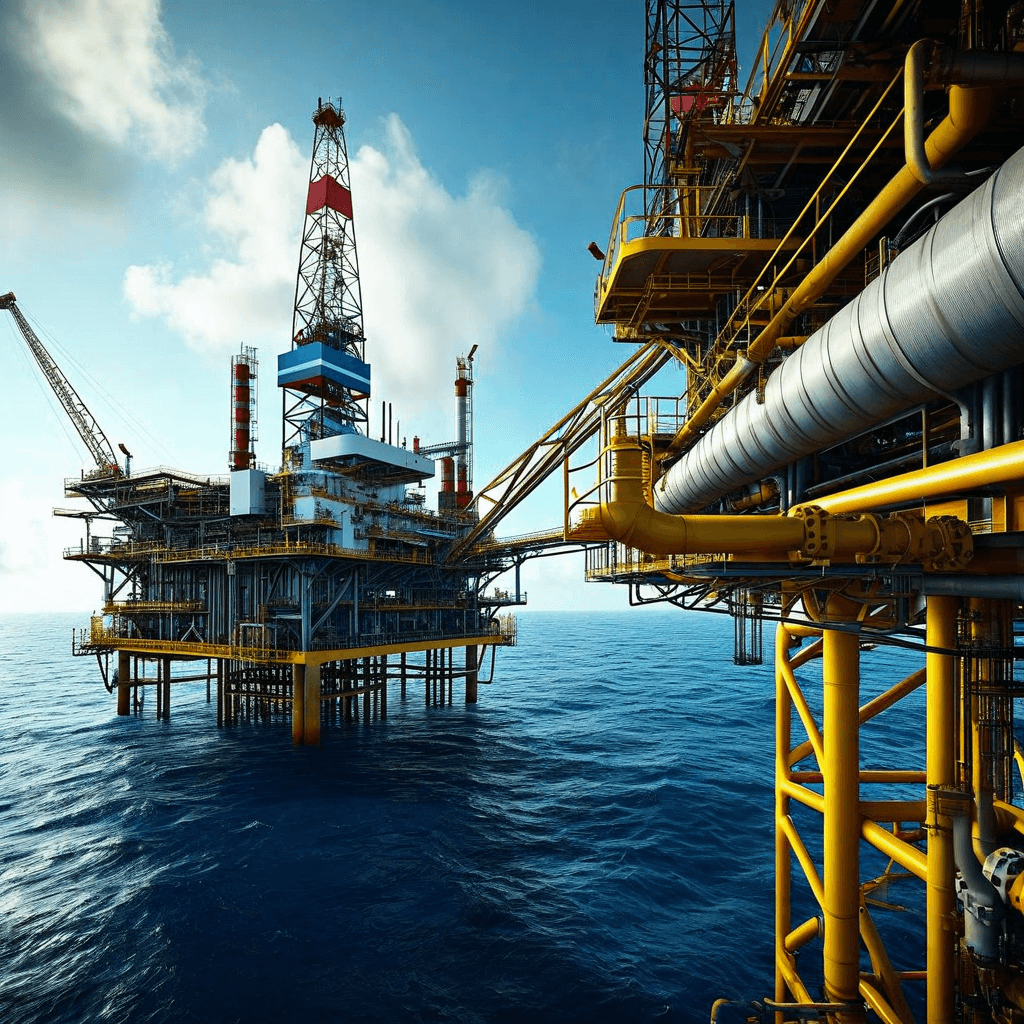
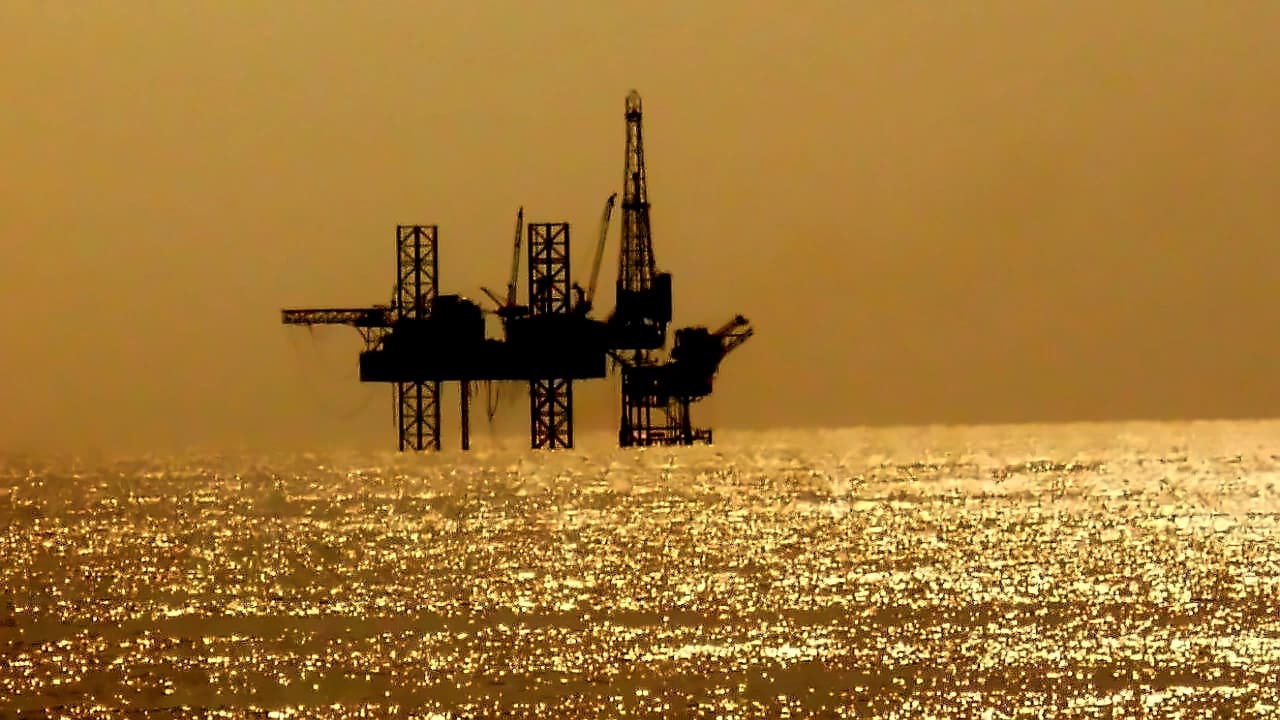
This risk-reward imbalance has proven particularly problematic for deepwater exploration, where 70% of OALP blocks are concentrated . Deepwater wells cost $100-150 million compared to $10-30 million for onshore wells, with development timelines stretching 10-15 years. Without cost recovery protection, marginal discoveries become commercially unviable, and the high upfront capital requirements create substantial balance sheet pressure.
PSU Dominance and Efficiency Constraints
State-run firms dominate OALP participation, winning approximately 75% of blocks. Oil and Natural Gas Corporation has emerged as the largest winner, securing 85% of blocks in OALP Rounds VI & VII InvestorPresentations +1, while Oil India has been awarded 25 blocks AnnualReports +1. This PSU dominance has created a homogenous exploration landscape characterized by risk-averse decision-making and bureaucratic delays.
The financial strain on these PSUs is evident. ONGC's operating income fell 75.9% year-on-year in FY25, while net profit declined 37.6% . Total assets contracted 36% to Rs 4,517 billion . Oil India faces similar constraints with limited leverage capacity and a debt-to-equity ratio of just 0.27 , restricting its ability to fund large exploration programs.
Both companies face a fundamental capital allocation conflict: maintaining production from ageing fields that account for 71% of India's oil and 84% of gas production versus funding high-risk deepwater exploration. ONGC alone needs approximately Rs 10,000 crore for Mumbai High redevelopment , while its flagship KG-DWN-98/2 deepwater project has already consumed $5 billion with production running seven years behind schedule and 53% below target .
The Foreign Investment Vacuum
Perhaps the most critical constraint is the near absence of foreign greenfield investment. During the NELP era, major international oil companies including British Gas, Cairn Energy, Eni, BHP Billiton, and BP participated actively, bringing advanced technology and capital . Under OALP, foreign participation has been minimal, with BP mainly entering through partnerships rather than greenfield projects.
This absence has severe technology transfer implications. India lacks domestic capability in critical deepwater technologies: 6th-7th generation drilling rigs, advanced subsea production systems, high-pressure high-temperature well control equipment, and sophisticated seismic imaging capabilities. The country faces a global shortage of offshore rigs with high day rates, while domestic suppliers require significant development to meet international quality standards .
Recent government attempts to attract foreign investment—including explicit guarantees against nationalization and the right to foreign arbitration—have yet to reverse this trend . The OALP-X round has seen its bid deadline extended four times, reflecting investor caution amid regulatory uncertainty .
The Technology-Development Gap
India's deepwater reserves present exceptional technical challenges. At ocean depths in India's exclusive economic zone, pressure exceeds 380 times atmospheric pressure, requiring specialized materials like titanium alloys . Communication limitations necessitate acoustic signal systems, while harsh environments demand advanced mooring systems and riser technologies .
Industry experts emphasize that operational reliability is decisive for project economics. Downtime in upstream operations can significantly affect returns, making technologies such as advanced sealing systems and condition monitoring critical . Yet India remains in the early stages of developing these capabilities, while advanced nations like China, the US, and Russia have invested heavily for decades .
The partnership model that ONGC has been forced to adopt—reaching out to 15 international companies for collaboration InvestorPresentations +2—creates additional governance complexities and decision-making delays. While partnerships like the potential ExxonMobil collaboration on the KG-DWN-98/2 block are necessary , they also highlight India's technology dependence.
Breaking the Vicious Cycle
The current situation creates a self-reinforcing negative cycle: low production leads to high import dependence, which limits fiscal space for exploration investment, resulting in fewer discoveries and further production declines. Breaking this cycle requires fundamental structural reforms.
First, fiscal regime modifications are needed. A hybrid model combining elements of production-sharing and revenue-sharing for deepwater blocks could restore risk-sharing balance. Extended royalty holidays beyond the current seven years for deepwater projects and limited cost recovery for frontier exploration would improve attractiveness.
Second, regulatory streamlining is essential. Single-window clearance mechanisms, statutory timelines for field development plan approvals, and long-term fiscal stability guarantees would reduce the 7-10 year exploration-to-production timeline.
Third, technology transfer incentives should be mandatory for foreign participation. Joint venture frameworks with clear technology-sharing requirements could accelerate domestic capability building while attracting international expertise.
Finally, government-led infrastructure development—pipelines, processing facilities, and specialized equipment—could reduce the capital burden on individual companies and create economies of scale.
The Iran war has compressed timelines and elevated stakes, making deepwater drilling a strategic imperative despite its high costs . India's estimated 22 billion barrels of undiscovered resources in Category-II and III basins remain largely untapped, with 70% of sedimentary basin area still unexplored . Without addressing these structural constraints, India's ambition of energy self-reliance by 2047 will remain elusive, and the country will continue to face escalating energy security vulnerabilities in an increasingly volatile global environment.