The Great Migration: Why Customers Are Flocking to PSU Pumps
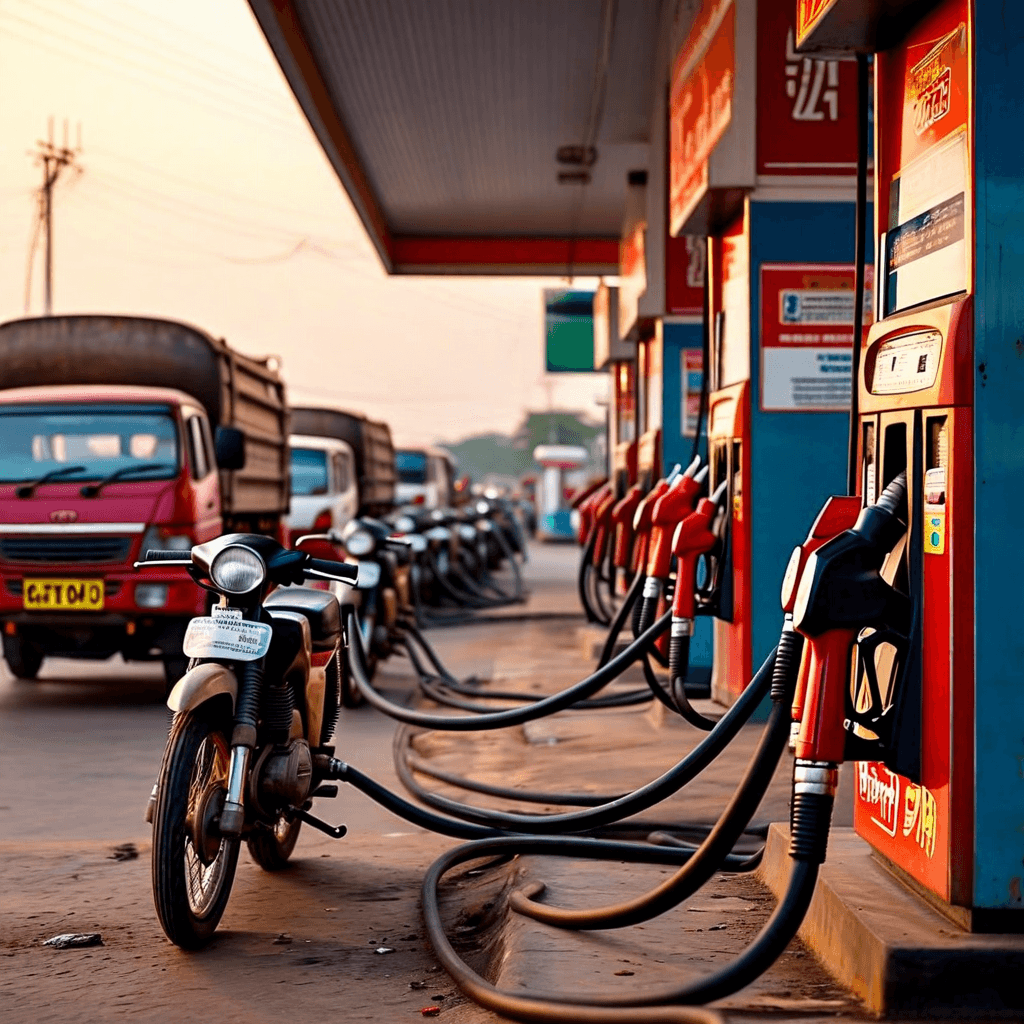
Something unusual is happening at India's fuel pumps. Customers are abandoning private retailers like Reliance-BP and Nayara Energy in droves and lining up at state-run outlets operated by Indian Oil Corporation Limited, Bharat Petroleum Corporation Limited, and Hindustan Petroleum Corporation Limited. The reason? Simple economics. When crude oil prices surged following the Iran conflict, private retailers raised pump prices to protect their margins. PSU companies, constrained by political considerations and a four-year price freeze, kept prices stable. The result became obvious: private pumps became significantly more expensive, sending price-sensitive consumers—including commercial vehicle operators and high-mileage users—scurrying to PSU outlets.
The numbers tell the story.
Shell's diesel sales fell 77%. Meanwhile, PSU retailers reported sales growth of nearly 9% for both fuels during the same period. This reversal is particularly striking because just a year earlier, private retailers were gaining market share by offering discounts of up to ₹5 per litre when crude prices were falling. The dynamic pricing flexibility that helped private retailers gain ground in 2025 became their Achilles' heel in 2026 when geopolitical tensions sent crude prices soaring above $120 per barrel.
Harvest Season Heat: Agricultural Demand Overwhelms the System
Adding to this migration pressure is the seasonal surge in diesel consumption during the harvesting period. Agriculture accounts for approximately two-fifths of India's annual diesel demand of about 92 million tonnes, and the wheat harvest season typically begins around April 10th. This creates a narrow, labor-intensive window where every hour is critical to prevent crop losses. Farmers need diesel for harvesters and tractors, and they need it now.
The impact is most pronounced in India's key grain-producing regions: Punjab, Haryana, Rajasthan, Uttar Pradesh, Madhya Pradesh, and parts of Maharashtra and Bihar. In these states, the combination of harvest demand and customer migration from private retailers has created demand surges of 20-50% above normal levels at PSU outlets. The situation has been exacerbated by a government ban on loose fuel sales in containers, designed to curb panic buying and illegal storage but making it difficult for farmers in remote villages to store diesel for uninterrupted farm operations.
The Diesel Arbitrage Game: Bulk Users Play the System
Perhaps the most significant factor driving the demand surge is the massive arbitrage opportunity between industrial and retail diesel prices.
In Vizag, the gap widens to ₹52 per litre. On average, industrial diesel is ₹40-42 per litre more expensive than retail diesel.
This price differential has triggered a predictable response. Institutional and commercial bulk diesel users—including small manufacturers, mining and road contractors, and fishing associations—are increasingly bypassing industrial depots and refueling at retail pumps meant for individual motorists. The migration has been dramatic: bulk diesel sales have dropped by 30-50% as large buyers switch to retail pumps. For oil companies, this creates a double whammy. They're losing high-margin bulk sales and replacing them with low-margin (or negative-margin) retail sales. At current crude prices of $120-125 per barrel, OMCs are estimated to be losing about ₹14 per litre on petrol and ₹18 per litre on diesel.
Distribution Under Strain: The Last-Mile Bottleneck
All this demand is putting enormous pressure on the depot-to-retailer distribution network. Dealers across multiple states report that supplies from BPCL and HPCL have been delayed by two to three days in some cases, with several outlets receiving only around 80% of their usual orders. The situation is particularly acute in Punjab, where the Petrol Pump Dealers Association has flagged an "increasingly serious fuel inventory replenishment crisis," with HPCL and BPCL outlets reportedly running dry across multiple districts.
The bottlenecks are both operational and financial. On the operational side, several depots have curtailed holiday operations and reduced working hours, disrupting replenishment schedules. Tankers are being made to wait for hours at depots despite advance payments from dealers. On the financial side, the strict enforcement of a "cash and carry" model—requiring advance payments—has created working capital pressure for pump owners, particularly smaller operators who traditionally relied on short credit cycles.
The Perception Gap: Official Denials vs. Ground Reality
Here's where things get interesting. All three PSU companies have issued statements denying rationing and supply constraints. Indian Oil says "fuel supplies across IndianOil's retail network remain stable" and that "no instructions for rationing of fuels at retail outlets" have been issued. BPCL and HPCL have issued similar denials. Yet dealers tell a very different story of supply constraints, replenishment delays, and inventory crises.
This disconnect stems from different definitions and perspectives. For corporate management, "no rationing" means no official company-wide policy limiting sales. For dealers, any limitation on sales—whether company-mandated or dealer-imposed due to stock shortages—constitutes rationing.
Weekend Pressures: The Uttarakhand Case Study
The Uttarakhand situation illustrates how regional demand spikes create local shortages. During weekends, tourist traffic creates exceptionally high customer footfall and transit load at pumps in pilgrimage areas like Augustmuni and Guptkashi. Dealers implement temporary rationing to ensure orderly servicing for all customers rather than allowing some customers to fill their tanks while others get nothing. During weekdays, operations return to normal with regular replenishment and uninterrupted service.
This pattern reveals a fundamental truth about fuel distribution: the system is designed for normal demand patterns, not for the kind of surge demand created by the convergence of harvest season, customer migration, and bulk user arbitrage. When demand spikes 20-50% above normal, even adequate aggregate supplies can create local shortages if the distribution network can't adapt quickly enough.
Structural Vulnerabilities: The PSU Dependence Problem
The current crisis exposes deeper structural issues in India's fuel retail market. PSUs control approximately 79% of the market through over 77,000 retail outlets, creating extreme concentration and single-point-of-failure risk. When PSU OMCs face supply constraints, the entire national fuel security framework is stressed. Private retailers, while growing, operate in specific regional strongholds and lack the infrastructure to provide meaningful competition at the national level, especially in remote and rural areas.
The pricing policy framework is also showing its age. India's hybrid pricing system—officially deregulated but subject to significant political influence—creates market distortions. The four-year price freeze from April 2022 to May 2026 created artificial competitive advantages for PSUs when crude prices were low but imposed massive financial burdens when prices rose.
The Path Forward: Balancing Competing Priorities
The demand-supply imbalance is forcing a fundamental reassessment of priorities. In the near term, OMCs are focusing on distribution resilience—strengthening depot operations, increasing storage capacity, and implementing digital supply chain management. HPCL, for instance, dispatched 48,099 tankers in the first week of April 2026 to meet demand, recording fuel sales of 2,64,548 kilolitres of petrol and 4,77,030 kilolitres of diesel.
Looking ahead, the industry faces difficult trade-offs. Maintaining competitive retail prices to control inflation conflicts with the need to ensure supply adequacy and protect OMC profitability. The industrial-retail diesel price differential creates arbitrage incentives that distort demand patterns. And the extreme dependence on PSUs for national fuel security creates systemic vulnerability that private sector participation alone cannot address.
The solution likely lies in a combination of approaches: rules-based pricing mechanisms that reduce political discretion, targeted subsidies for vulnerable consumers rather than broad price controls, infrastructure investments that strengthen distribution resilience, and policies that encourage private sector participation in underserved areas. Until these structural issues are addressed, India's fuel retail market will remain vulnerable to the kind of crisis we're seeing today—where adequate national supplies coexist with local shortages, and official denials clash with dealer realities.