The PLI Revolution: A 24x Multiplier in Compensation Costs
The Department of Financial Services' November 2024 directive fundamentally restructured incentive compensation for India's banking sector. Under the previous uniform scheme established through the 11th Bipartite Settlement in November 2020, all employees from part-time workers to Scale VII officers received Performance Linked Incentives capped at 15 days of Basic Pay plus Dearness Allowance, based on overall bank performance. The revised formula creates a stark two-tier system: Scale IV to VII officers become eligible for incentives up to 365 days of Basic Pay based on individual performance, while the remaining 95% of the workforce remains under the 15-day cap. This represents a 24x increase in maximum incentive potential for senior officers.
The financial implications are disproportionate. Approximately 40,000 officers in Scale IV and above—just 5% of the industry's 8-lakh-strong workforce—could receive incentives that potentially exceed the total paid to the remaining 7.6 lakh employees. The United Forum of Bank Unions argues this creates "divisive differentiation" and undermines the principle of uniformity that has governed banking sector compensation for decades. For public sector banks, where PLI is mandatory and tied to Operating Profit or Net Profit growth above 5%, this structural shift threatens to significantly elevate staff costs at a time when the industry emphasizes cost efficiency and capital discipline.
Strike Cascade: Transaction Volumes and Fee Income Under Threat
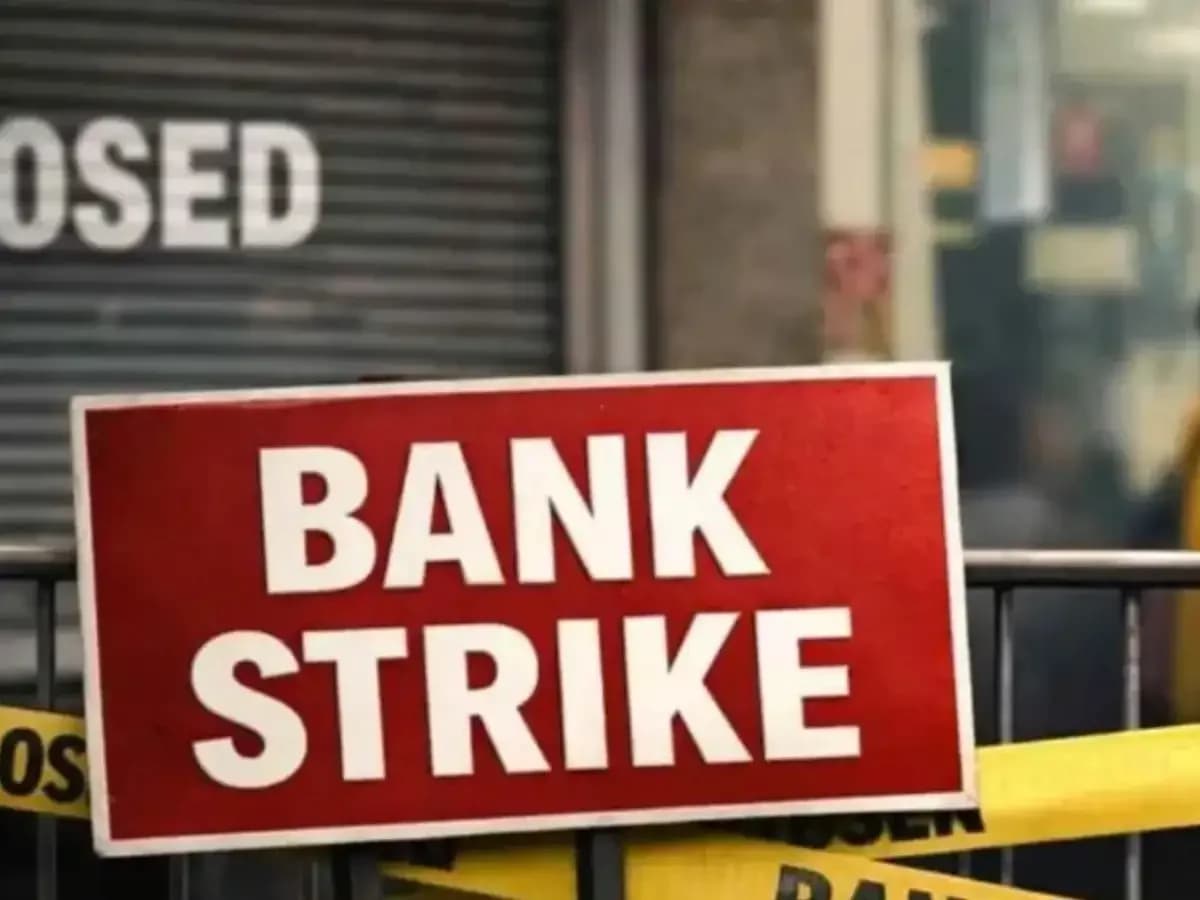
The UFBU, representing over 90% of banking employees across public sector, private, foreign, regional rural, and cooperative banks, has announced a phased strike program that threatens operational continuity. The September 11 strike falls on a Friday, creating a potential four-day service disruption when combined with weekend holidays and regional observances like Ganesh Chaturthi. A subsequent three-day strike from September 28-30 coincides with half-yearly closure, while an indefinite strike from October 26 looms if demands remain unaddressed.
Public sector banks face the most severe impact on transaction volumes and fee-based income. Branch-based services including cash deposits, cheque processing, demand drafts, KYC updates, and loan documentation face disruption. While digital channels like UPI, IMPS, and internet banking should continue, manual transaction fees and document processing charges—significant revenue streams for PSBs—will take a hit. Private and foreign banks, with fewer branches and greater digital penetration, may experience indirect effects through inter-bank transaction delays. Regional rural and cooperative banks, heavily dependent on physical branch operations, face high disruption risks to agricultural credit and rural financial services.
The Five-Day Week Impasse: Competitive Pressure Mounts
The five-day banking week agreement, formalized through the 12th Bipartite Settlement and 9th Joint Note signed on March 8, 2024, remains in regulatory limbo more than two years after IBA and unions reached consensus. Under the proposed arrangement, banks would close all Saturdays while extending working hours by 40 minutes Monday through Friday. The Finance Ministry's delay creates operational uncertainty and prevents banks from planning necessary infrastructure upgrades, staffing adjustments, and customer service modifications.
This delay places commercial banks at a competitive disadvantage. The Reserve Bank of India, Life Insurance Corporation, General Insurance Corporation, and NABARD already operate five-day workweeks. Foreign banks in India and IT companies maintain similar schedules. UFBU's cross-sector comparison strengthens their bargaining position by highlighting what they term discrimination—bank employees receive lower salaries than government, RBI, and insurance counterparts while working longer hours. The equity argument, combined with technological readiness demonstrated by India's digital banking infrastructure, creates compelling pressure for policy alignment.
NBFC Lessons: Risk-Adjusted Compensation Models
The banking sector's PLI dispute contrasts sharply with compensation frameworks in non-banking financial companies. RBI guidelines for NBFCs, effective from April 2023, emphasize principle-based, risk-adjusted compensation with mandatory deferral, malus, and clawback provisions. NBFCs enjoy greater flexibility—no prescribed minimum or maximum for variable pay, no specified deferral periods, and no requirement for share-linked instruments. This allows compensation structures tailored to specific business models while ensuring risk alignment through governance mechanisms.
Banks could learn from NBFC models that ensure managers share both upside and downside risks. The current banking PLI scheme's binary structure—dividing the workforce into Scale IV+ recipients and remaining employees—creates internal division without necessarily improving risk-adjusted performance. Alternative models incorporating risk-adjusted metrics, longer-term performance horizons, and flexible structures could address UFBU's concerns about fairness while maintaining prudential standards.
The Path Forward: Trust Deficit and Resolution Imperative
The dispute's escalation traces a clear causal chain. In March 2025, the Chief Labour Commissioner successfully deferred strike action after securing government assurances and committing to direct monitoring of the five-day banking approval process. However, subsequent DFS directives in March 2026 and August 2026, issued during ongoing conciliation proceedings and pending Delhi High Court litigation, violated status quo obligations under the Industrial Disputes Act. This unilateral action undermined trust and rendered the conciliation process ineffective.
The Delhi High Court's April 1, 2026 order declined to stay PLI implementation but made it subject to further proceedings, creating legal uncertainty for banks caught between government directives and ongoing litigation. With the next hearing scheduled for May 25, 2026, banks face compliance risks regardless of the outcome.
Resolution requires acknowledging the legitimate competitive pressures facing commercial banks, the equity arguments for workweek alignment with peer institutions, and the need for compensation structures that balance performance incentives with fairness and risk adjustment. The alternative—prolonged industrial action disrupting banking services during a critical economic period—serves no stakeholder interest.