The Strategic Pivot
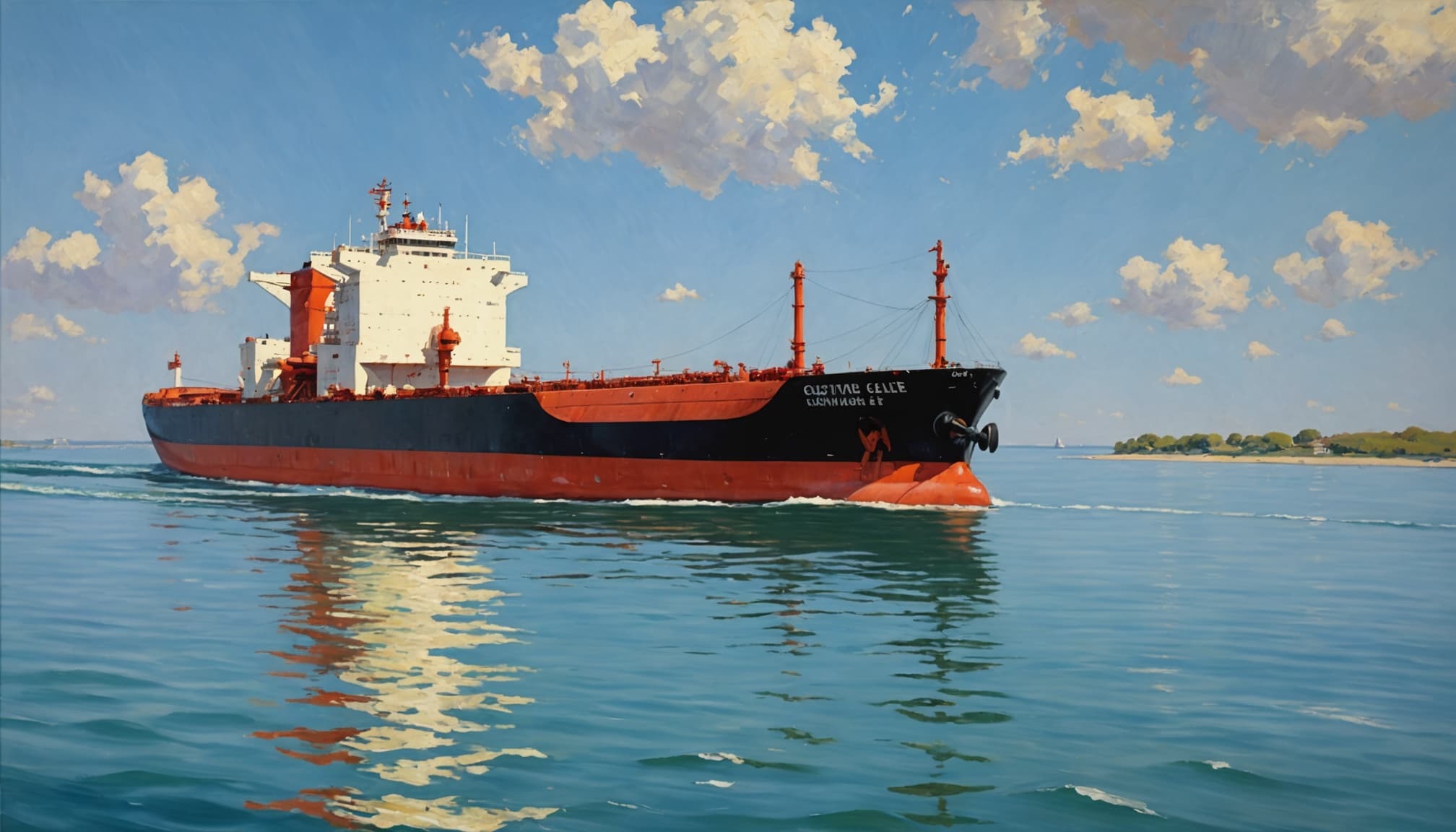
In October 2026, Indian oil refiners implemented a fundamental shift in their crude procurement strategy. Instead of relying on Gulf producers to deliver oil on a cost-and-freight (C&F) basis—where suppliers shoulder the risk of transiting the contested Strait of Hormuz—companies like Indian Oil Corporation, Reliance Industries, and Bharat Petroleum Corporation began directly hiring tankers to pick up crude from within the Persian Gulf. This move marks a transition from passive dependence to active logistics control, driven by the pursuit of deep discounts and supply chain security in a volatile geopolitical environment .
Quantifying the Trade-off: Charter Costs vs. Crude Savings
The economics of this shift are compelling. Iraqi state marketer SOMO has been offering discounts of up to $37 per barrel below regional benchmarks for October supplies . However, assuming transit risk comes at a price. During the March 2026 crisis, war-risk insurance rates for ships transiting the Strait of Hormuz jumped from 0.25% to 1% of hull value, adding $2-3 million in premiums for a Very Large Crude Carrier (VLCC) voyage. Supertanker charter rates quadrupled to nearly $770,000 per day .
Despite these elevated costs, the math favors direct chartering. Even under crisis conditions, the additional charter and insurance costs total approximately $3.50-4.75 per barrel. When subtracted from the $37 Iraqi discount, refiners secure net savings of roughly $32-33 per barrel. Under normal conditions, with standard freight around $1.20 per barrel from the Middle East and lower insurance premiums, the net savings potential rises to $35-36 per barrel . For a country importing approximately 2.8 million barrels per day from the Middle East, this strategy could theoretically yield annual savings approaching $35 billion.
Impact on Gross Refining Margins
This logistics transformation is already reflecting in financial performance. Indian refiners reported strong Gross Refining Margins (GRMs) in recent quarters. Indian Oil Corporation posted a GRM of $8.41 per barrel in Q3 FY26, up from $3.69 a year earlier . Hindustan Petroleum achieved $8.85 per barrel in the same period . While these margins are supported by broader market factors, the ability to source deeply discounted crude directly provides a significant tailwind.
The strategic shift allows refiners to access Free-on-Board (FOB) pricing, giving them better control over timing and routing . This flexibility is crucial when suppliers like SOMO offer substantial discounts. By bypassing the traditional C&F model, where suppliers bundle logistics costs into the crude price, Indian refiners can separate the commodity cost from the freight cost, optimizing both independently.
Freight Cost Differentials and Landed Cost
The landed cost calculation under the new model reveals a clear advantage. Under conventional C&F routing, refiners pay a bundled price that includes a premium for the supplier assuming transit risk. In the spot market during August 2026, Gulf suppliers were seeking premiums of $3-4 per barrel over the Dubai-Oman benchmark, which itself was trading at a premium of $6-7 to Brent, pushing effective prices $10 higher than Brent .
With direct chartering, refiners pay the FOB price plus their own freight and insurance. Even with charter rates elevated to $2.50 per barrel during crises and war-risk insurance adding $1 per barrel, the total landed cost remains significantly lower than the premium-laden C&F alternative. The ability to switch suppliers based on spot market opportunities further enhances cost optimization, allowing refiners to pivot toward the most economical crude grades available.
Operational Risk Profile Transformation
This strategic shift fundamentally alters the operational risk profile. Previously, the risk of transit disruption through the Strait of Hormuz was borne by Gulf suppliers. Now, Indian refiners directly assume this risk. The Strait is a critical chokepoint—only 33 km wide at its narrowest—handling approximately 20% of global oil consumption . During the February-March 2026 crisis, vessel traffic through the waterway dropped by 95%, and over 20,000 seafarers were stranded in the Persian Gulf due to security threats .
By taking control of logistics, refiners gain operational flexibility but also face new challenges. They must manage vessel scheduling, navigate crew restrictions, and absorb the cost of delays or rerouting. The Directorate General of Shipping has issued dynamic advisories regarding Indian seafarer deployment in the region, adding a layer of regulatory complexity to crewing arrangements for chartered vessels .
Inventory Management and Supply Chain Continuity
The move toward direct chartering necessitates a more robust inventory management strategy. With direct responsibility for transit reliability, refiners must maintain larger buffer stocks to account for potential delays. This represents a shift from "just-in-time" efficiency toward "just-in-case" resilience.
India's current inventory position provides a foundation. The country maintains approximately 74 days of total oil availability, combining Strategic Petroleum Reserves (SPR) and commercial inventories held by oil marketing companies . The SPR currently holds about 26 million barrels, covering 6.9 days of net imports, while industry stocks cover an additional 58.8 days . This buffer proved effective during the 2026 crisis, allowing India to weather the disruption without consumer fuel shortages .
However, the new shipping strategy may require refiners to reassess optimal inventory levels. Research on crude procurement through the Strait of Hormuz demonstrates that incorporating backup suppliers can reduce total expected costs by up to 34% when supply disruption probability is high . This suggests that a diversified sourcing strategy, combining direct chartering from the Gulf with alternative suppliers, offers the most resilient approach.
Geopolitical Risk Assessment and Mitigation
Geopolitical risk remains the primary concern. The Strait of Hormuz has witnessed several confrontations, including the Iran-Iraq War's "Tanker War" phase, when insurance rates for trips to Kharg Island reached 7.5% of hull value . The 2026 crisis highlighted how quickly the corridor can transform from a high-volume trade artery into a severely restricted zone .
Indian refiners are mitigating these risks through several mechanisms. Supply diversification is key—India has reduced its dependence on West Asian supplies and actively sources from 41 alternative suppliers . The government has also fast-tracked Phase II SPR expansion, targeting an additional 47.7 million barrels of capacity to boost strategic cover to approximately 22 days .
Diplomatically, India maintains a balanced approach, engaging with multiple regional powers while securing transit access through negotiations with Iran . The "Seafarer-First" initiative, including the eNavik Portal for real-time tracking and crisis management, provides a digital infrastructure for monitoring vessels and seafarers operating in high-risk zones .
Competitive Positioning Against Regional Refiners
This strategic evolution grants Indian refiners a significant competitive edge over regional peers. Many Asian refiners remain heavily dependent on Gulf crude, with more than 50% locked in long-term contracts that limit flexibility . Furthermore, refinery configurations across Asia are often optimized for specific crude grades. US crude is light and sweet, unsuitable for refineries built around Gulf sour crude, while Russian supply is largely committed to China and India . This leaves regional competitors competing for limited alternatives from the Americas and West Africa, adding freight costs and feedstock uncertainty.
Indian refiners, by contrast, are leveraging their complex refinery configurations—which can process discounted sour crude to produce Euro-VI compliant fuels—to capture the full value of Gulf discounts . Strong domestic demand growth, projected at 5% annually through 2030, provides a natural hedge against margin pressure affecting export-oriented refiners in South Korea and Thailand .
Reliance Industries exemplifies this competitive advantage. Its Jamnagar refinery, the world's largest with a complexity index of 21.1, has processed over 216 different crude grades . During the 2026 disruption, Reliance stepped in as a swing supplier to Europe and Brazil, capturing supernormal margins while its SEZ unit remained exempt from domestic windfall taxes .
Bargaining Power Transformation with Gulf Suppliers
The shift to direct chartering is reshaping the power dynamic with Gulf suppliers. Historically, OPEC producers held the upper hand, with term contracts favoring supplier pricing and terms . Buyers had limited flexibility, often needing to provide six weeks' notice for lifting quantities while suppliers retained the option to reduce supplies during production cuts.
By moving toward FOB purchases and spot market acquisitions, Indian refiners are gaining leverage. The ability to charter vessels independently allows them to switch suppliers based on commercial considerations, reducing dependence on any single source. The fragmentation of OPEC, exemplified by the UAE's exit from the cartel, further strengthens the position of major buyers like India, allowing them to negotiate tighter price differentials and more favorable terms .
Regulatory Landscape and Compliance
Executing this strategy requires navigating a complex regulatory framework. India's maritime regulations are undergoing their most significant overhaul in seventy years, with the Merchant Shipping Act, 2025, replacing the 1958-era legislation . The Directorate General of Shipping issues dynamic advisories for Gulf region transit, currently advising against deploying Indian seafarers on vessels transiting the Strait of Hormuz under DGS Circular 36 of 2026 .
Ship-to-ship (STS) transfers off the Western Coast add another layer of regulatory complexity. While governed internationally by MARPOL Annex I, Chapter 8, domestic requirements include approved STS operations plans and compliance with environmental regulations . Sanctions compliance, particularly under the US Sanctioning Russia and Iran Act of 2026, which authorizes tariffs of up to 100% on Russian oil buyers, further complicates procurement decisions .
Regulators are also facilitating the shift. The government has exempted International Financial Services Centre (IFSC) GIFT City units from licensing requirements under the Coastal Shipping Act, 2025, for chartering foreign vessels, potentially enabling refiners to structure maritime financing through these entities .
The Path Forward
The strategic shipping shift by Indian oil refiners represents a calculated transformation of their business model. By assuming direct control of logistics, they are capturing substantial cost savings, enhancing supply chain resilience, and establishing competitive advantages in the Asian refining landscape. Success depends on balancing this operational autonomy with robust risk management, regulatory compliance, and strategic inventory planning. As the global energy order continues to evolve, this proactive approach positions Indian refiners not merely as passive consumers, but as sophisticated architects of their own energy security.