The Valuation Standoff
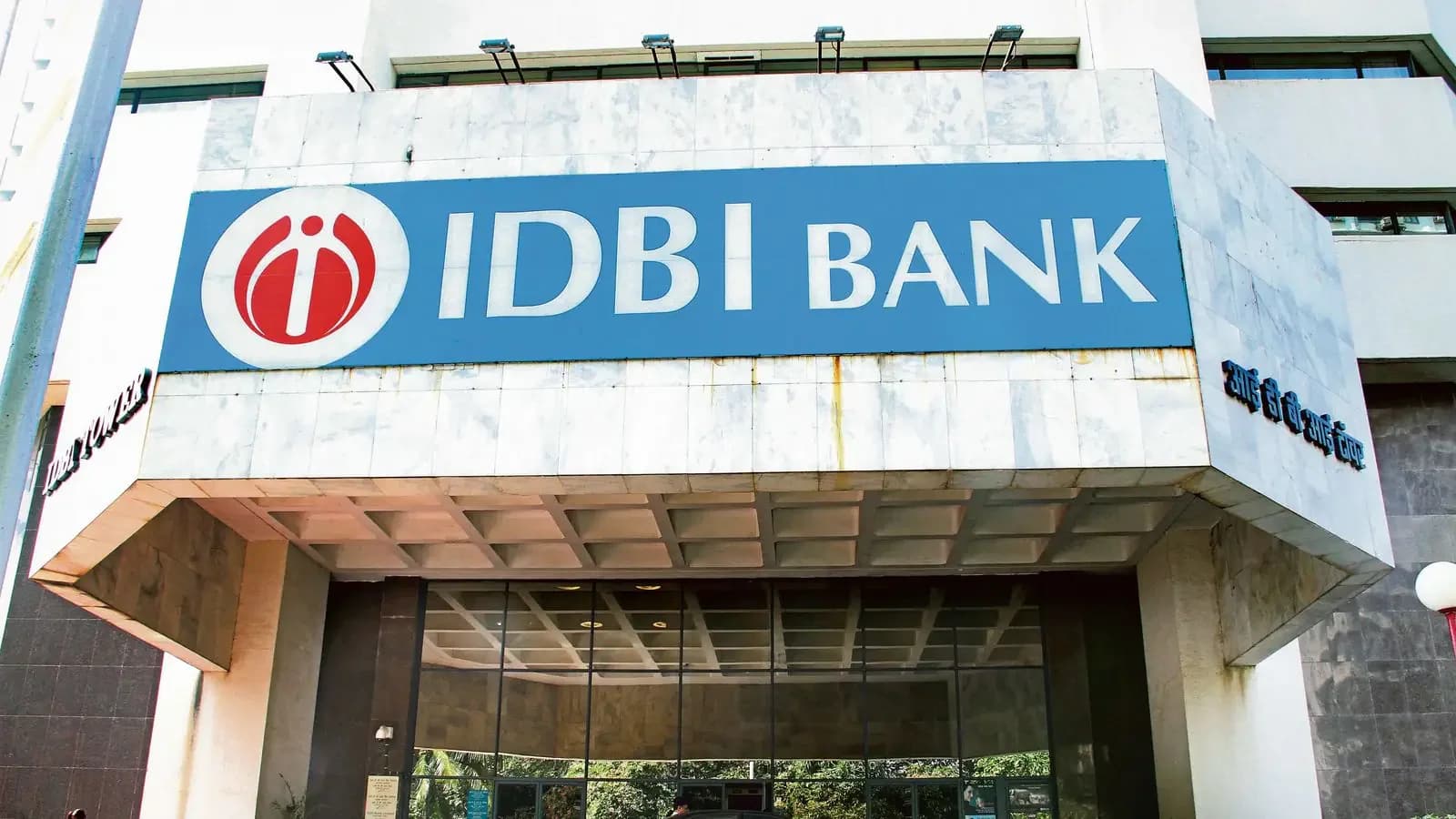
The government's ambitious plan to privatize IDBI Bank has hit a significant roadblock: a massive valuation gap. Initial bids from Fairfax India Holdings and Emirates NBD came in at ₹40,000–45,000 crore, while the government's reserve price hovered around ₹72,000 crore—a shortfall of 40–45%. This isn't just a disagreement over price; it reflects fundamentally different views on what IDBI Bank is worth and what risks lie ahead.
For bidders like Fairfax, the concerns are practical. IDBI Bank carries legacy baggage from its days as a development financial institution, including a workforce with traditional public sector employment terms and hierarchical decision-making structures that don't align with private sector efficiency expectations. There's also the challenge of integrating a large public sector bank into private ownership—a transition that requires significant management autonomy and cultural overhaul. Fairfax has since submitted a revised all-cash bid of approximately ₹77 per share, valuing the 60.72% stake at around ₹50,000 crore, but this still falls short of government expectations.
The government, meanwhile, points to IDBI Bank's remarkable turnaround. The bank posted its highest-ever net profit of ₹9,513 crore in FY26, up 27% year-on-year, with gross NPAs down to 2.32% and net NPAs at a record low of 0.15%. Total business crossed ₹6 lakh crore, deposits grew 23% to ₹3.47 lakh crore, and the capital adequacy ratio stands at a robust 26.65%. These metrics, the government argues, justify a premium valuation. The market seems to agree—IDBI Bank's stock has rallied 27% in recent months on revived privatization hopes.
Coordination Under Pressure
Behind the scenes, a complex bureaucratic machinery is working to bridge this divide. The Core Group of Secretaries on Disinvestment (CGD) and the Inter-Ministerial Group (IMG), co-chaired by the Department of Financial Services (DFS) and DIPAM, have been holding intensive meetings to advance the process. On July 13 alone, the CGD convened two separate meetings while the IMG met to discuss the strategic disinvestment specifics. This high-level coordination signals renewed urgency to resolve outstanding issues and close the deal.
The DFS plays a particularly crucial role in evaluating bidder suitability. Beyond financial strength, the department assesses strategic fit—how well a bidder's vision aligns with India's banking sector needs and regulatory requirements. For Fairfax, this means evaluating its plan to merge IDBI Bank with CSB Bank (where Fairfax already holds a majority stake) and fold in subsidiaries like GoDigit General Insurance and IIFL Capital Services. For Emirates NBD, which recently acquired a controlling stake in RBL Bank for ₹26,850 crore, the DFS must consider whether managing two Indian banking operations simultaneously creates regulatory complexity or competitive concerns.
The Alternative Mechanism, empowered by the Cabinet Committee on Economic Affairs and comprising the Finance Minister, Minister for Road Transport & Highways, and the administrative minister, will ultimately decide on the final bid approval. This streamlined approval process, designed to eliminate multiple CCEA referrals during disinvestment stages, is now being tested as the government considers accepting below-reserve-price bids through legal provisions rather than restarting the entire process.
LIC's Strategic Exit
Life Insurance Corporation of India's decision to divest 30.24% of its stake alongside the government's 30.48% sale marks a significant shift in strategy. LIC acquired 51% control of IDBI Bank in 2019, injecting ₹21,000 crore to rescue the lender from surging bad loans. But the insurer's board has since passed a resolution to reduce its holding, citing regulatory mandates from IRDAI that typically limit insurance company investments to 15% in any single entity.
The divestment makes strategic sense for LIC. The proceeds will strengthen its capital position and solvency margins while freeing up capital for deployment in higher-yielding assets like government securities or corporate bonds that carry lower risk weights than banking sector investments. More importantly, LIC can maintain its valuable bancassurance partnership with IDBI Bank without equity control—IDBI Bank remains LIC's "number one partner in bancassurance," generating ₹862 crore in new business premium in Q1 FY26, up from ₹435 crore a year earlier.
The trade-off is clear: LIC sacrifices potential capital appreciation from IDBI Bank's turnaround for regulatory compliance and capital flexibility. The insurer has indicated it may retain some stake to preserve the bancassurance relationship, but the days of LIC as controlling promoter are numbered. This aligns with the broader government objective of transferring management control to a private strategic investor who can infuse fresh capital, technology, and management practices.
Competitive Dynamics and Market Impact
The presence of multiple qualified bidders has strengthened the government's negotiating position. Fairfax and Emirates NBD emerged as the primary contenders after Kotak Mahindra Bank clarified it did not submit a financial bid. Industry sources described them as "neck-to-neck" in terms of interest and capability. This competition gives the government leverage to negotiate better terms on management control transition, employee protections, and strategic commitments.
Fairfax brings distinct advantages: existing Indian banking experience through CSB Bank, a comprehensive financial services ecosystem including GoDigit and IIFL Capital, and a commitment to make IDBI Bank its anchor investment in India's financial services sector. The Canadian investor has also offered to fully divest its 40% stake in CSB Bank to comply with RBI's single banking license norm, demonstrating regulatory awareness. Emirates NBD counters with regional banking expertise, $196 billion in total assets, and digital banking leadership—94% of its transactions occur outside branches. However, its recent RBL Bank acquisition may limit appetite for a second major Indian banking investment.
The stalled disinvestment process has created significant stock price volatility. When reports emerged in March 2026 that bids fell below the reserve price, IDBI Bank's stock crashed nearly 15% as the "privatization premium" evaporated. But the stock has since rallied 27% on revived privatization hopes, with Fairfax's revised bid providing concrete progress. This volatility reflects the market's heavy reliance on privatization prospects as the primary value driver, even as underlying fundamentals remain strong.
The Transformation Ahead
The transfer of management control will fundamentally reshape IDBI Bank's operations. Fairfax's vision involves merging IDBI Bank with CSB Bank to create a significantly larger private sector bank with national footprint, while folding in insurance and capital market subsidiaries to build a comprehensive financial services platform. Emirates NBD would likely pursue standalone expansion, leveraging its digital banking expertise and Middle East-India trade corridor strengths.
Either approach would accelerate IDBI Bank's evolution from its development financial institution heritage toward commercial banking excellence. The loan book, already 70% retail, would likely see further emphasis on MSME and retail segments with more sophisticated risk-based pricing. Risk management practices would undergo transformation with AI-driven fraud detection, real-time monitoring systems, and stress testing capabilities that private sector banks typically employ.
The transition period presents challenges. Employee uncertainty has prompted appeals from SC/ST/OBC employee forums seeking job safety protections, with many having joined IDBI Bank expecting public sector job security. Fairfax has committed to retaining existing management and staff for at least three years with unchanged compensation, providing some stability. Corporate clients may hesitate on major partnerships until ownership clarity emerges, while retail customers could diversify holdings during uncertainty.
As the government considers accepting below-reserve-price bids through legal provisions rather than restarting the process, the focus shifts from "if" the sale will happen to "at what price". The coming weeks will determine whether India's first major bank privatization can finally cross the finish line, setting a template for future PSU bank disinvestments and unlocking value in IDBI Bank's improved asset quality.