Hindustan Petroleum Corporation just pulled off one of the most dramatic quarterly turnarounds you'll see.
That's a swing of nearly Rs 16,000 crore in three months. But here's the thing: the first half of FY27 still ended in a net loss of Rs 8,639.45 crore, compared to a profit of Rs 7,970 crore in the same period last year. So what happened?
The villain of the story is crude oil. The West Asia war pushed prices above $100 per barrel, and for an oil marketing company (OMC) like HPCL, that's bad news when you can't pass those costs to consumers. Retail fuel prices are administered, meaning the government decides what you and I pay at the pump. When crude spikes, HPCL absorbs the difference.
On the Q1 call, they said marketing under-recoveries were upwards of Rs 26,000 crore—roughly Rs 20,000 crore on petrol and diesel, and the rest on LPG. Every litre sold was effectively a loss-maker. Transcript
Why Profit Fell Even as Revenue Soared
Here's where it gets counterintuitive. Q2FY27 revenue jumped 26.1% year-on-year to Rs 1,39,140 crore, but net profit actually fell 6.1% to Rs 3,625 crore. How does that math work?
Remember, revenue for an OMC isn't profit. Higher revenue mostly reflects higher crude and product prices, not better margins. Profit depends on the spread between what HPCL pays for crude and what it earns from selling fuel. Even though refining margins improved (more on that in a bit), marketing margins remained under pressure. Rising crude prices, higher expenses, and a heavier tax bill ate into the gains. The standalone numbers tell the story: pre-tax profit was Rs 6,768 crore, but tax took a Rs 3,285 crore bite, leaving net profit at Rs 3,483 crore. That's a tax rate that would make anyone wince. Investor Presentation
The Rs 7 Hike That Changed Everything
So what sparked the Q2 recovery? In May 2026, the government hiked retail fuel prices by a cumulative Rs 7. This was the first meaningful increase in ages, and it mattered. The hike applied for the full quarter, just as crude prices were cooling off from their peak. That narrowed the gap between HPCL's costs and what it could charge consumers. Moneycontrol reports that this "healthy marketing margin" support was key to the return to profitability. Brokerages had been betting on this exact dynamic—improved fuel marketing margins easing the pain from Q1's bloodbath.
Refining Margins: The Silver Lining
While marketing was struggling, HPCL's refineries were having a field day.
For the first half, GRM averaged $27.89 per barrel, compared to just $5.95 in H1FY26. That's nearly a five-fold jump.
What drove this? Product cracks—the difference between crude and refined product prices—were "consistently high," management said on the Q1 call. The West Asia disruption tightened global fuel supplies, boosting those spreads. Plus, HPCL buys crude on dated Brent with a one- to two-month pricing lag. When crude fell sharply after being bought at higher prices, that inventory timing worked in their favor for Q2. Refineries also ran hard: combined capacity utilisation was 100.4% in Q2, with Mumbai refinery operating at 109% and Visakh at 95%. Transcript
The Volume Puzzle
Here's an interesting wrinkle: crude throughput actually fell from 6.52 million metric tonnes (MMT) in Q1 to 6.20 MMT in Q2. Some reports suggest it was also down year-on-year from 6.57 MMT in Q2FY26. Yet margins improved. How?
Lower throughput doesn't automatically mean disaster when per-barrel margins are this strong. At $32.15 per barrel, you're making money on every barrel processed. A 5% dip in volume hurts, but it's nothing compared to the margin expansion. Plus, HPCL prioritized keeping throughput going during the supply disruption rather than optimizing the crude slate. The company also faced some operational hiccups—Vizag had catalyst-handling issues, and the new Rajasthan refinery (HRRL) was ramping up after a fire in April delayed commissioning. These factors likely weighed on volumes but didn't derail the margin story. Investor Presentation +2
Why Refining and Marketing Moved in Opposite Directions
This is the core tension in HPCL's business right now. Refining margins track international product prices, which soared with the West Asia crisis. Marketing margins, on the other hand, are shackled by domestic price controls. HPCL sells more fuel through its marketing network than it refines itself, so strong refining performance can't fully offset marketing losses. It's like having one arm tied behind your back while you're trying to run a race. Transcript
The divergence is stark. Q1 EBITDA was a loss of Rs 14,860 crore. Q2 EBITDA swung to a profit of Rs 9,822 crore. That's the refining engine roaring to life. But H1FY27 still ended in a net loss because the marketing drag was too heavy. Petrol and diesel sales grew 10% year-on-year to 7.78 MMT in Q2, but those volumes came at suppressed margins. LPG sales rose to 2.03 MMT, and under-recoveries there kept piling up. Investor Presentation +1
The LPG Compensation Conundrum
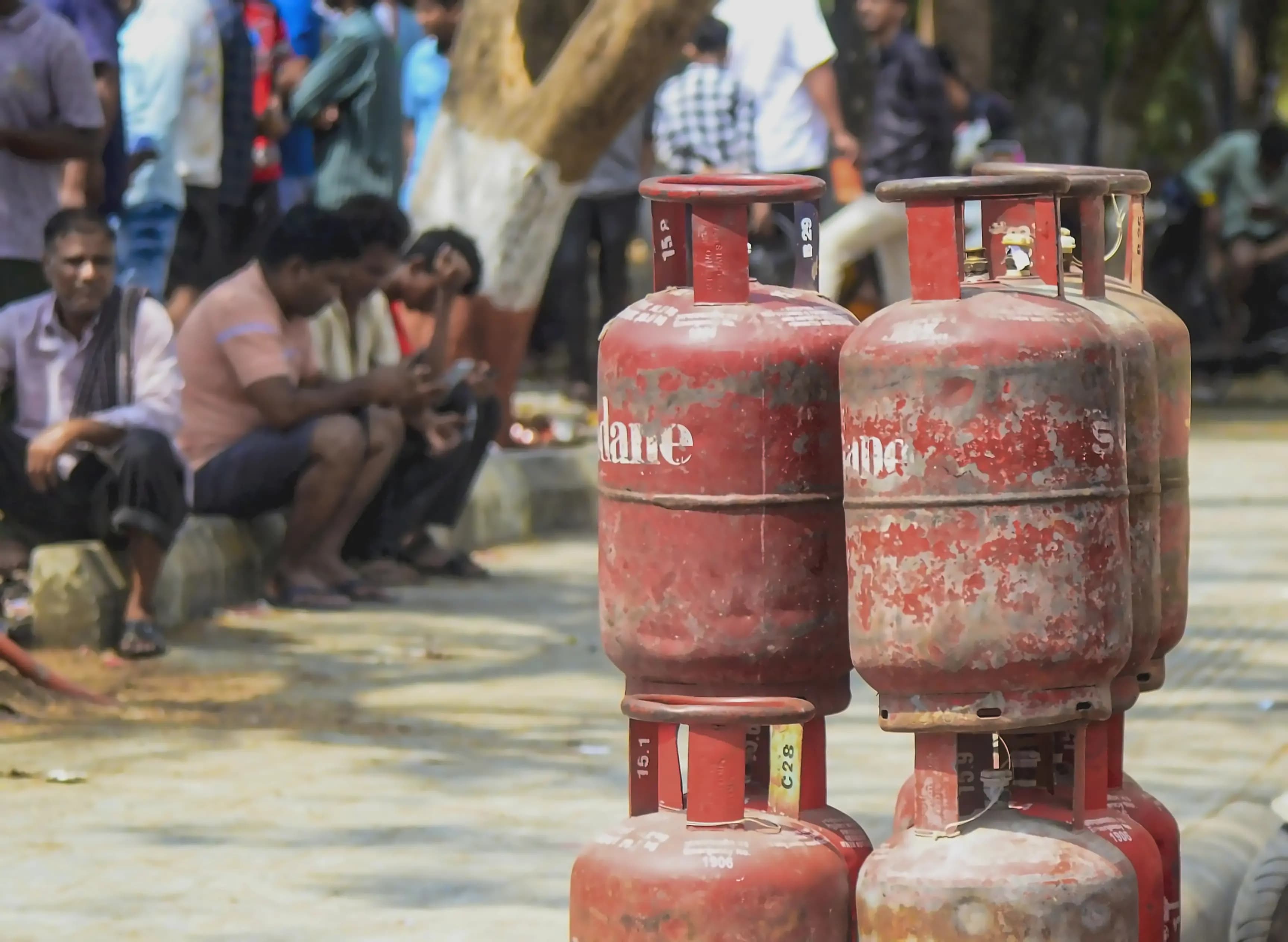
The government hasn't left HPCL entirely high and dry. The Oil Ministry conveyed Rs 7,920 crore in compensation for domestic LPG under-recoveries, payable in 12 equal monthly installments from November 2025. That's Rs 660 crore per month, recognized under "Sale of Products" rather than as other income. For H1FY27, HPCL recognized six installments totaling Rs 3,960 crore. Other
This helped, but it's a partial fix. The compensation covers only domestic LPG, not petrol and diesel, which were the biggest source of under-recoveries. And here's the kicker: the cumulative negative buffer—the LPG losses HPCL has absorbed but hasn't been able to book as a receivable—stood at a staggering Rs 18,048.82 crore as of September 30, 2026. That's up from Rs 16,406 crore in June and Rs 12,799 crore in March. This buffer isn't a liability on the balance sheet, but it represents real cash that's been burned. Until the government authorizes more compensation, that money is gone. Other
Capex: Investing for Tomorrow, Paying Today
Despite the losses, HPCL isn't hitting the brakes on investment. Q2FY27 capex was Rs 2,085 crore, taking H1 spending to Rs 3,819 crore. The focus is on strengthening refining and marketing infrastructure. The company mechanically completed a 201-km LPG pipeline from Haldia to Panagarh, commissioned a fuel farm at Bhogapuram Airport, and even fired up India's first refinery blue hydrogen unit at Visakh.
There's no massive new project on the horizon—just routine spending and debottlenecking. The big-ticket items, like the Visakh refinery upgrade and the Rajasthan refinery, are either nearing completion or already ramping up. This conservative approach makes sense: HPCL is focused on reducing debt (which fell from Rs 72,597 crore in Q1 to Rs 65,458 crore in Q2) rather than launching expensive new ventures. Transcript +3
The Strategic Trade-off
Here's the trade-off HPCL is making. Short-term profitability is being sacrificed for long-term resilience. Investing in pipelines, terminals, and refinery upgrades improves efficiency and margin resilience against future crude volatility. But when you're already bleeding from suppressed marketing margins, every crore spent on capex is a crore that isn't going to the bottom line. Transcript
There's also a strategic angle. HPCL's infrastructure investments align with the government's energy security objectives—more refining capacity, better distribution networks, and strategic reserves. Management has emphasized that India's strategic petroleum reserves were available during the supply disruption, and that crude supply is fully secured. This strengthens HPCL's case as a strategic asset, which could matter for future policy support. But let's be clear: there's no guarantee that capex will be compensated. Past support, like the Rs 30,000 crore LPG package and the May fuel price hike, has been ad hoc and reactive. Transcript
What Lies Ahead
So where does HPCL go from here? The Q2 turnaround shows that the company can bounce back when the environment improves. But the structural issues remain. Marketing margins are still suppressed, the LPG buffer keeps growing, and the final compensation installment arrives in October 2026. After that, there's no guaranteed support unless the government announces a new package.
The refining business looks strong, and the Rajasthan refinery should contribute more as it ramps up. Petrochemicals, expected to come online next year, could provide more stable margins. But the elephant in the room is pricing policy. Until there's clarity on how fuel prices will be managed in a volatile crude environment, HPCL's profitability will remain at the mercy of geopolitics. Transcript
For investors, the takeaway is nuanced. HPCL isn't broken—it's a strategically vital company navigating a perfect storm. The Q2 recovery proves the underlying business is resilient. But the path to sustainable profitability depends on factors beyond HPCL's control: crude prices, government policy, and the timing of any fresh compensation. Keep an eye on the Q2 earnings call on October 23—management's commentary on marketing margins and the outlook for the rest of the year will be telling.