Hindustan Zinc's ₹80,000 Crore Gamble: Doubling Down on Zinc
On November 16, 2026, Hindustan Zinc dropped a bombshell. Its board approved roughly ₹80,000 crore (about $8.5 billion) to nearly double metal production capacity from 1.1 million tonnes per annum (MTPA) to 2.0 MTPA over the next three to five years. This isn't just maintenance capex. It's a bold bet on India's infrastructure boom and a global zinc market that management believes will stay tight for years.
The Financial Engine Room: Leverage, Cash Flow, and Dividends
Let's talk money. The company says it will fund this through "internal accruals and debt". But what does that actually look like? Other
Hindustan Zinc starts from a position of strength. It ended FY26 with net cash of roughly ₹6,000 crore and generated a free cash flow of ₹11,746 crore. Management has even said it would ideally not use debt for growth, preferring to earn its way through expansion. Transcript +1
However, the ₹80,000 crore outlay averages to about ₹16,000–27,000 crore annually. That's well above the current run-rate. Even with strong cash generation, free cash flow after growth capex will likely compress significantly, potentially turning negative in peak spending years.
Here's the leverage math. If the company funded the entire amount with debt, gross debt could balloon to around ₹83,700 crore. Against an annualised H1 FY27 EBITDA of roughly ₹36,800 crore, that implies a leverage ratio of about 2.3x. That's an extreme scenario. A more realistic mix, heavily weighted toward internal cash, would keep leverage much lower. Management expects to exit FY27 as a net cash company, which suggests the early years will be funded conservatively. Transcript +1
Dividends? Hindustan Zinc has been a cash cow, paying ₹10 per share in FY26 and an interim ₹11 per share in Q1 FY27. Management says dividends and expansion "both will continue". But let's be real. Heavy capex usually means lower payouts. Expect regular dividends to continue, but the era of massive special dividends might pause until the new assets start printing money. Transcript +2
Returns: The ROIC Question
Management has guided that the expansion's internal rate of return (IRR) is in the "double digits". That sounds decent, but context matters. Transcript
Historical ROCE has been stellar—around 67% in FY26. That reflects a largely depreciated asset base and a first-quartile cost position. New greenfield smelters and deeper mines carry a much heavier capital burden. Incremental returns will inevitably be lower than the historical average. A double-digit IRR suggests the expansion is accretive, but it also implies a drag on blended ROCE as these new assets come online. Other
Operational Risks: The Execution Gauntlet
Doubling capacity isn't just about writing checks. It's about moving mountains, literally.
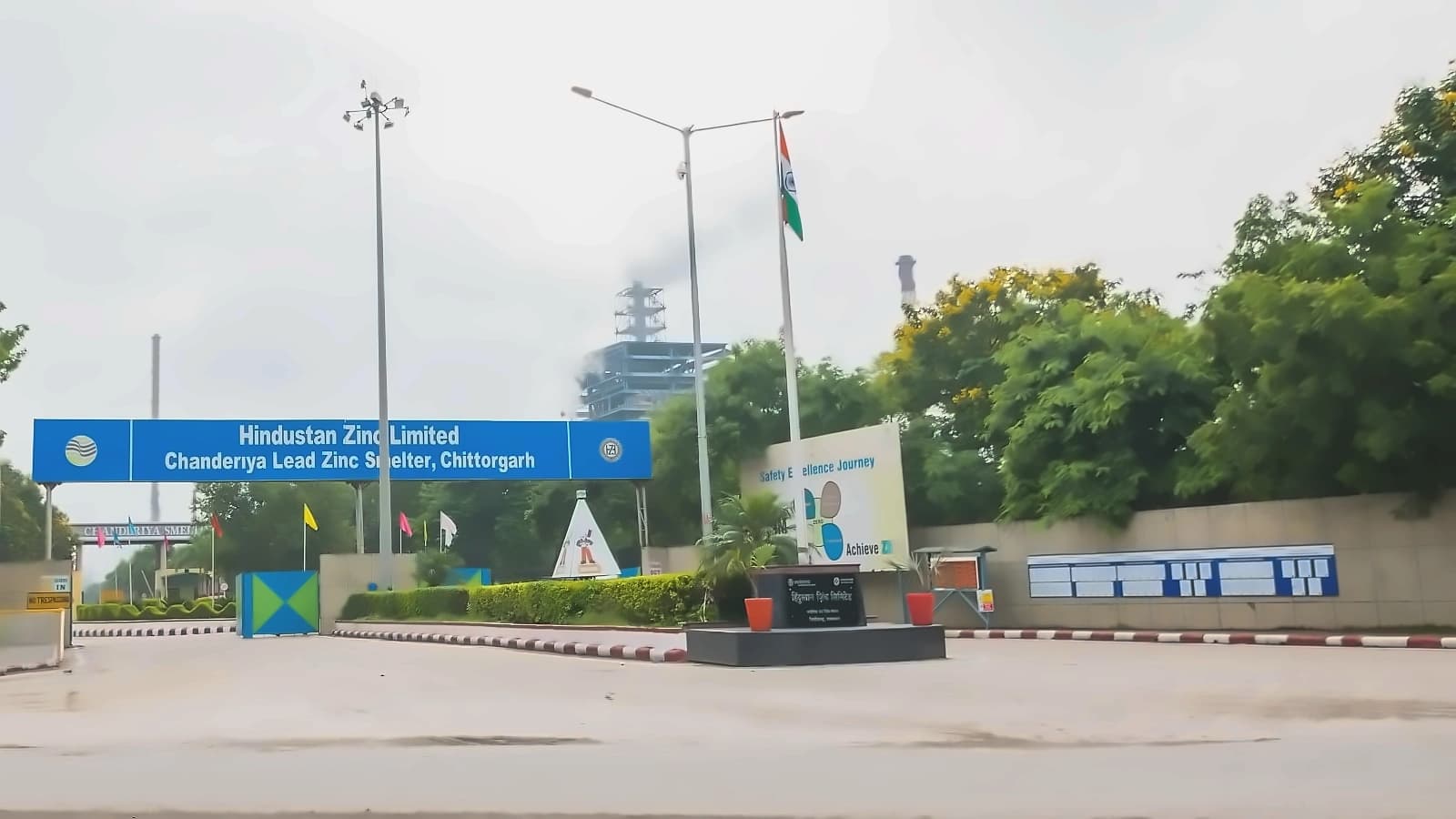
The plan includes a 265 KTPA integrated zinc smelter at Debari (targeted for Q2 FY29), a new 500 KTPA zinc smelter, a 200 KTPA lead smelter, and a 700-tonne-per-annum silver refinery. Mining capacity must surge from 19.3 MTPA to 35 MTPA to feed these furnaces.
The risks are real. Mines are going deeper, which raises ventilation and ground-support costs. A roaster commissioning delay in FY26 already affected output, showing that smelter start-ups can slip. The 10 MTPA tailings reprocessing plant at Rampura Agucha uses technology with few global precedents and expects a 6–8 month ramp-up. Transcript +3
On the cost front, the news is good for now. Zinc cost of production (excluding royalty) has plummeted from $959 per tonne in FY26 to $703 in Q2 FY27, driven by better grades, higher volumes, and more renewable power. Management has cut its full-year guidance to $825–850 per tonne. Transcript +1
Economies of scale should help absorb fixed costs, and the company targets 70% renewable power by FY28 to further drive down energy costs. However, deeper mines and lower-grade ore could push costs back up. The net effect on unit costs is uncertain, but the trajectory suggests a competitive low-cost position can be maintained. Transcript
Market Dynamics: Will the World Absorb 2.0 MTPA?
Here's where it gets tricky. Hindustan Zinc already holds about 74% of India's primary zinc market. Domestically, there isn't much room left to grow share. The new volume must find homes abroad. Investor Presentation
The global outlook is mixed. The International Lead and Zinc Study Group (ILZSG) forecasts a refined zinc deficit of 88,000 tonnes in 2026, flipping to a small surplus of 25,000 tonnes in 2027. Management is more bullish, expecting a structural deficit beyond 2030 due to limited new projects and declining ore grades. Transcript
The added 765 KTPA of zinc capacity is roughly 5% of global demand. That's significant. If new supply from other regions also floods the market, treatment charges could rise and cash margins could compress. However, Hindustan Zinc is integrated—it owns the mines. In a concentrate-constrained world, that's a massive advantage.
Pricing power? The company is a price-taker on the LME. It doesn't set prices. But as a low-cost producer, it wins when prices fall and thrives when they rise. The expansion adds volume, not pricing power.
The Vedanta Connection: Concentration Risk
For parent Vedanta Limited, this expansion is a double-edged sword.
After its demerger in May 2026, Vedanta Limited is essentially a Hindustan Zinc wrapper. In Q2 FY27, Zinc India contributed a staggering 93% of group consolidated EBITDA. Doubling Hindustan Zinc's capacity increases this single-asset, single-commodity dependence. Investor Presentation +1
Vedanta holds roughly 60.7% of Hindustan Zinc. The subsidiary's dividends are a key lifeline for servicing debt at the Vedanta Resources parent level. If Hindustan Zinc retains more cash for capex, that upstream flow slows. Vedanta's own net debt has fallen sharply to ₹3,675 crore with a net debt/EBITDA of just 0.1x, giving it room to support the expansion. But the group's financial health is now tightly hitched to zinc prices and Hindustan Zinc's execution. Annual Report
Regulatory Hurdles: The Hidden Timeline
Big projects in India don't just happen. They need environmental clearances, forest permissions, consent to establish, and mining lease renewals.
The Rampura Agucha mine lease, a crown jewel, expires in March 2030. Management believes renewal is secure given its first right of refusal, but a premium payment is possible. The Debari smelter's existing Consent to Operate is valid until March 2027, and a recent environmental clearance letter noted discrepancies involving forest land that required departmental consultation. Transcript
Specific approval statuses for the new 500 KTPA zinc smelter, 200 KTPA lead smelter, and the massive mine expansion to 35 MTPA are not publicly detailed. Delays in these processes are a genuine risk to the 3–5 year timeline.
Compliance costs are rising. Mining royalty hit ₹4,948 crore in FY26, up from ₹4,103 crore the previous year. Royalty is a percentage of LME prices, so it scales directly with revenue. Closure provisions and tailings dam management will also expand as operations grow. Annual Report
The Verdict
Hindustan Zinc's ₹80,000 crore expansion is a high-conviction bet on its own low-cost capabilities and India's growth story. The financials suggest the company can absorb the initial shock without breaking its balance sheet, especially given its net cash position and strong operating margins.
The operational challenges are significant but manageable for a seasoned miner. The bigger question is the market. Can the world absorb this much new zinc without crushing prices? If the structural deficit management predicts materializes, Hindustan Zinc will be perfectly positioned to capture it. If the market swings to surplus earlier than expected, the company's low-cost position is its best defense.
For Vedanta, this deepens its reliance on a single winner-takes-all asset. It's a strategy of concentration, not diversification. The next five years will determine if that concentration pays off.