India's scorching summer didn't just break temperature records—it broke sales records too. As temperatures soared across the country in April-June 2026, consumers opened their wallets for anything that offered relief. The result? Double-digit sales growth across FMCG, white goods, and retail sectors, defying broader inflationary concerns.
The numbers tell a compelling story. Marico Limited saw its domestic business accelerate, delivering double-digit underlying volume growth to a multi-quarter high. Voltas Limited achieved what seemed impossible—selling one million air conditioners in just 81 days, setting a new company record. Value fashion retailers V-Mart Retail and V2 Retail reported revenue growth of 23% and 58% respectively, while Avenue Supermarts (D'Mart) posted a 15% surge to ₹18,343 crore.
This wasn't uniform growth, though. The heatwave created clear winners and losers, revealing fascinating patterns in consumer behavior and corporate strategy.
Summer Categories: The Clear Winners
Beverages, ice cream, and beer didn't just grow—they exploded. Nuvama Institutional Equities reported that summer categories were likely to register high double-digit volume growth. Mother Dairy saw ice cream volumes more than double on quick commerce platforms during peak heatwave periods, while Amul reported a 50% rise in ice cream sales.
The white goods sector rode this wave even harder. Cooling product demand surged 17-18% as consumers rushed to buy air conditioners, air coolers, and refrigerators. Voltas, India's largest AC manufacturer, led the charge. Its record one million AC sales in 81 days surpassed its previous benchmark of 88 days, achieved in Q1 FY25. For context, Voltas sold 2.25 million ACs during the entire FY26—making this Q1 performance particularly remarkable.
What drove this surge? Simple physics and psychology. Extreme temperatures made cooling non-negotiable. Quick commerce platforms emerged as major drivers for impulse purchases, with consumers ordering ice creams and cold beverages for immediate delivery rather than planning ahead.
The Tea Paradox: Why Heat Didn't Help Everything
Here's where things get interesting. While summer products boomed, tea volumes declined for FMCG companies. How does that make sense during a heatwave? Two factors: extreme temperatures and LPG shortages.
Tea volumes were hit by extreme temperatures, which affected consumption patterns at roadside tea stalls and traditional outlets. When it's that hot, hot tea loses its appeal. But the bigger story was the LPG crisis.
Commercial gas supply was slashed by 30-50% as the government invoked the Essential Commodities Act to prioritize domestic use. Restaurants and food services were severely affected, with many operating "half-kitchens" serving limited menus. Roadside tea stalls and small vendors faced acute shortages, directly impacting tea preparation and sales.
This created a ripple effect. Biscuit sales, often paired with tea, also suffered. The divergence was stark: summer categories (beverages, ice cream, beer) thrived while non-summer categories (biscuits) struggled.
Pricing Power in an Inflationary World
How did companies maintain profitability amid rising input costs? Strategic price hikes.
The difference in pricing strategy reflects market structure. Consumer staples operate in highly competitive markets with price-sensitive consumers, limiting pricing power. Paint companies and Pidilite enjoy oligopolistic markets with stronger brand equity and more inelastic demand, enabling bolder pricing.
Crucially, most FMCG companies had forward cover of input costs for a few months. This strategic procurement approach—locking in prices through advance contracts and hedging—enabled them to avoid significant margin pressure despite crude-linked packaging material inflation. The West Asia crisis had caused sudden increases in crude derivative prices, but forward cover provided a buffer.
The Commodity Lottery: Winners and Losers
Input cost pressures varied dramatically across sectors, creating a divergence in profitability. Food and beverage companies found themselves in a mixed environment. Stable cereal prices, lower coffee and cocoa costs, and softer copra prices provided relief. But elevated soymeal, edible oil, and dairy costs remained challenging.
Marico was a clear beneficiary. Easing copra prices—the primary raw material for Parachute Coconut Oil—directly improved gross margins. Parachute delivered double-digit volume growth, its strongest in several quarters. InvestorPresentations
Home and personal care companies faced a tougher road. They continued to face input cost pressures from crude-linked derivatives, though recent corrections provided early signs of margin relief. The benefits will take time to flow through to finished goods due to contractual lags.
Retail's Robust Momentum
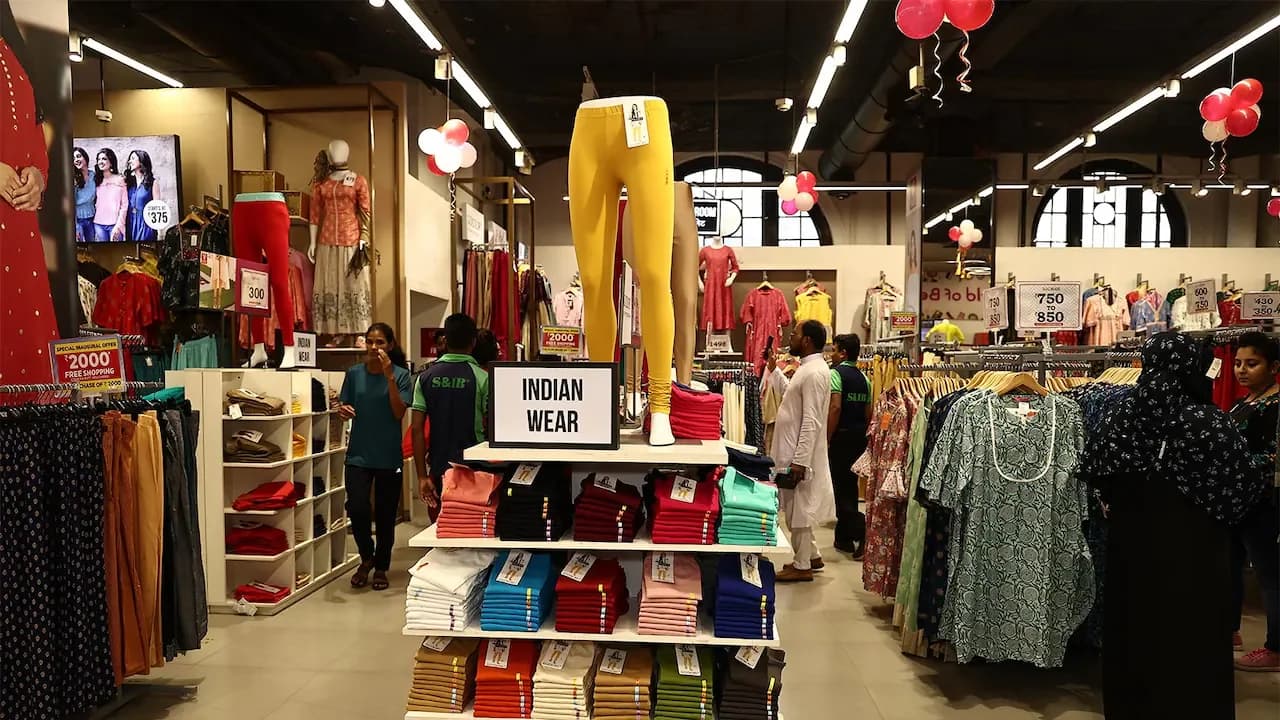
Value fashion retailers showed robust momentum alongside FMCG and white goods companies, indicating broad-based consumer spending recovery. V-Mart's 23% revenue growth to ₹1,089 crore came with 9% same-store sales growth. The company opened 15 new stores, taking its total count to 591.
However, V-Mart maintained better same-store sales growth (9% vs 7.5%), suggesting stronger brand loyalty and operational efficiency.
D'Mart's 15% revenue growth to ₹18,343 crore indicated robust grocery consumption despite heatwave challenges. The company's focus on basic home and personal care products provided resilience, while its value proposition attracted budget-conscious consumers during inflationary periods.
The Looming Risks
Despite the strong Q1 performance, companies remain cautious about evolving risks. El Niño's potential impact on the monsoon tops the worry list. Poor monsoon could affect agricultural incomes, directly impacting rural purchasing power. For Marico, which depends heavily on copra (coconut) supplies, El Niño-induced drought conditions could reverse favorable price trends.
Geopolitical tensions and supply chain disruptions pose another threat. The West Asia crisis, which triggered the LPG shortage and crude derivative price spike, remains unresolved. Elevated shipping rates and lower vessel availability created supply chain challenges during the quarter, and these could persist.
Companies are closely monitoring inflationary trends despite current operating profit improvements. The feedback loops between input costs and pricing power are delicate—aggressive pricing during inflationary periods can lead to permanent market share loss, while absorbing costs compresses margins.
What Lies Ahead
The recent correction in crude-linked derivatives offers hope for home and personal care companies in subsequent quarters. Lower crude prices reduce costs for packaging materials, surfactants, and fragrances. However, the benefits will flow through gradually as supply contracts reset.
The sustainability of double-digit sales growth remains uncertain. Heatwave-driven demand is inherently seasonal. As temperatures normalize, growth rates may moderate. The structural consumption story—India's rising incomes, young population, and organized market penetration—remains intact, but near-term volatility is guaranteed.
Companies that navigate this complex environment successfully will share common traits: resilient supply chains, strong brands that maintain pricing power, and the financial flexibility to invest during periods of stress. The heatwave provided a temporary boost, but the real test lies in sustaining momentum when the weather cools.