The Paradox of Strength and Weakness
HDFC Bank presents one of the most puzzling contradictions in Indian markets today. On paper, the bank is a fortress. Bank of America recently highlighted its Common Equity Tier 1 (CET1) ratio of 17.4%—the strongest among major Indian banks—and gross and net non-performing loan ratios that are among the lowest in the sector. Yet the stock has plummeted 26.83% year-to-date, hitting a 52-week low of ₹715.10 on August 19, 2026. Meanwhile, the Nifty Private Bank index has gained over 1%, and peers like ICICI Bank, Kotak Mahindra Bank, IDFC First Bank, and Bandhan Bank have posted significant gains. The question isn't about fundamentals anymore. It's about trust, and right now, the market is charging HDFC Bank a steep premium for the lack of it.
The Governance Crisis That Won't Go Away
The root of HDFC Bank's troubles lies in a series of governance missteps that have fundamentally altered how investors perceive the institution. In March 2026, part-time Chairman Atanu Chakraborty resigned abruptly, stating that "certain happenings and practices within the bank" were not congruent with his personal values and ethics. That single sentence erased approximately ₹1.6 lakh crore in market capitalization over three trading sessions. Then came reports of an Audit Committee-ordered investigation into payments totaling ₹45 crore to a PSU disguised as marketing spend. Most recently, a group of over 75 investors who purchased Carlisle's Luxembourg Life Fund through HDFC Bank's Dubai operations have announced plans to approach the Prime Minister's Office, alleging mis-selling, substantial losses, and prolonged denial of redemption since late 2020. Each new controversy chips away at the governance premium that HDFC Bank once commanded effortlessly.
The Valuation Disconnect
Despite these headwinds, HDFC Bank's valuation metrics suggest the stock should be performing much better. The bank currently trades at an adjusted P/E ratio of 13.99 and a price-to-book ratio of 1.86x—levels last seen during post-merger integration anxiety in 2023. Historically, HDFC Bank commanded 3x–3.5x book value during periods of clean governance and strong growth. The current valuation appears to price in a scenario that may prove too pessimistic, especially considering the bank's robust capital position. HDFC Bank's CET1 ratio of 17.4% significantly outperforms ICICI Bank's 16.25% and public sector banks' 13-14%. Yet the market continues to apply a confidence penalty that analyst models do not fully capture. All 38 analysts still rate the stock as Buy or Strong Buy, but the market is disagreeing on fundamentals and applying a governance discount instead.
The ICICI Bank Contrast
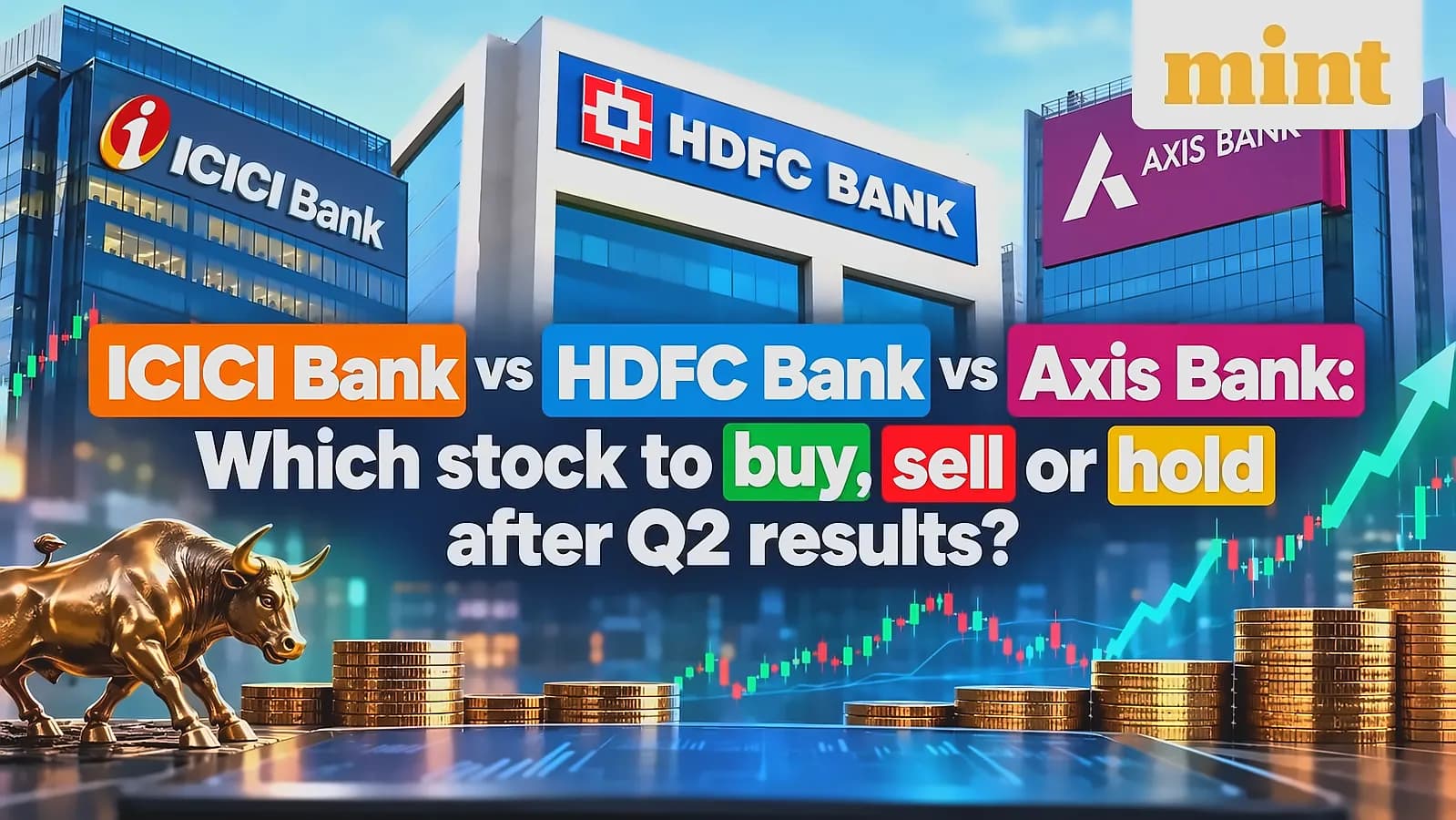
The divergence between HDFC Bank and ICICI Bank is particularly striking given their similar fundamental profiles. Both have been identified by Bank of America as the strongest performers among major lenders with comparable capital ratios and asset quality. Yet ICICI Bank has delivered 48.31% returns over the past year, while HDFC Bank has declined 19.84%. This 68 percentage point difference stems from ICICI Bank's clean governance record, superior operational metrics, and stronger growth momentum. ICICI Bank maintains a higher Net Interest Margin of 4.36% compared to HDFC Bank's 3.26%, a better CASA ratio of 39% versus HDFC's 33-34%, and has transformed its ROE from 12% (FY20) to approximately 17-18% (FY25). While HDFC Bank grapples with governance overhang and post-merger integration challenges, ICICI Bank has emerged as a "clean" growth story with operational excellence and diversified financial services.
Trading Patterns and Investor Sentiment
The current investor sentiment toward HDFC Bank is clearly reflected in its trading patterns. The stock shows higher sell quantities compared to buy quantities, indicating sustained selling pressure. Foreign Institutional Investors have been aggressively offloading shares, with FII holdings declining from 49.2% in December 2024 to 44.05% in Q4 FY26. Trading volume has also declined significantly, with HDFC Bank trading at just 33% of its 1-month average volume. This contrasts sharply with peers like Kotak Mahindra Bank, which trades at 100% of its 1-month average with the highest delivery percentage (62.4%) among private banks, suggesting strong institutional holding. The market is effectively voting with its feet, rotating toward banks with cleaner governance perception and stronger recent momentum.
Operational Challenges Beyond Governance
While governance issues dominate the narrative, HDFC Bank also faces legitimate operational challenges that are weighing on investor sentiment. The post-merger integration with HDFC Ltd has fundamentally altered the bank's business model, increasing exposure to lower-yielding home loans and pressuring overall Net Interest Margins. Management has acknowledged margin pressure, with CEO Sashidhar Jagdishan stating during FY26 earnings calls that "yield on assets had a faster transmission as against deposits on a full year basis, leading to a NIM drop". The bank has deliberately slowed unsecured loan growth compared to peers due to internal risk signals and is prioritizing balance sheet optimization over aggressive growth. Credit costs have risen to 0.40% quarter-on-quarter in Q1 FY27, and the bank faces intense competition for deposits in a tightening liquidity environment. These structural changes mean that the old HDFC Bank—a high-speed compounding machine—may no longer exist in the same form after the merger.
The Path Forward
The recovery timeline for HDFC Bank stock depends on three critical events sequencing properly: a permanent RBI-approved chairman takes charge, the vigilance investigation concludes without damaging structural findings, and Q1 FY27 earnings show NIM improvement and stable deposit costs. Analysts suggest that NIM recovery is "a FY27 story, not a permanent impairment," and the franchise remains intact with resilient loan growth. However, governance discounts compress only when the overhang clears, not when the price falls far enough. The stock may recover only when trust compounds again, not merely when valuation looks inexpensive. For long-term investors willing to look through temporary governance concerns, current valuations at 2.1x trailing book value may present an opportunity. But for the market as a whole, trust has become the critical metric, and on that front, HDFC Bank still has work to do.