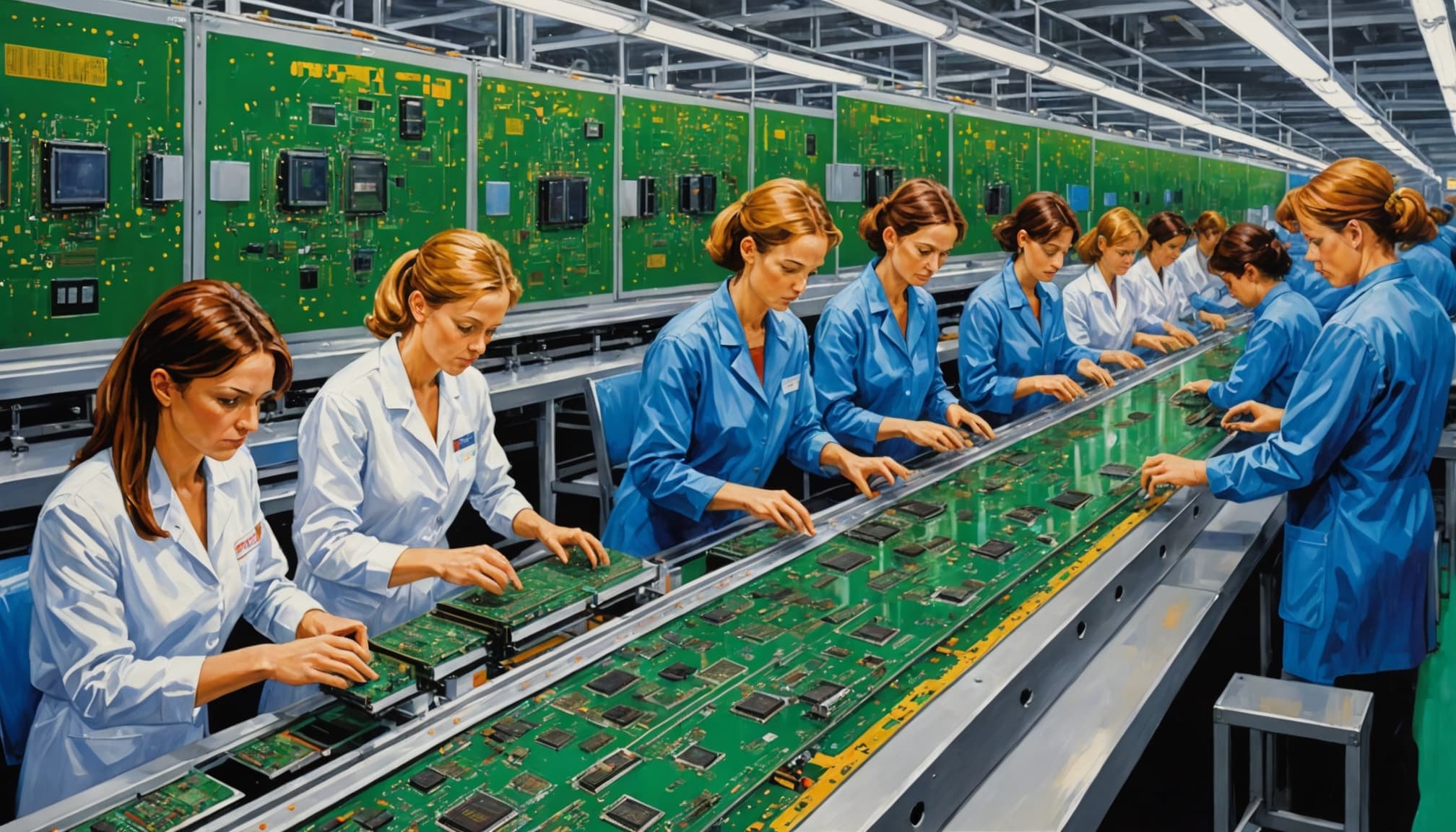
HCL Technologies is making a bold wager that could redefine India's IT services landscape. The company is aggressively hiring an "elite cadre" of engineers—fresh graduates with specialized AI skills who command compensation packages 3-4 times higher than standard hires. These engineers, earning between ₹18-22 lakh annually compared to the industry norm of roughly ₹5-6 lakh, are being groomed over 2-3 years to become Forward Deployed Engineers (FDEs). This isn't just a hiring strategy; it's a fundamental bet on the future of enterprise AI delivery.
The Competitive Pressure Cooker
The driving force behind this strategy is a severe talent shortage. According to ManpowerGroup's 2026 survey, 82% of Indian employers struggle to find AI talent, with AI skills now topping the hardest-to-find list—overtaking traditional engineering for the first time. This scarcity has created a seller's market where AI professionals command a median salary of $160,000 annually in the US, with specialized roles adding 25-45% premiums on top.
HCLTech faces specific pressures from its ₹3,500 crore AI data center investment, which requires geography-specific talent that traditional hiring pools cannot provide. The market is also shifting rapidly from horizontal AI solutions to industry-specific packaged solutions. As one HCLTech executive noted, the company is moving "beyond the horizontal data analytics and AI value chain" toward solutions that customers can deploy faster.
Differentiation from the Midcap Pack
Midcaps are adding management layers to coordinate AI projects, but HCLTech is investing in the engineers who actually build and deploy these systems.
The scale difference is stark. HCLTech has trained 135,000 employees in GenAI technologies, with 11,800 AI builders and more than 700 black belts certified for service transformation. The company boasts the highest number of OpenAI-badged experts among all OpenAI partners. This technical depth creates capabilities that midcaps cannot replicate through executive hiring alone. Transcripts
Capabilities That Money Can't Buy
HCLTech's elite engineers are being developed for capabilities that existing talent pools simply cannot provide. These include Physical AI and cyber-physical engineering, which require expertise in robotics, IoT, and real-time systems. The company is also building Custom Silicon Engineering capabilities, a highly specialized field requiring deep hardware design expertise spanning chip architecture to manufacturing. Transcripts
The OpenAI-badged agentic engineering teams work directly with OpenAI forward-deployed engineers, creating a competitive moat through partnership access. These engineers are developing AI Factory capabilities and industry-specific solutions across financial services, manufacturing, utilities, and life sciences & healthcare. The goal is full-stack AI capabilities spanning from physical AI infrastructure through to AI products, applications, and integration. Transcripts
The Margin Squeeze
This strategy comes with immediate financial costs. HCLTech is already experiencing significant margin pressure from compensation increases. In Q3 FY26, wage hikes contributed 90 basis points to margin decline, with another 45 basis point impact in Q4 FY26 from the second increment cycle. Employee costs currently stand at 57.0% of revenue, but elite engineering compensation is expected to push this higher in the near term. Transcripts +1
The company's guidance reflects this trade-off. While management maintains that the desired margin range remains 19-20%, FY26 margins are expected to be 17-18% due to headwinds including AI investments.
The Revenue Premium Potential
Despite near-term margin pressure, HCLTech sees significant revenue potential from its elite engineers. AI native services are expected to grow in the 25-30% range, compared to overall services growth of just 4.8%. Advanced AI services grew 19.9% in Q3 FY26, led by strong traction in Agentic physical AI and AI factory programs. Transcripts +1
The company has already secured major deals that validate this approach, including a $100 million+ AI factory program for next-generation AI data centers and a $1.14 billion AI-led transformation deal with a Europe-based Fortune Global 50 client. Annualized Advanced AI revenue reached $620 million in FY26, demonstrating early success. Transcripts +1
However, the company faces deflationary pressure on traditional services. Management acknowledges 3-5% deflation in "AI disrupted" services like application development and infrastructure operations.
The Grooming Machine
HCLTech is building a comprehensive training infrastructure to transform elite freshers into FDEs over 2-3 years. The company has trained 135,000 employees in GenAI technologies, with 11,800 AI builders and 700+ black belts certified. In Q3 FY26 alone, over 38,000 additional employees were trained on GenAI and more than 600 on responsible AI. Transcripts
The company uses AI-powered platforms like MentorBot (a virtual mentor) and TalentXchange (an internal talent marketplace) to accelerate development. Specialized upskilling programs target infrastructure and data center teams for AI Data Center initiatives. The Career Shaper platform has impacted over 100,000 learners globally through AI-driven skilling programs. Transcripts
Delivery Model Transformation
The transition to FDEs represents a fundamental shift in project delivery. Unlike traditional software engineers who work in linear build cycles, FDEs operate in rapid iteration cycles: Discovery → Prototype → Validate → Ship → Iterate. They embed directly within client organizations for extended periods, writing production code inside environments they didn't build and scoping problems customers can't articulate.
This embedded model enables premium pricing based on business outcomes rather than hours worked. HCLTech uses flexible billing models—fixed price projects with scaling components for inference silicon work, time and material with per-rack pricing for AI Factory implementation, and traditional fixed price models for custom AI solutions leveraging solution accelerators. Transcripts
The Retention Risk Factor
The most significant threat to HCLTech's strategy is talent retention. The FDE market faces extraordinary demand—job postings grew 1,165% year-over-year, while the qualified candidate pool grew only about 50%. Median FDE base salary is $173,816 globally, with total compensation of $300K-$550K for mid-to-senior roles. Top-tier positions at frontier labs reach $600K to over $1.2M.
HCLTech's elite freshers earning ₹18-22 lakh annually would need massive compensation increases to match global FDE rates after 2-3 years of training. The grooming period creates a vulnerable window where competitors could poach partially-trained talent. Companies like Palantir, OpenAI, Anthropic, Google, and vertical AI startups are aggressively hiring FDEs and have the compensation scales to attract trained talent.
Client Validation and Feedback Loops
Despite the risks, client response has been positive. The OpenAI partnership is delivering measurable impact, with engagements at two large retailers in Europe and the US. HCLTech is rated No. 1 in ISG Client Experience scores for Generative AI Services for two consecutive years and Leader in 6/6 quadrants of ISG Provider Lens™ Advanced Analytics & AI Services 2024. Transcripts
Management reports strong demand for "Day-1" AI services like custom silicon development for edge inferencing and AI Factory professional services. AI has become integral to every deal conversation, with 123 new engagements in AI labs in Q4 FY26 and notable increase in CEO and COO-led transformation programs. Transcripts
The company has established strong feedback loops between client requirements and talent development. A refreshed operating model places skills at the center of talent decision-making, with increased transparency around skills data, proficiencies, deployment, and their linkage to rewards and progression. Data and AI principal cohorts are now strongly embedded in more than 50% of priority accounts, creating direct feedback loops. Transcripts
The Strategic Calculus
HCLTech's elite engineering strategy represents a high-stakes bet on the AI transformation of enterprise IT services. The company is accepting near-term margin pressure and significant retention risks to build capabilities that could provide sustainable competitive advantages. With 227,181 employees and industry-low attrition of 12.5%, HCLTech has the scale to make investments that midcaps cannot match. Transcripts
The success of this strategy will depend on whether the premium pricing power of AI-native services can offset the higher compensation costs, and whether the company can retain elite talent in the face of explosive global demand. If successful, HCLTech could establish itself as the leader in enterprise AI services. If not, the margin pressure and talent losses could weigh heavily on financial performance.
For now, management is prioritizing long-term positioning over near-term margin optimization.
In the AI talent war, HCLTech is betting that quality beats quantity every time.