GRSE vs BEL: The Defence Stock Showdown You Need to Watch
Here's the thing about defence stocks right now - everyone's talking about them, but not everyone understands what's actually driving the numbers. Let's break down what's happening with Garden Reach Shipbuilders and Bharat Electronics, two companies that couldn't be more different despite playing in the same sandbox.
The Numbers Game
GRSE just delivered something pretty remarkable - a record turnover of ₹6,400 crore in FY26, up 26% from the previous year. The stock responded with a 20% rally, hitting ₹2,365. But here's what's interesting: this wasn't just about one good quarter. GRSE has delivered 13 consecutive quarters of year-on-year growth since April 2022. That's the kind of consistency investors love.
Meanwhile, BEL is playing in a completely different league. With a market cap of ₹306,060 crore compared to GRSE's ₹27,026 crore, BEL is the heavyweight champion here. The company reported turnover of ₹26,750 crore and secured additional orders worth ₹6,795 crore, sending its stock up 7.3% to ₹430.20.
The Valuation Puzzle
Here's where it gets interesting. GRSE is trading at a PE ratio of 32.76x, while BEL commands a premium 49.09x. On the surface, BEL looks expensive. But dig deeper, and you'll see why investors are willing to pay that premium.
BEL's net profit margin sits at 22.97% - more than double GRSE's 10.39%. That's the kind of profitability that justifies a higher valuation. But here's the kicker - GRSE's PEG ratio (that's price-to-earnings growth, basically telling you if you're getting value for the growth you're paying for) comes in at 1.64, making it the most attractive among defence PSUs. BEL's PEG? 2.05. AnnualReports +3
What's Driving These Stocks?
The defence sector is riding some serious tailwinds. The Union Budget 2026-27 allocated ₹7.85 lakh crore to defence - a 15.19% increase. More importantly, the capital acquisition budget jumped 24.6% to ₹1.85 lakh crore, with 75% reserved for domestic industries. That's music to these companies' ears.
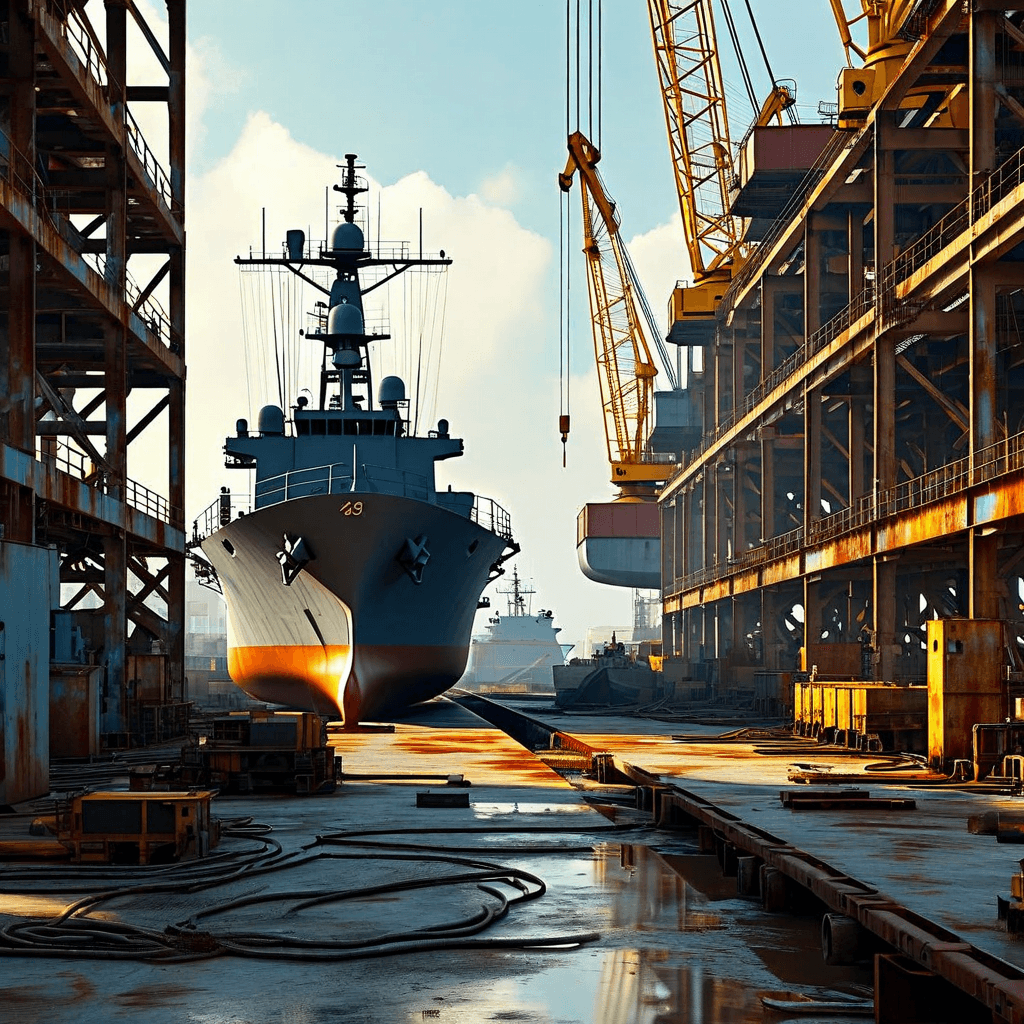
For GRSE, the story is all about the Indian Navy. The company has an order book of ₹22,681 crore, which gives it 4.5x revenue visibility - the highest among peers. But the real excitement lies in what's coming. The Indian Navy has a procurement pipeline worth around ₹1.55 lakh crore for shipbuilding, and GRSE is well-positioned to grab a significant chunk. Transcripts
The P-17 Bravo project alone is worth ₹70,000 crore for 7 ships, and GRSE is the L2 bidder (meaning they're second in line and could still win a substantial portion). There's also a 5-ship project worth ₹33,000 crore where price negotiations are complete - contract could close any day now. Transcripts +1
BEL's story is different but equally compelling. The company has an order book of ₹73,450 crore and is targeting 15%+ growth for the next 3-4 years. The QRSAM program worth ₹30,000-32,000 crore is expected in Q4 FY26, and management is 90%+ confident of securing it. BEL's diversified portfolio across radar, communication, and electronic warfare systems gives it stability that GRSE, with its Navy-heavy focus, doesn't have. Transcripts +1
The Efficiency Battle
When you look at how efficiently these companies run their operations, some interesting patterns emerge. GRSE's net capital turnover ratio is 3.69 times compared to BEL's 1.54 times. What does that mean? GRSE is generating more revenue per rupee of capital employed - that's working capital efficiency at work. AnnualReports +2
But BEL fights back with superior capital efficiency. Its Return on Capital Employed (ROCE) is 36.81% versus GRSE's 32.58%. BEL also has a healthier current ratio at 1.76 compared to GRSE's 1.17, suggesting better liquidity management. AnnualReports +3
What Lies Ahead
Looking at FY27, GRSE has identified it as their peak revenue recognition year, driven by the completion of P-17 Alpha frigates. They're targeting 25-30% CAGR and have their sights set on an order book of ₹70,000 crore by FY27-end. That's ambitious, but given their execution track record, not impossible. Transcripts +1
BEL is taking a more measured approach - consistent 15%+ growth with strong visibility. The company has 30+ major programs valued at minimum ₹1,000 crore each in the pipeline. That's the kind of predictability that institutional investors love. Transcripts
HAL, the third major player in this space, is facing some headwinds. Supply chain issues are affecting LCA Mk1A and HTT-40 deliveries, and the stock is down 13.09% over the past year. But with an order book of ₹2.54 lakh crore, there's significant turnaround potential if they can sort out their execution challenges.
The Bottom Line
So, what's an investor to do? If you're looking for growth at a reasonable price, GRSE presents an interesting case. The stock has delivered 39.50% returns over the past year, and with the Navy's procurement pipeline and attractive valuation metrics (PEG of 1.64), there's still room to run.
BEL, on the other hand, is the quality pick for conservative investors. Yes, you're paying a premium, but you're getting superior margins, consistent execution, and diversified revenue streams. The 43.39% one-year return suggests the market is rewarding this quality.
The defence sector story isn't going away anytime soon. With the government's push for Atmanirbhar Bharat and 95-97% of orders expected to go to Indian shipyards, companies like GRSE and BEL are positioned to benefit for years to come. The question isn't whether to invest in defence - it's about picking the right horse for your investment style. Document
GRSE offers the growth upside with Navy-specific catalysts, while BEL provides the stability of a diversified, profitable business model. Both have their place in a portfolio, but understanding their different drivers is key to making the right call.