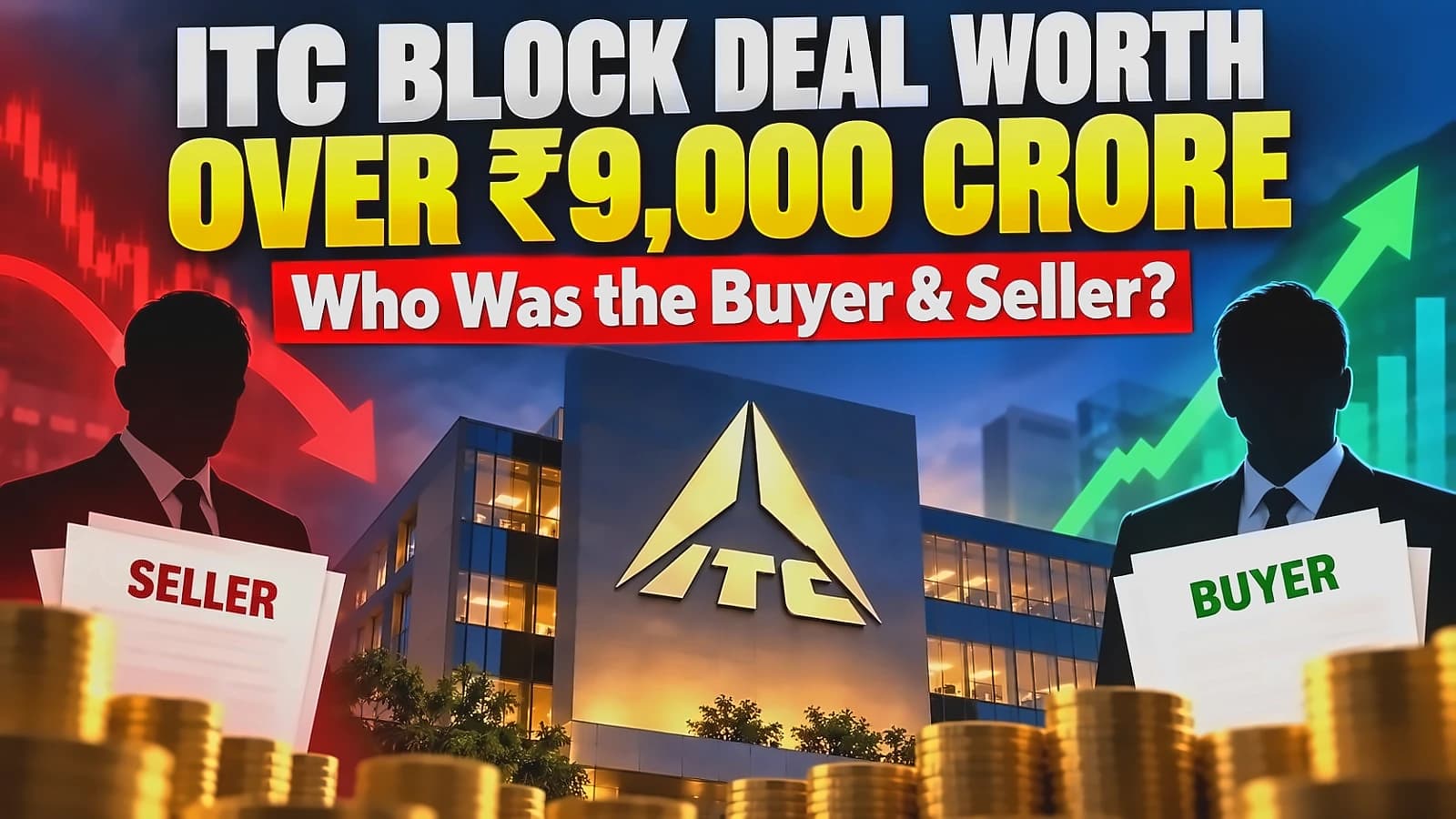
A GQG-linked fund sold 36.51 crore shares, representing 2.91% of the company, for Rs 9,395 crore at an average price of Rs 257.35. This wasn't a sudden decision—regulatory filings show GQG had been steadily reducing its holding through open-market transactions between May 28, 2025, and October 5, 2026, bringing its stake down from 3.48% to 3.17%. Other +1
The timing is striking.
So why would a major institutional investor choose to exit after such a steep decline? The answer lies in a complex mix of company-specific challenges and broader market pressures.
Why GQG Sold
Here's the thing—GQG hasn't publicly stated its reasons for the sale. But reading between the lines of available data reveals several compelling factors.
First, ITC's core cigarette business faced an unprecedented tax hike. Nearly 40% higher excise duties kicked in from February 1, 2026, forcing the company to implement phased price increases rather than one sharp hike. This strategy, while sensible to prevent volume migration to illicit trade, meant slower profit recovery. In Q1 FY27, cigarette segment results plummeted 35% year-on-year to Rs 3,341 crore, with net revenue falling 25%. Investor Presentation +1
Second, volume recovery remained sluggish.
When your biggest profit engine sputters, even long-term investors might reconsider their position. Investor Presentation +1
Third, this wasn't an isolated move. GQG has been systematically paring its Indian holdings. In April 2026, it sold 1% of ITC Hotels for Rs 197 crore. In May and June, it offloaded stakes in Adani Enterprises, Adani Green Energy, and GMR Airports worth thousands of crores. This pattern suggests a broader portfolio rebalancing rather than a judgment solely on ITC's fundamentals.
The Market's Reaction
The block deal itself was absorbed—buyers including Fidelity International, ICICI Prudential Mutual Fund, SBI Mutual Fund, and several other domestic and foreign institutions stepped up to purchase the shares at the same price. Yet ITC's stock still fell over 4% to close at Rs 254.05 on the BSE that day.
Why the slump despite willing buyers? Several factors were at play. The block price of Rs 257.35 was already below recent large trades that had occurred between Rs 260-268 in the preceding days. This signaled that even at discounted prices, sellers were eager to exit. The sheer size of the trade—nearly Rs 9,400 crore changing hands—created psychological pressure. When a major foreign investor dumps a significant stake, it raises questions about what they know that others don't.
Trading volume spiked to 5.37 crore shares, 7.31% above the one-month average, indicating heightened activity and likely some panic selling from smaller investors. The stock extended its losing streak to three sessions, becoming the biggest loser on the Nifty 50 that day.
The Global Backdrop
ITC's decline didn't happen in a vacuum. Global markets were under severe stress in October 2026. The US 30-year Treasury yield had touched 5.68%, its highest level since 2002. The Reserve Bank of India had just hiked the repo rate by 25 basis points to 5.50%, its first increase since February 2023, while the rupee weakened to 96.78 against the dollar and Brent crude climbed above $102.
These conditions create a perfect storm for emerging market stocks. Higher US yields make dollar assets more attractive, pulling foreign money away from markets like India. The Nifty had already fallen for eight straight weeks, its longest losing streak in 25 years, wiping out over Rs 26 lakh crore in market capitalization.
In this environment, any large foreign selling gets amplified. The global risk-off mood meant there was less appetite to absorb big blocks of stock, even in fundamentally sound companies. ITC's defensive characteristics—usually a virtue in tough times—became a liability as investors rotated away from consumer names that had already run up significantly in previous years.
Valuation and Fundamentals
So did ITC's financial performance justify GQG's exit timing? The picture is mixed.
On the negative side, Q1 FY27 consolidated net profit fell 15.6% year-on-year to Rs 4,509 crore, while revenue declined 8.9% to Rs 20,262 crore. The cigarette business, which contributes around 40% of segment revenue but a much larger share of operating profit, was clearly struggling under the tax burden. Group segment profit before tax dropped 28% to Rs 4,759 crore. Investor Presentation
However, not all segments were weak. The FMCG-Others business grew revenue 12% and segment profit 21%, with EBITDA margins expanding 55 basis points to 10%. Dairy, snacks, noodles, and frozen snacks grew over 20%, while personal care grew in the mid-teens. The paperboards and packaging segment delivered strong results, with segment profit rising 38%. Investor Presentation +2
On valuation metrics, ITC was trading at a price-to-earnings ratio of 16.47 and price-to-book of 4.58. Without historical context, it's hard to judge whether this represents value or still reflects premium pricing for a quality franchise. HDFC Securities maintained an "Add" rating with a sum-of-the-parts target price of Rs 300, valuing the cigarettes business at Rs 137 per share and other FMCG at Rs 98 per share. Citi analysts believed the earnings downgrade cycle was largely over.
This suggests GQG may have sold near the bottom if earnings indeed stabilize. But portfolio managers sometimes prioritize risk management over catching the exact bottom, especially when global conditions are deteriorating.
What Lies Ahead
The immediate overhang from GQG's selling appears to have cleared.
If GQG has indeed exited most of its position—my calculations suggest it might hold less than 0.25% remaining—direct supply pressure from this seller should ease. Other
The bigger question is whether domestic institutions can sustain the stock's performance. ITC's ownership is dominated by domestic institutions like the Specified Undertaking of Unit Trust of India (7.78%), mutual funds (16.5%), and Life Insurance Corporation (16.3%). Their continued support will be crucial.
Looking forward, several factors will determine ITC's trajectory. The success of phased price hikes in restoring cigarette margins without triggering further volume decline to illicit trade is critical. Management's ability to sustain double-digit growth in non-cigarette FMCG categories will demonstrate the diversification story. And global conditions—if US yields stabilize and foreign selling abates—could provide tailwinds.
For now, ITC remains a battleground stock. Bulls see a quality franchise trading at reasonable valuations with strong non-cigarette growth. Bears see a company whose core business faces structural challenges from taxation and changing consumer preferences. GQG's exit doesn't provide definitive answers, but it does highlight the tension between these narratives.
The lesson here isn't that one smart money firm's exit signals doom. Rather, it's that even the best companies face periods when the stars don't align—tax shocks hit at the wrong time, global markets turn risk-off, and previously patient investors decide to move on. Whether ITC can navigate this period and emerge stronger will depend more on its execution in coming quarters than on who owns its shares today.