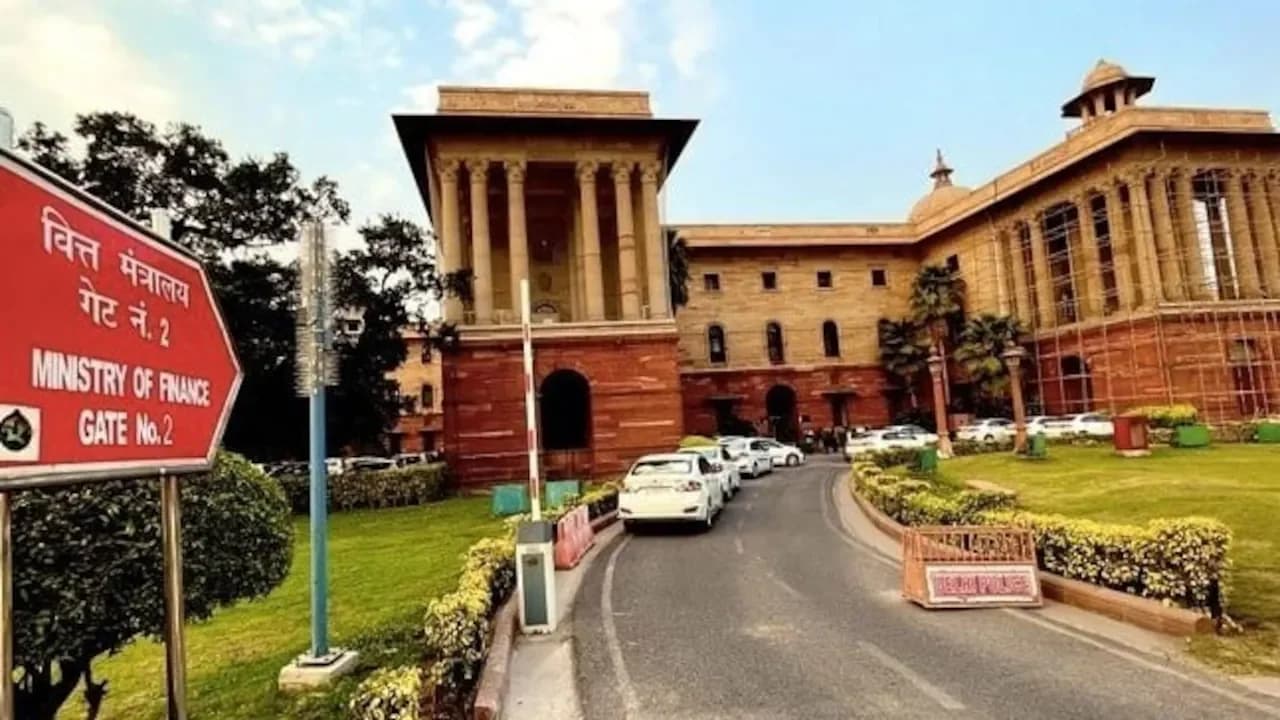
The Centre has launched an aggressive disinvestment programme in FY27, targeting ₹80,000 crore through divestment and asset monetisation. Since May 21, 2026, the government has successfully mobilized over ₹16,000 crore via Offer for Sale (OFS) transactions in five Navratna PSUs: General Insurance Corporation of India, Coal India, NHPC, Central Bank of India, and NLC India. A sixth transaction in Indian Railway Finance Corporation opened on June 24, 2026, offering up to a 2% stake with a greenshoe option.
This accelerated drive serves critical fiscal objectives. Disinvestment receipts fall under 'Miscellaneous Capital Receipts' in the budget, providing non-tax revenue to meet fiscal deficit targets without increasing tax burden or cutting essential expenditure. The ₹16,480 crore raised so far represents 27% of the full-year target, and sources indicate the government is likely to exceed the ₹80,000 crore combined target at the current pace.
DIPAM's Data-Driven Timing Strategy
This framework links dividend flows with PSU performance, connects dividend policy with asset prices, solves trade-offs between market timing and dividend yield, and uses volume-weighted average price to derive optimal windows.
DIPAM has moved from annual plans to rolling plans, creating a pipeline of proposals to capitalize on favorable market conditions without delay. The department has also implemented several execution accelerators: reducing the OFS notice period from T-2 to T-1 to minimize price hammering, reserving 20% of shares for retail investors on a case-to-case basis, and ensuring 25% of non-retail allocations are reserved for mutual funds and insurance companies.
What's Driving Investor Participation
Recent PSU OFS transactions have witnessed robust demand from both institutional and retail investors. Several factors enable this strong participation. The government has consistently priced offerings at healthy discounts to prevailing market prices—Coal India at nearly 10% discount, Central Bank of India with attractive pricing, and others similarly positioned. These discounts create immediate value propositions and short-term arbitrage opportunities.
Navratna PSUs offer compelling fundamental attributes. Coal India boasts a 6.03% dividend yield, Central Bank of India offers 5.54%, and others provide attractive income components. These companies enjoy explicit government backing, monopoly-like franchises in strategic sectors, predictable business models with stable cash flows, and strong credit profiles. DIPAM has also actively engaged mutual funds, urging them to include PSU stocks in their portfolios, which has helped build sustained institutional interest.
Greenshoe Option as Success Indicator
The government has consistently exercised the greenshoe option in most OFS transactions this year—a clear signal of healthy investor appetite. The greenshoe option allows the government to sell additional shares (typically up to 15% of the base offer) if demand exceeds the initial allocation. This mechanism stabilizes prices post-OFS by managing supply-demand dynamics.
In five of six completed transactions, the government exercised the greenshoe, indicating oversubscription. The exception was IRFC's February 2026 OFS, where institutional investors subscribed only 94.98% of their allocated portion, leading the government to skip the oversubscription option. This failure provides valuable lessons for the current transaction.
IRFC's Dramatic Rise and Fall
IRFC's stock price journey has been nothing short of extraordinary.
In 2023 alone, the stock gained 203.7%, driven by a massive PSU re-rating rally, government infrastructure push, expectations of record railway capex, and the award of prestigious Navratna status granting operational autonomy.
However, the stock has subsequently declined 57% from those peaks to current levels around ₹93.9. This correction stems from multiple factors: extreme valuation de-rating (from 30x P/E at peak to 18.41x currently), interest rate spread compression in FY26's elevated rate environment, budget disappointment when railway capex expectations weren't met, growth concentration risk (entirely dependent on Indian Railways), and sector rotation as investors shifted capital to private sector banks and IT stocks.
Current OFS Pricing Strategy
The current IRFC OFS incorporates critical lessons from the February 2026 failure. That transaction failed because the floor price of ₹104 offered less than 0.5% discount to market price, insufficient to attract institutional interest. This time, the government has set a floor price of ₹91, representing approximately 3% discount to current market price—six times deeper than the previous attempt.
The pricing strategy also considers market timing. The stock is trading near its 52-week low of ₹87, having already corrected significantly from peak levels. This provides better risk-reward for investors compared to February when the stock was at higher levels. The offer size is also smaller (2% vs 4% previously), making supply more manageable for market absorption.
Regulatory Constraints on Disinvestment
Despite the accelerated disinvestment push, the government continues to hold 84.65% in IRFC as of March 2026—significantly above the 25% Minimum Public Shareholding (MPS) norm. This is because PSUs are exempt from MPS requirements under amended Securities Contracts (Regulation) Rules. The exemption recognizes strategic importance in critical sectors like railways and financial services.
The New Public Sector Enterprise Policy for Atma Nirbhar Bharat identifies four strategic sectors where the government will maintain "bare minimum presence" at Holding Company level. IRFC, as the dedicated financing arm for Indian Railways, falls under both critical infrastructure and financial services, justifying higher government retention. The government must balance fiscal objectives with strategic control, likely maintaining 51%+ in such entities.
Ownership Structure Impact
IRFC's current ownership structure influences OFS dynamics significantly. The government holds 84.65%, Life Insurance Corporation owns 2.54%, mutual funds hold 0.27%, FIIs 1.16%, and retail investors 11.29%. LIC's presence provides stability but unlikely additional demand. Mutual funds, with their low 0.27% allocation, represent significant upside potential and are key demand drivers—especially with DIPAM's engagement urging MF participation.
The 9.65% stake above the 75% threshold creates potential future supply overhang, as investors anticipate additional government sales. However, the government will likely space these out over multiple years to avoid market disruption and optimize value realization.
Cochin Shipyard: A Contrasting Experience
Contrary to assumptions about undersubscription, Cochin Shipyard's October 2024 OFS was actually successful.
The government exercised the greenshoe option, raising ₹1,980 crore. This success was driven by strong defence sector appeal, order book visibility of ₹22,000 crore, and strategic importance under the 'Atmanirbhar Bharat' initiative.
The business model differences between IRFC and Cochin Shipyard significantly affect investor risk perception.
Cochin Shipyard presents moderate execution risk but strong growth potential and strategic defence sector importance. IRFC attracts conservative investors seeking stability, while Cochin Shipyard appeals to growth investors seeking defence exposure.
Looking Ahead
The current IRFC OFS represents a critical test of whether improved pricing and better timing can overcome the challenges that led to February's failure. The 3% discount, near-52-week-low pricing, and smaller offer size address previous shortcomings. However, the stock's recent underperformance and anticipated future supply overhang may dampen enthusiasm.
The government's disinvestment strategy for Navratna CPSEs will continue balancing fiscal objectives with strategic control, market conditions, and regulatory constraints. As DIPAM refines its data-driven approach and applies lessons from each transaction, the success of future OFS offerings will depend on maintaining the delicate equilibrium between value realization for the government and attractive returns for investors.