India's food regulator has been busy. The Food Safety and Standards Authority of India (FSSAI) recently issued notices to Heritage Foods Limited over "Fresh" and "Healthy" claims on its paneer products, while simultaneously cracking down on energy drink manufacturers for misleading functional claims. The regulator even seized 53,256 cans of Red Bull Energy Drink from a Jaipur warehouse. But here's the thing—these two cases represent fundamentally different types of regulatory challenges with vastly different implications for the companies involved.
Heritage Foods: A Labeling Interpretation Issue
Heritage Foods received a show cause notice on July 6, 2026, questioning two specific claims on its paneer products. The "Fresh Paneer" claim allegedly doesn't meet conditions under Schedule V for using the term "Fresh," while the "Healthy" term in the company's "Healthy Happiness" trademark supposedly violates Regulation 8(3) of the Food Safety and Standards (Advertising and Claims) Regulations, 2018.
The company's defense is straightforward. Heritage Foods argues that paneer is inherently a fresh dairy product made from pasteurized milk for refrigerated consumption within a limited shelf life—neither dehydrated, reconstituted, nor frozen. The "Fresh Paneer" terminology simply distinguishes it from frozen paneer variants in their portfolio. As for "Healthy Happiness," the company clarifies it's a long-standing corporate slogan reflecting their philosophy, not a health or nutritional claim for the paneer itself.
Potential Penalties for Heritage Foods
If FSSAI finds Heritage Foods in violation, the penalties under the Food Safety and Standards Act, 2006 are structured but not catastrophic. For misbranded food (Section 52), the penalty can extend to ₹3 lakh. For misleading advertisements (Section 53), it can go up to ₹10 lakh. The company has faced regulatory action before—including a ₹10 lakh penalty in February 2018 for Heritage Fresh Paneer regarding lower fat content and certain labeling declarations—but has consistently maintained that these actions don't question the fundamental quality or safety of their products. Others
The financial impact remains manageable. Professional packaging redesign for 10-15 paneer SKUs might cost ₹2-15 lakhs, with additional hidden costs for inventory write-offs and supply chain adjustments. But compared to the company's scale—FY27 Q1 revenue of ₹1,118.77 crores with dairy contributing 98.42%—these costs represent a minor operational blip rather than a strategic threat .
Energy Drinks: An Existential Category Threat
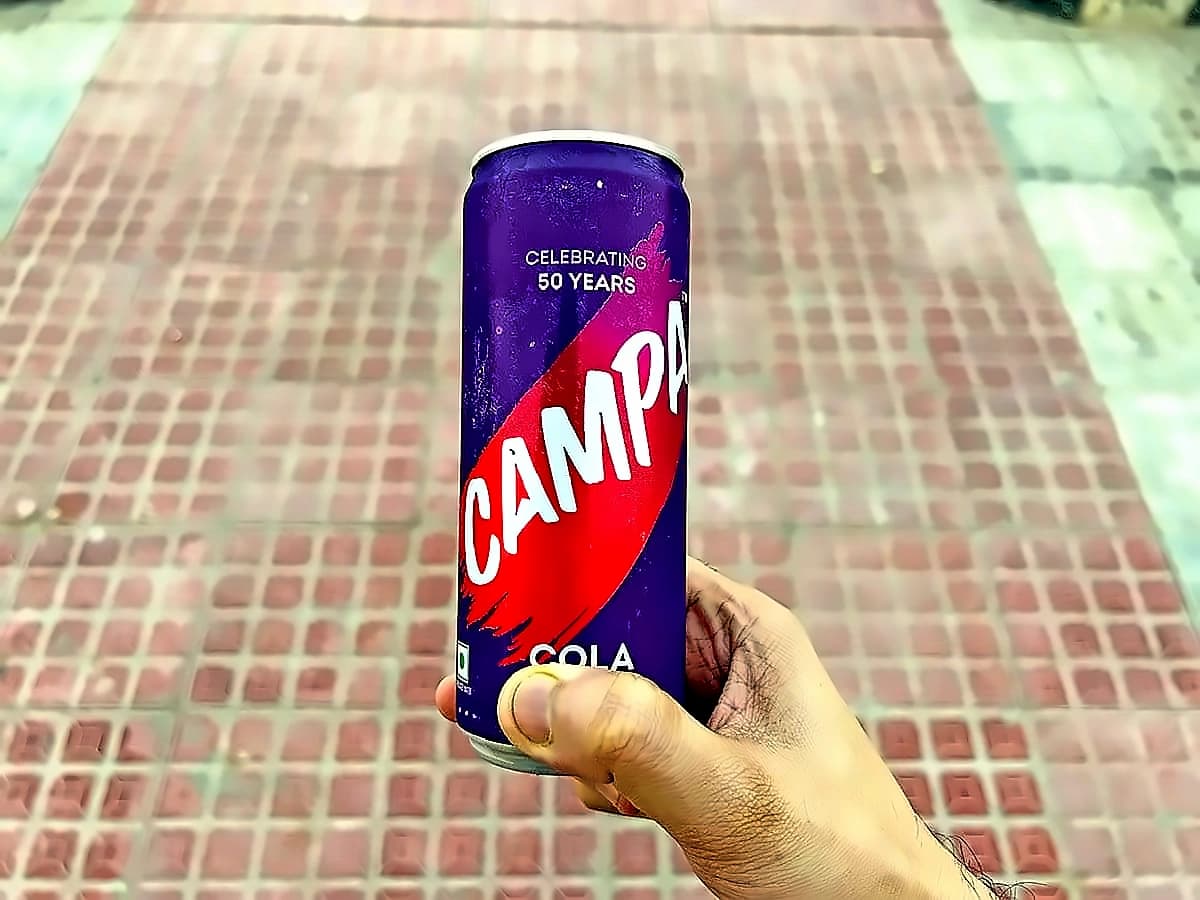
The energy drink situation is dramatically different. FSSAI has issued notices to six major brands—Red Bull, PepsiCo's Adrenaline Rush, Reliance's Campa Energy Drink, Sting, Hell Energy, and Coca-Cola-backed Monster Energy—stating that the regulator "has not notified any standard for 'Energy Drink' or similar products". This isn't just about specific claims; it's a fundamental challenge to the entire product category's legitimacy under Indian regulations.
The Jaipur seizure of 53,256 Red Bull cans carrying the claim "energy drink, vitalizes body and mind" demonstrates FSSAI's willingness to take immediate enforcement action. The samples were sent to the State Food Laboratory for analysis, with legal action promised if claims violate labelling and advertising norms. This is product seizure, not just a notice—a clear escalation in regulatory enforcement.
Regulatory Severity: A Tale of Two Approaches
The nature of violations also differs fundamentally. Heritage Foods' alleged violations involve technical interpretations of labeling terminology—whether "Fresh" meets Schedule V conditions and whether "Healthy" in a corporate slogan constitutes a health claim. Energy drink violations involve functional and therapeutic claims like "vitalizes body and mind," "enhances focus," and "boosts energy levels"—claims that FSSAI explicitly states are "not permissible for food products under the FSS Act 2006".
Financial Impact: Manageable vs Massive
For Heritage Foods, the financial impact remains contained. Even in a worst-case scenario requiring complete product withdrawal, the company's diversified portfolio provides buffers. Paneer represents a portion of their Value-Added Products (VAP) segment, which contributes 38% of total sales (₹4,132 crore) with 18% YoY growth. If paneer represents 20-30% of VAP revenue, that's ₹826-1,240 crore at risk—but this is an extreme scenario.
Energy drink manufacturers face potentially catastrophic costs. The India energy drink market was valued at USD 1.6 billion (~₹13,400 crore) in 2026, with the top five companies controlling 93% market share. Comprehensive cost impacts could range from ₹56-367 crore per company, including fines (₹25-50 lakh), legal defense (₹50 lakh-₹2 crore), packaging changes (₹5-15 lakh), product seizures (₹80 lakh for single case, potentially ₹5-10 crore multi-state), marketing rebranding (₹50-300 crore), and supply chain disruption (₹5-50 crore).
Brand Trust: Recovery Challenges
Consumer trust impacts also differ significantly. Heritage Foods faces a recoverable brand trust challenge primarily affecting product quality perception and credibility. The company has established itself as "one of India's leading and most trusted dairy brands" since 1992, serving over 1 crore consumers daily across 9 states with 859 Heritage Parlours. Recovery timelines of 12-18 months are realistic with transparent communication and consistent product performance.
Energy drink manufacturers confront an existential category trust crisis. The health risk perception is substantially higher given research showing energy drinks can "disrupt normal heart function" and cause "elevated blood pressure and abnormal electrical activity in the heart". Emergency room visits related to caffeine overdose more than doubled for middle school children from 2017 to 2023, creating particular sensitivity around youth-targeted marketing. Recovery timelines stretch to 36+ months with uncertain success.
Strategic Responses: Compliance vs Transformation
Heritage Foods has implemented a measured, compliance-focused approach. The company submitted a detailed response to FSSAI on July 2, 2026, framing the issue as a "labeling interpretation" matter rather than product quality concern. They're leveraging existing ISO 22000 certification and the CII-FACE Kaizen Award 2024 Bronze Medal for food safety to demonstrate quality systems. Operational impact remains minimal, with continued focus on paneer category expansion growing at 30%+ CAGR and product innovation like Nourish+ paneer (60 grams protein variant). Others
Energy drink companies require complete business model transformation.
The industry is transitioning toward clean-label formulations with natural caffeine sources (green tea extract, guarana, green coffee), sugar reduction, and functional ingredients like vitamins, electrolytes, and adaptogens. This represents a fundamental repositioning from performance enhancement to wellness orientation.
The Bottom Line
The FSSAI regulatory actions reveal two fundamentally different compliance challenges. Heritage Foods faces a manageable technical interpretation issue with limited operational impact and recoverable brand trust consequences. Energy drink manufacturers confront an existential category threat requiring complete business model transformation, with massive financial implications and uncertain consumer acceptance.
For Heritage Foods, this is a compliance hurdle to clear. For energy drink companies, it's a battle for category survival. The differential impact stems from the nature of violations (technical compliance vs. health safety), regulatory severity (product-specific vs. category-wide), and consumer vulnerability involved (general population vs. youth demographic). As FSSAI continues its tightening enforcement, the message to food businesses is clear: interpret regulations conservatively, because the cost of getting it wrong has never been higher.