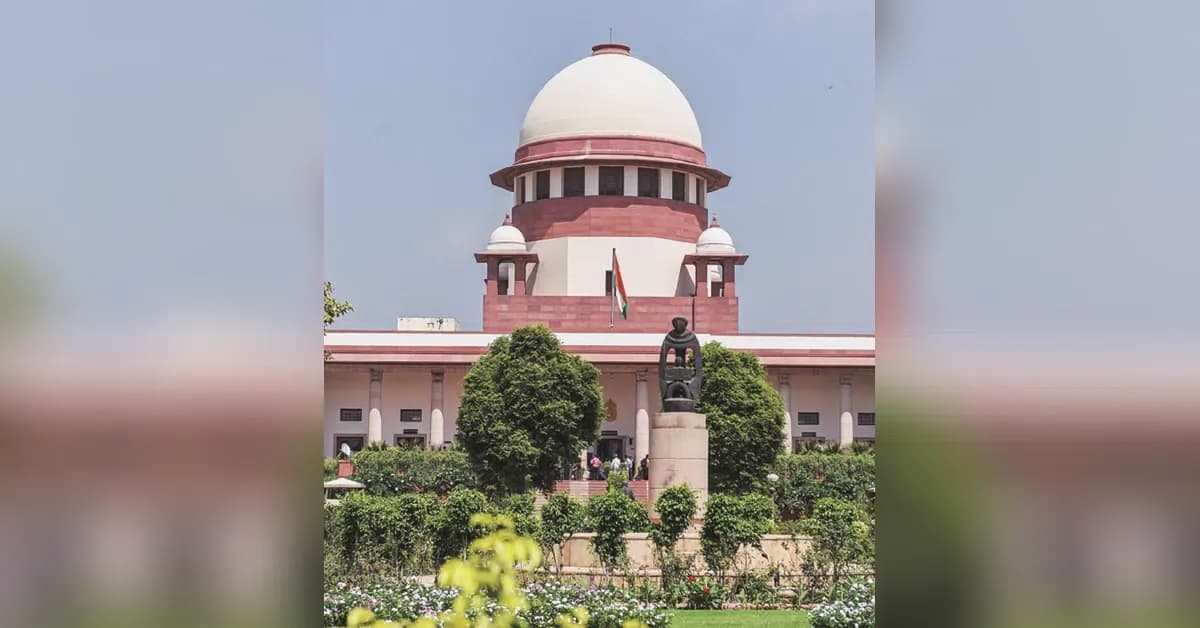
In September 2022, the Supreme Court awarded six months' jail to former Fortis promoters Malvinder and Shivinder Singh and ordered a forensic audit of their company's sale to Malaysia's IHH Healthcare. This wasn't just another corporate dispute—it was the culmination of a decade-long battle by Japanese pharma giant Daiichi Sankyo to enforce a Singapore arbitration award stemming from the Singh brothers' 2008 sale of Ranbaxy Laboratories. The award, initially Rs 2,562 crore, has swollen to approximately Rs 5,300 crore with interest. Yet Daiichi has recovered less than 1.5% of this amount.
The forensic audit now underway examines a complex triangular transaction structure: IHH infused Rs 4,000 crore into Fortis in July 2018, which was then used to acquire RHT Health Trust's Indian assets for Rs 4,666 crore. Daiichi alleges this was a "clandestine transfer" designed to dissipate assets that could otherwise satisfy its award. The Supreme Court observed that while the RHT acquisition appears "prima facie" to serve Fortis's business structure, the facts on record were inadequate for definitive evaluation—hence the forensic audit directive. AnnualReports +1
The Asset Dilution Puzzle
The numbers tell a stark story. Between September 2016 and 2018, the Singh brothers' stake in Fortis Healthcare collapsed from 70.28% to 5.87%. This wasn't normal market activity—it occurred despite multiple Supreme Court and High Court orders protecting their assets. The Court had forbidden the brothers from pledging additional shares and ordered status quo on their holdings.
How did this happen? The Supreme Court identified a "device" was employed: with direct sales blocked, shares were proceeded against by banks and financial institutions through pledge enforcement. The Court noted that within 18 months, the shareholding of Fortis Healthcare Holding Private Limited (FHHPL) stood reduced to a "negligible level". None of the banks informed the Court what the consequences of their actions would be.
The mechanism was straightforward but devastating. Banks invoked pledges on encumbered shares (permitted under a February 2018 clarification) but also transferred unencumbered shares without court authorization. When the Singh brothers couldn't meet margin calls, banks sold the pledged shares. The result: assets that should have been available to satisfy Daiichi's award simply evaporated.
The 17 Banks and Their Role
Daiichi's petition names 17 banks and financial institutions, including HDFC Ltd, Yes Bank, Axis Bank, Citicorp Finance, Aditya Birla Sun Life Insurance Co, and Kotak Mahindra Investments. The allegation: these lenders invoked pledges on Fortis shares in violation of Supreme Court and High Court orders, and extended loans to loss-making entities without adequate due diligence.
The most documented violation involves Indiabulls. In September 2018, Indiabulls Ventures Limited transferred 12.25 lakh Fortis shares to Indiabulls Housing Finance Limited. The Supreme Court held six Indiabulls directors guilty of contempt, noting they had "knowingly and willfully" disobeyed court orders. The Court ordered Indiabulls to deposit the value of these shares as of August 31, 2017.
But this wasn't an isolated incident. The Supreme Court observed that banks had intervened in matters pending before the Court, were definitely aware of the arbitration award, and their role would "require closer scrutiny". The forensic audit will examine whether these lenders aided and abetted the constant erosion of the Singh brothers' assets.
The Religare Connection
The asset diversion network extended well beyond Fortis. SEBI's forensic audit revealed that Religare Finvest Limited and Religare Enterprises Limited diverted Rs 2,315 crore (later revised to Rs 2,473.66 crore) through 21 conduit entities for the ultimate benefit of the Singh brothers. The diversion operated through four primary routes: fixed deposits with Lakshmi Vilas Bank (Rs 729.13 crore), loans to Bharat Road Network and OSPL Infradeal (Rs 250 crore), loans to promoter-linked entities (Rs 1,260.96 crore), and loans to Religare entities (Rs 75 crore).
The conduit entities—including Best Healthcare, Fern Healthcare, Modland Wears, Davera Developers, and Vitoba Realtors—were "merely a facade for REL's promoters and their agents," according to SEBI. These same entities also appeared in Fortis Healthcare's Rs 403 crore diversion case, where funds were routed from Fortis Hospitals to RHC Holding (the parent company of the Fortis-Religare group) and Religare Finvest.
The connections ran deeper. Daiichi alleged that the Singh brothers used Shimal Healthcare to divert Rs 1,407.33 crore through preference shares and debentures, routing funds to entities including Fern, Best, and Modland. The Singh brothers also took loans worth Rs 2,315 crore from Religare Enterprises and Religare Finvest. In 2019, the court ordered Religare to recall these loans and not dispose of assets till repaid to Fortis Healthcare.
The Singapore-Malaysia-India Triangle
The cross-border dimension adds complexity. RHT Health Trust, listed on the Singapore Exchange, was promoted by the Singh brothers. Gurpreet Singh Dhillon, a close relative of the Singh brothers, served as former CEO of RHT Trust. The Dhillon family's connections to the Singh brothers run through the Radha Soami Satsang Beas spiritual organization—Gurinder Singh Dhillon is Shivinder's maternal grandfather.
When Fortis acquired RHT's Indian assets for Rs 4,666 crore, the funds flowed to Singapore. Daiichi alleged that Rs 4,000 crore was transferred to RHT Trust, Singapore, in breach of the Supreme Court's December 14, 2018 order. Further transfers were made to RHT's unitholders, including Dhillon family members. RHT has since been wound up and delisted from the Singapore Exchange effective January 31, 2024. AnnualReports +2
IHH Healthcare, the Malaysian company that infused Rs 4,000 crore into Fortis, acquired a 31% controlling stake. The Supreme Court stayed IHH's open offer to acquire an additional 26%, leaving Rs 3,349 crore stuck in an escrow account. IHH maintains the transaction was bona fide and designed to consolidate Fortis's business structure. AnnualReports +1
What the Forensic Audit Could Reveal
The Delhi High Court has appointed S Ramanand Aiyar & Co as forensic auditor, with a six-month timeline to reconstruct the movement of Fortis shares, funds, and related transactions from May 24, 2016. The audit will examine share pledges, additional securities, transfers, releases, and sales of pledged shares, and whether these occurred after relevant court orders.
The potential recovery targets are substantial. Prius Real Estate debentures (Rs 1,429.50 crore), Shimal Healthcare network (Rs 1,407.33 crore), RHC Holding outstanding obligations (Rs 1,539.05 crore), and international subsidiary assets could all be subject to recovery if the audit establishes fraudulent intent. AnnualReports
Daiichi has argued that Fortis Healthcare is bound by the Singh brothers' undertakings through the "theory of attribution"—that the undertakings given by the Singh brothers should be deemed to have been made by Fortis given their control over the company. If the audit establishes Fortis's participation in asset dissipation, Daiichi could potentially recover INR 2,341.90 crores directly from Fortis.
The Bigger Picture
This case isn't just about recovering money—it's about establishing new standards for enforcing foreign arbitration awards in India. The Supreme Court's intervention addresses systemic gaps: asset dissipation despite court orders, inadequate investigation of cross-border transactions, fragmented regulatory actions, and limitations of private forensic audits. AuditReports
The supervision of forensic audits by retired high court judges enhances credibility through independence, procedural rigor, and direct enforceability. Court-backed findings carry implicit judicial endorsement, can be treated as contempt if ignored, and have greater acceptance in cross-border enforcement proceedings.
For the banking sector, this case will likely lead to enhanced pledge management systems, court order verification protocols, and expanded liability frameworks for facilitating asset dissipation. For cross-border M&A, expect enhanced disclosure requirements, beneficial ownership tracing, and asset flow mapping.
The forensic audit findings could fundamentally transform Daiichi's enforcement prospects.
But the process will face challenges: Fortis maintains the transactions were bona fide business restructuring, cross-border enforcement is complex, and litigation will likely extend for years. AuditReports
As the forensic audit unfolds, it will reveal whether the Rs 4,000 crore IHH infusion and Rs 4,666 crore RHT acquisition were legitimate business transactions or a sophisticated asset dissipation scheme. The answer will determine not just Daiichi's recovery prospects, but the future of cross-border arbitration award enforcement in India.