Force Motors is making a calculated bet on electric commercial vehicles. The company has developed the T1N monocoque electric platform, which serves as the foundation for multiple van variants including the Traveller EV and Urbania EV. This platform approach allows Force Motors to spawn different body styles—passenger vans, ambulances, and delivery vehicles—from a common electric architecture. The development process is complete, and the vehicles are currently undergoing final testing and homologation with ARAI (Automotive Research Association of India). Managing Director Prasan Firodia has confirmed a launch window between January and March 2027 for the Traveller EV, with the Urbania EV following a few months later.
The T1N Platform and Battery Advantage
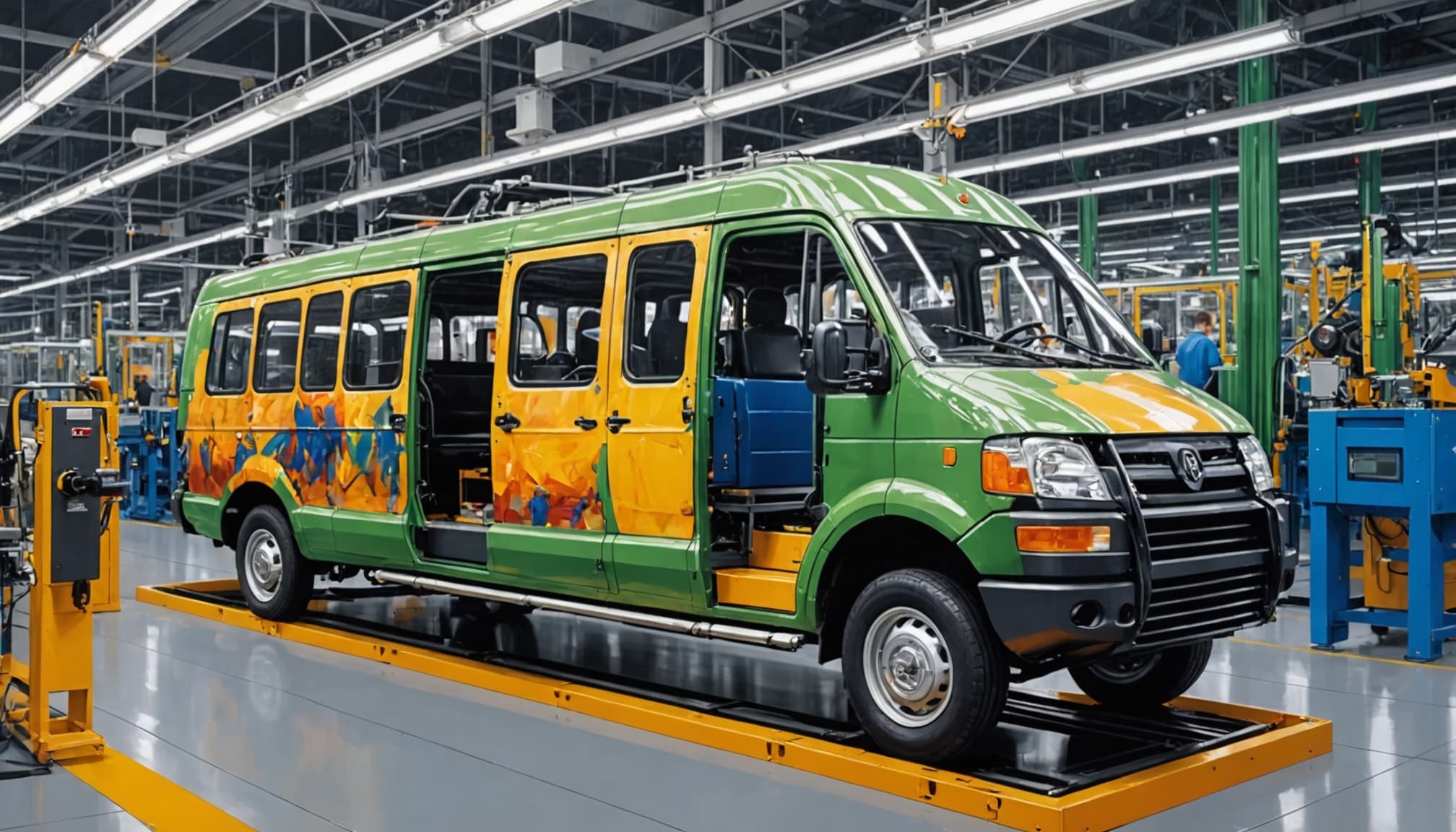
The e-Traveller Smart Citibus EV, built on this platform, packs a 70 kWh battery with 18% gradability. These specifications matter in commercial operations. The 70 kWh pack supports intracity shift operations, while 18% gradability means the vehicle can handle flyovers, ramps, and hilly urban routes that many commercial vans struggle with. The company positions this as India's first monocoque panel e-van, designed as a 14-seater solution for last-mile connectivity. Its compact 5.4-meter length, smallest turning circle, and 1.8-meter standing height make it suitable for dense city routes and passenger comfort. Features like an electrically operated jack-knife door, AC, internal and external cameras, and GPS add to its appeal for fleet operators.
Why a Dedicated Electric Platform?
Why build a dedicated electric platform instead of retrofitting diesel? The company doesn't explicitly state its reasoning in filings, but the advantages are structural. A monocoque body is fundamentally different from the body-on-frame layout typical of diesel commercial vehicles. Designing the structure around a large battery pack and electric drivetrain from scratch simplifies packaging and optimizes weight distribution. The company emphasizes that the lightweight monocoque body cuts power use and costs. Additionally, a dedicated platform enables multiple variants to share components, improving economies of scale. This approach also lets Force Motors continue its existing diesel and CNG lines—the new Traveller N range launched in May 2026 is a refreshed internal-combustion platform—while preparing for an electric future. Other
The ₹3,000 Crore Investment Plan
The scale of this ambition is reflected in the company's capital commitment.
This outlay covers new variants, capacity enhancement, future hybrid drivetrains, and legislation compliance across the value chain. It includes a new paint shop, a ₹150 crore digitization program called Project DigiForce, and shop-floor automation. The expansion will be funded entirely through internal accruals, according to management. This is significant because Force Motors ended FY26 with zero debt, giving it financial flexibility. However, the spending will pressure free cash flow. FY26 operating cash flow was ₹1,297 crore against capital expenditure of ₹540 crore, leaving free cash flow of ₹757 crore. If the ₹3,000 crore is spread evenly over 2.5 years, annual spending could approach ₹1,200 crore, potentially squeezing free cash flow unless operating cash flow grows. Investor Presentation
The company hasn't disclosed a payback period or return on investment targets for this expansion. The best available reference point is its current returns: FY26 ROE was 33.53% and ROCE was 30.82%. The investment case rests on supply-constrained demand—management reported monthly output of about 3,000 units against a run rate of 4,000, creating a backlog of 1,500–2,000 units. Urbania, the premium shared-mobility van, is averaging 700 units per month with a target of 1,000. The electric variants will add to this mix, but their volume contribution depends on demand and policy.
Revenue Mix and Demand Segments
Management expects a multi-fuel future, with diesel, CNG, electric, hybrid, and hydrogen all in use. It estimates EV penetration in commercial vehicles is still below 1%. This gradual adoption suggests that electric vehicles will remain a small portion of Force Motors' revenue mix over the next 3–5 years. The company's current product lineup is dominated by diesel engines, including the Traveller N and Urbania. Diesel buses account for about 95% of annual bus sales in India. On this evidence, the electric share of revenue is likely to stay modest in the near term, with diesel and CNG continuing to drive the bulk of sales. Annual Report +2
Which segments will drive electric adoption? Industry studies and the company's positioning point to school buses, employee transportation, and intracity ambulances. These applications share characteristics that make electric viable: fixed routes, predictable daily distances, and return-to-depot operations that allow overnight charging. Fleet operators with high vehicle utilization benefit most from lower running and maintenance costs, despite higher upfront prices. Studies show electric buses can reduce operating costs by 31% against diesel and 18% against CNG. Force Motors is already India's most preferred ambulance maker and the fastest-growing school bus manufacturer, giving it a ready customer base for these segments. Tourism and small inter-city applications are also identified as probable use cases, likely because shorter routes with fixed overnight stops could fit within the battery's range. However, no source quantifies the revenue potential of these segments. Investor Presentation +1
Regulatory Drivers and Homologation
Regulatory incentives and compliance requirements are shaping this strategy. The PM E-DRIVE scheme, with an outlay of ₹10,900 crore, supports e-ambulances, e-trucks, and e-buses. The ambulance incentive is quoted as ₹30,000 per kWh of battery capacity or 35% of the ex-factory price. This could make the electric ambulance variant more attractive to buyers. However, the scheme's e-bus support is for bulk acquisition by state agencies, and e-truck categories are for vehicles above 3.5 tonnes. A 14-seater van may not qualify for passenger-van incentives, except possibly the ambulance variant. The company has also asked for GST rationalization, localization-linked incentives, and capital investment allowances. On the compliance side, the End-of-Life Vehicles Rules, 2025 impose extended producer responsibility, for which Force Motors booked a ₹260 lakh provision in FY26. Tighter emission norms in the future would raise diesel compliance costs, potentially narrowing the price gap with electric vehicles and strengthening the case for the dedicated electric platform. Annual Report +1
The ARAI homologation process is a critical milestone before launch. Homologation is the final regulatory gate before vehicles can be sold. The company has said the Traveller EV platform is developed and in final testing with ARAI. Any delay in this process could push the Q1 2027 launch window into FY28, affecting first-year revenue. Management has also indicated that the vehicles are "fully ready" but that there is "no point launching if there is no demand" due to the absence of government incentives. This suggests the launch timing may depend on commercial considerations as much as regulatory approval.
Competitive Positioning and Launch Strategy
Competitive positioning in the electric commercial vehicle market is still taking shape. Sourced rivals are mostly in adjacent segments: Tata Motors has electric minitrucks, pickups, and buses; Mahindra and Eicher offer cargo vans like the Zeo and E-Xpress. Tata's Winger is the closest diesel rival in passenger vans, but no electric Winger was found in these results. A third-party site lists a "Force Urbania EV" at ₹28–32 lakh with a 220–250 km range, but this conflicts with the company-linked report that the Urbania EV is still under development, so it should be treated cautiously. The feature set of the e-Traveller—monocoque construction, compact size, standing height, and fleet-oriented amenities—differentiates it in the 14-seater segment. However, pricing and range advantages against competitors remain unverified.
Force Motors' sequential launch strategy—Traveller EV first, followed by Urbania EV—aims to leverage its largest customer base first. The Traveller is the volume line with over 65–70% market share in its segment. Launching the electric variant here allows the company to test demand in schools, ambulances, and employee transport before introducing the premium Urbania EV. This approach could establish a "mainstream EV van" image before moving upmarket. The success of this strategy hinges on whether demand materializes. If incentives improve and total cost of ownership convinces fleet operators, Force Motors is well-positioned with its dedicated platform and strong existing market share. If adoption remains slow, the ₹3,000 crore investment will weigh on returns until the market catches up. Investor Presentation