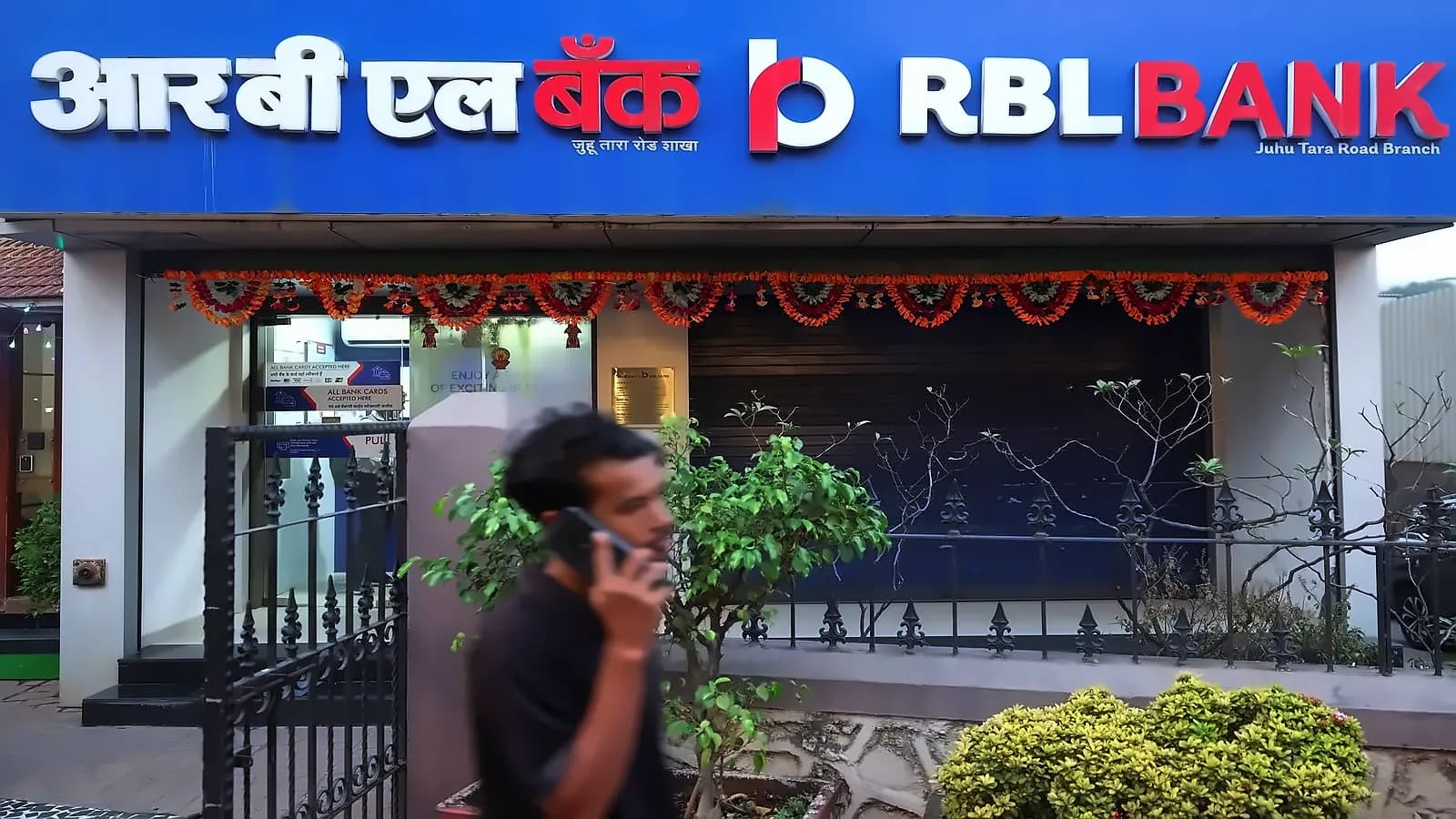
Emirates NBD's proposed acquisition of a 51-74% majority stake in RBL Bank represents a landmark moment in Indian banking—the largest foreign direct investment in the sector to date. The Dubai-based banking giant will invest approximately ₹26,850 crore (~USD 3 billion) through a preferential issuance of up to 95.91 crore equity shares at ₹280 per share. This primary infusion, coupled with a mandatory open offer for an additional 26% stake (41.56 crore shares at the same price), positions Emirates NBD to acquire controlling interest while maintaining RBL Bank's listed status. Others +1
The transaction structure reflects sophisticated financial engineering. Emirates NBD's final shareholding will range between 51% and 74%, subject to foreign ownership limits and open market acceptance levels. The deal is expected to close in Q1 FY27, pending final statutory clearances, with execution projected to take 30-35 days from the last approval date. InvestorPresentations
Capital Structure Transformation
The capital infusion fundamentally reshapes RBL Bank's financial foundation. Pre-transaction, RBL Bank reported a Capital Adequacy Ratio (CRAR) of 14.25% and CET1 Ratio of 12.77% with net worth of ₹16,014 crore. Post-transaction, net worth will surge to approximately ₹42,864 crore—a 2.7x increase—while CRAR is expected to strengthen to the 18-20%+ range. This dramatic enhancement removes capital constraints that have limited RBL Bank's growth ambitions relative to larger peers like HDFC Bank, ICICI Bank, and Axis Bank. InvestorPresentations +1
Balance sheet leverage will improve significantly, with the asset-to-equity ratio declining from 11.3x to approximately 4.2x. This strengthened capital base provides headroom for 15-20%+ annual loan growth, enabling RBL Bank to compete more aggressively in priority segments without regulatory constraints. The infusion also positions RBL Bank for potential credit rating upgrades, which could lower its cost of funds and improve net interest margins—already competitive at 4.41% against peer averages of 3.5-4.0%. InvestorPresentations +1
Shareholder Dilution and Valuation Signals
The preferential issuance of 95.91 crore shares represents substantial dilution for existing shareholders. With current outstanding shares estimated at 61.6 crore, the post-issue total will reach approximately 157.5 crore, resulting in ~61% ownership dilution for current shareholders. The mandatory open offer provides an exit opportunity at ₹280 per share, representing a 17.2% discount to the current market price of ₹338.10 but a modest 4.6% premium to book value of ₹267.63. Others +1
The discount to market price reflects control premium considerations and strategic value beyond current financial metrics, while the premium to book value indicates confidence in RBL Bank's intrinsic value and growth potential under new ownership. Market response has been positive, with RBL Bank shares gaining 3-4% on announcement and trading near 52-week highs following regulatory approvals. Others
Regulatory Navigation and Governance Evolution
The transaction required unprecedented regulatory coordination. The Reserve Bank of India evaluated multiple supervisory concerns before granting approval for up to 74% ownership, including governance structure adequacy, financial stability implications, operational integration complexity, and home country supervision coordination. RBI imposed specific conditions: Emirates NBD must acquire and maintain minimum 51% stake, RBL Bank will operate as a foreign bank subsidiary under Chapter IV of RBI Governance Directions 2025, and voting rights are capped at 26% despite 74% economic ownership. Others +1
The Union Ministry of Finance's separate approval for investment beyond 49% reflects India's multi-layered FDI regulatory framework. Beyond 49% and up to 74% requires explicit government approval under the approval route, distinguishing between RBI's prudential supervision and the Ministry's policy oversight on foreign investment limits and strategic sector considerations. This dual approval process ensures both technical fitness and policy alignment with national interests.
Governance Restructuring and Control Mechanisms
RBL Bank's Articles of Association underwent significant amendments to accommodate Emirates NBD's governance rights. New Article 104A establishes shareholding-based director nomination rights: above 50% shareholding enables Emirates NBD to nominate all non-independent directors including executive directors, providing effective board control. The deletion of Article 85 (casting vote provision) and amendment of Article 116 (board meeting quorum) further strengthen board-based control mechanisms. Others +2
Despite majority ownership, minority shareholder protections remain robust. The 26% voting rights cap prevents unilateral dominance, while 50% independent director representation ensures objective oversight. Enhanced disclosure requirements for foreign bank subsidiaries and RBI supervision provide additional safeguards. This governance balance enables Emirates NBD to exercise strategic control while protecting minority interests through regulatory oversight and board independence.
Strategic Synergies and Competitive Positioning
The acquisition creates a unique competitive entity combining global capabilities with local presence. Emirates NBD brings USD 317 billion in total assets, operations across 13 countries, and sophisticated digital platforms including a wealth management offering with 11,000+ instruments across 21 markets. RBL Bank contributes 15 million customers, 564 branches, strong payments leadership (7th largest in IMPS processing), and niche expertise in gems & jewellery and new economy segments. InvestorPresentations
The combined entity gains distinctive advantages in the India-Middle East corridor. With UAE contributing nearly 19% of India's total remittances (~USD 24.5 billion annually), RBL Bank's existing payments leadership combined with Emirates NBD's cross-border network creates dominant positioning in remittances and trade finance. Emirates NBD's near real-time payment network to 40+ countries and digital wealth platform provide RBL customers unprecedented access to global financial services.
This first-mover advantage in the foreign bank subsidiary framework positions the combined entity to compete effectively with both top-tier domestic private banks and established foreign competitors.
Stakeholder Implications and Integration Challenges
The integration presents significant opportunities and challenges across stakeholder groups. For depositors, enhanced product offerings include global wealth management access, improved cross-border banking services, and advanced digital platforms. Borrowers benefit from expanded credit availability, competitive pricing through improved credit ratings, and specialized trade finance capabilities for international business. InvestorPresentations
Employee implications are more complex. While management continuity under current MD & CEO R Subramaniakumar provides stability, the RBL Bank Employees Union has protested the acquisition as an "onslaught of foreign capital" on Indian banking. Potential restructuring may affect back-office functions, with consolidation of legal, compliance, operations, and technology support roles. However, opportunities for international exposure, skill enhancement, and career progression in a larger organization may offset some concerns.
Corporate governance standards will evolve under foreign bank subsidiary status, requiring compliance with both Indian regulations and international best practices. Enhanced disclosure requirements, consolidated supervision with UAE Central Bank, and stronger risk management frameworks will improve transparency while adding complexity. The 26% voting rights cap and 50% independent director requirement provide robust minority shareholder protections despite majority foreign ownership. Others
Market Response and Future Outlook
Market reaction has been overwhelmingly positive, with RBL Bank shares gaining significantly following announcement and each regulatory approval milestone. Analyst sentiment remains bullish, with several firms maintaining Buy ratings and target prices suggesting 15-20% upside potential from current levels. The transaction has triggered renewed investor interest in mid-sized private banks, potentially catalyzing sector consolidation.
The successful execution of this landmark transaction could reshape India's banking landscape. It demonstrates regulatory openness to majority foreign ownership in strategic sectors while maintaining robust safeguards for financial stability and stakeholder protection. For Emirates NBD, it provides transformative access to one of the world's fastest-growing banking markets. For RBL Bank, it delivers the capital strength and international capabilities needed to accelerate growth and compete effectively with larger peers.
As the transaction moves toward closing in Q1 FY27, all stakeholders will be watching integration execution closely. The realization of synergies, maintenance of service quality, preservation of employee morale, and delivery on growth promises will determine whether this landmark acquisition fulfills its transformative potential for Indian banking.