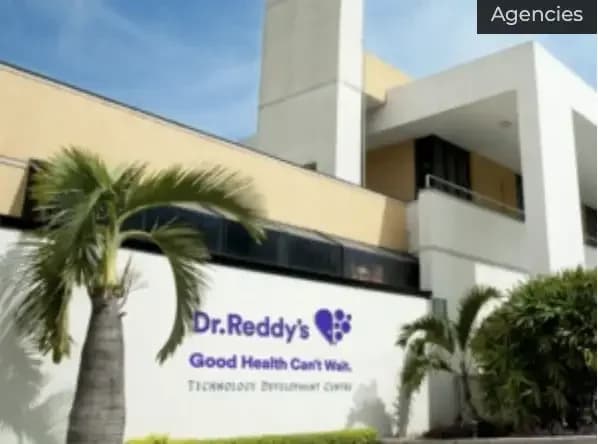
This wasn't just a bad quarter; it was a convergence of three distinct storms: a self-inflicted quality crisis in a high-growth product, structural erosion in its largest market, and a looming regulatory threat that could reshape its entire business model.
The Semaglutide Self-Goal
The company's ambitious bet on generic semaglutide, the blockbuster weight-loss drug, hit a wall during manufacturing scale-up. The specific failure occurred when certain batches were found "out of specification" due to an impurity issue with the active pharmaceutical ingredient (API). This wasn't a problem with the API itself initially, but rather a degradation that occurred during the formulation process when scaling up from laboratory to commercial production.
This technical failure triggered an immediate ₹239.7 crore provision for inventory write-downs and associated costs. The financial impact was severe: gross margins collapsed by 1,039 basis points to 46.5%, while EBITDA margins halved to 12.5%. Excluding this semaglutide hit, EBITDA margins would have been a respectable 15.4%. InvestorPresentations +1
The operational consequences are equally damaging. Commercial supplies are halted until late October or early November 2026, forcing the company to slash its FY27 production target from 12 million pens to just 6-7 million—a 45-50% reduction. In the fast-moving GLP-1 market projected to exceed $100 billion by 2030, this four-month supply gap hands critical market share advantages to domestic peers like Sun Pharma and Zydus, who also launched "Day 1" generics.
North America: The Structural Erosion
While semaglutide grabbed headlines, the deeper structural problem lies in North America, where revenue plummeted 35.3% year-on-year to ₹2,205 crore. This decline stems primarily from the loss of market exclusivity for lenalidomide, the key oncology drug, combined with relentless pricing pressure across the US generics market. InvestorPresentations
The therapeutic area hit hardest was oncology, where lenalidomide had been a cornerstone product. As generic competition intensified following patent expiry, Dr Reddy's faced both volume loss and severe price erosion. The company recorded a ₹453 crore one-time shelf stock adjustment related to lenalidomide, underscoring the magnitude of this decline. InvestorPresentations
Dr Reddy's product mix shifted toward lower-margin unbranded generics, contributing to the overall 5.6% revenue decline from ₹8,545.2 crore to ₹8,070.5 crore. InvestorPresentations
The Tariff Sword Hanging Overhead
Just as the company grappled with these operational challenges, US President Donald Trump announced a phased tariff plan that could fundamentally alter its cost structure. The proposal offers zero tariffs for two years, followed by 100% tariffs in year three and 200% thereafter—a clear ultimatum to shift manufacturing to American soil.
For Dr Reddy's, with 43-47% of revenue dependent on the US market, this represents an existential threat. The company's cost structure is built around Indian manufacturing, which offers 30-40% cost advantages over US production. A 100-200% tariff would either force massive price increases that US payers might reject, or require absorbing costs that would devastate already thin generic margins.
The market reacted swiftly. The Nifty Pharma index fell nearly 2%, with Dr Reddy's shares dropping 2.16% to ₹1,179.90. This wasn't just about one company—it reflected investor concerns about the entire Indian pharmaceutical sector's vulnerability to US trade policy.
The Strategic Crossroads
CEO Erez Israeli's response to the tariff threat reveals the company's strategic dilemma. He stated that shifting manufacturing to the US is "not practical" given the "magnitude and cost difference between the US and some of the markets where we operate". This pragmatic assessment acknowledges that relocating manufacturing would require massive capital expenditure—$500 million to $1 billion for a greenfield facility—with operating costs 30-40% higher than India.
Instead, Dr Reddy's is pursuing a three-pronged strategy: geographic diversification, product mix optimization, and supply chain resilience. The company has already reduced North America's contribution from 34% to 27% of total revenue, with branded businesses now accounting for 52% of sales. Emerging markets grew 31% year-on-year, India 17%, and Europe 13%, demonstrating progress in reducing US dependence. InvestorPresentations
Rebuilding After the Quality Crisis
The semaglutide failure has forced a fundamental rethink of capital allocation priorities. For FY27, the company has guided ₹2,000 crore in capital expenditure, but significant portions will now be redirected toward quality systems enhancement rather than pure capacity expansion. Transcripts
R&D investment, maintained at 7-8% of revenues, will need to balance immediate quality remediation with long-term pipeline development. The company is investing in AI/ML for manufacturing decisions, enhanced analytical testing capabilities, and facility upgrades to ensure "inspection readiness" for regulators at all times. Transcripts +1
The immediate priority is executing the validation timeline to resume semaglutide supplies by late October. However, the long-term challenge is rebuilding manufacturing excellence and preventing similar failures in other complex products. The company's ability to restore its GLP-1 trajectory will depend on whether it can regain first-mover advantages lost to competitors during this supply gap.
The Path Forward
Dr Reddy's stands at a critical inflection point. The company must navigate the immediate semaglutide crisis while simultaneously addressing structural vulnerabilities in its US business and preparing for potential tariff disruptions. Success will require disciplined execution of geographic diversification, strategic capital allocation toward quality systems, and potentially selective US manufacturing investments for high-value products.
The 69% profit decline is a wake-up call. The company's future depends on transforming from a US generics-dependent player to a more diversified, quality-focused pharmaceutical company with balanced geographic exposure and a resilient supply chain. The next 12-18 months will determine whether Dr Reddy's can turn these crises into catalysts for fundamental business model transformation.