Dixon Technologies just delivered one of those quarters that makes you scratch your head. Revenue surged 46.7% year-on-year to ₹21,794 crore in Q2 FY27, yet net profit attributable to shareholders nearly halved, falling 48.7% to ₹343.7 crore . The stock, paradoxically, jumped over 12% the next trading day . What gives?
Here's the thing: the headline numbers tell two different stories. The revenue surge is real and substantial, driven by smartphone manufacturing. But the profit drop is partly a mirage—last year's quarter included a massive fair-value gain on an investment that had nothing to do with making phones. Strip that out, and the picture looks less alarming. Still, margins are under genuine pressure, and the company is essentially asking investors to look past today's squeezed profits toward a much bigger tomorrow.
What Actually Drove the Revenue Jump?
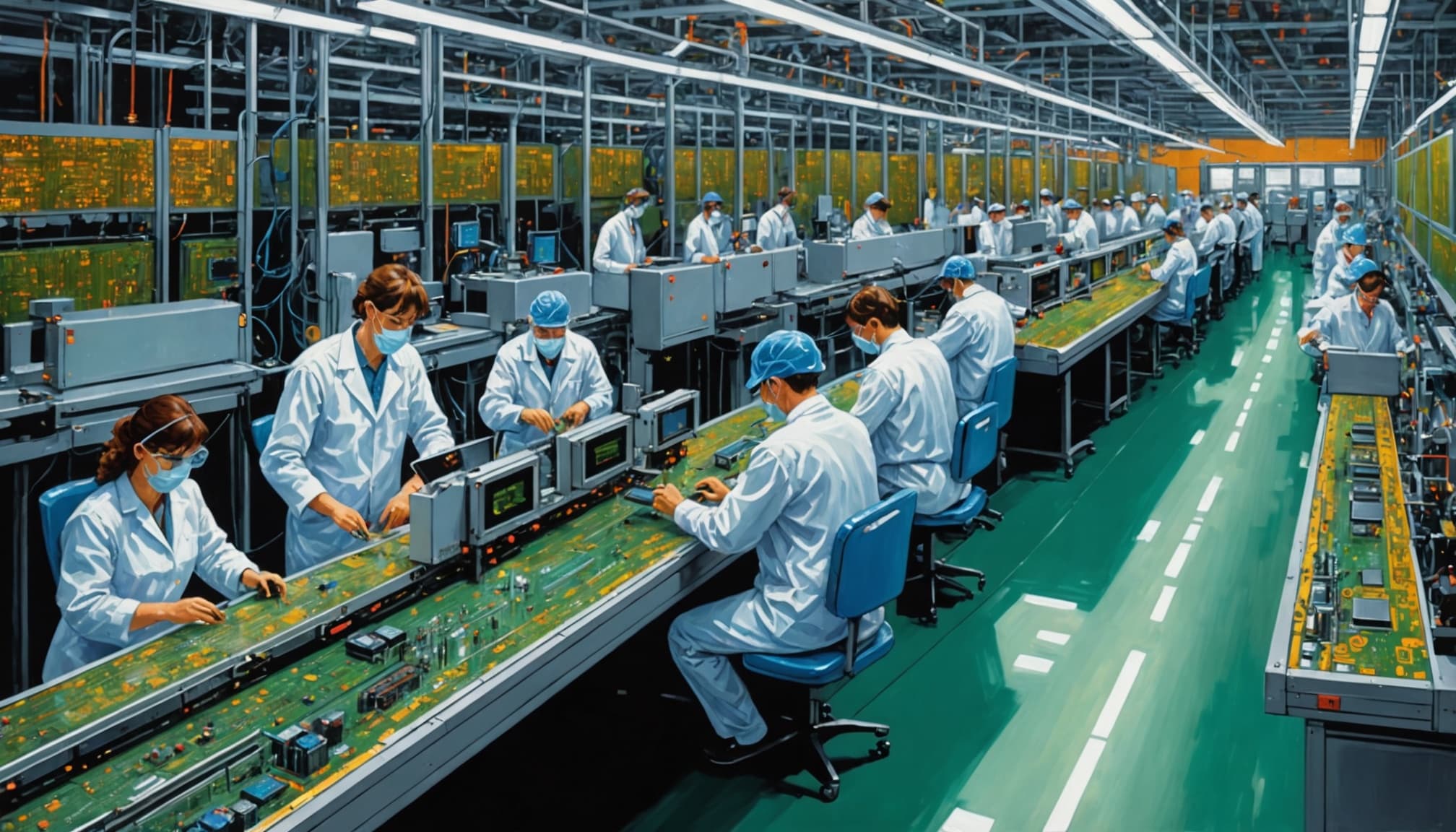
The 47% top-line growth didn't come from selling more widgets across the board. It came almost entirely from one division: Mobile and other EMS (Electronics Manufacturing Services). This segment raked in ₹20,093 crore, up about 50% from the year-ago period, and accounts for roughly 92% of Dixon's total revenue .
Two factors powered this. First, smartphone volumes grew. Brokerage reports suggest Dixon manufactured 9.7 million smartphones in Q2, up 29% from the previous quarter . Second, and perhaps more importantly, selling prices rose. Memory prices—the chips that go inside phones—have skyrocketed 30-40% over the past year . Dixon operates largely on a cost-plus model, meaning it passes these higher input costs to customers. So, revenue balloons even if the number of phones doesn't increase proportionally.
This dynamic explains why margins look worse even as the business expands. When you pass through higher costs, your revenue goes up, but your margin percentage shrinks because the denominator (revenue) is inflated while the numerator (profit) doesn't grow at the same pace. It's an optical illusion of sorts, but it hits the reported numbers hard.
Why Margins Got Squeezed
The margin compression in Q2 wasn't just accounting optics. Three real factors are at play. First, the government's Mobile PLI 1.0 scheme, which provided production-linked incentives, expired in March 2026 . That's a direct hit to profitability. Second, input costs—memory, polymers for appliances, and other components—have climbed. Third, other income, which included a hefty ₹496 crore gain last year, collapsed to ₹69 crore this quarter .
The result? EBITDA margin slipped to 2.7% from 3.8% a year ago. Gross margins also fell, dropping to 5.1% from 7.1% . The company is clearly in a transition phase. It's growing fast, but that growth is currently coming from the lowest-margin part of its business—mobile phone assembly.
Is there a trade-off between volume and margin? Absolutely. Mobile manufacturing is a high-volume, low-margin game. As mobiles become an even larger chunk of revenue (they're already about two-thirds), they drag down the overall margin percentage . Management has been candid: they don't expect margin improvement in the current fiscal year. The recovery, they say, will come from FY28 onward Transcript.
The Pricing Power Question
So, does Dixon have any pricing power? The answer is nuanced. The company describes its contracts as "cost-plus" with pass-through mechanisms . This protects its absolute rupee margin when input costs rise, because it can charge customers more. But it also caps upside. Dixon is essentially a price-taker on margin percentage—it earns a fixed fee or markup on top of costs.
This structure works well when costs are stable or rising, as they are now. But it means Dixon can't easily expand margins just by raising prices. The upside will have to come from elsewhere: making more of the phone itself (backward integration), winning government incentives, or achieving economies of scale.
The Vivo Joint Venture: The Big Bet
This is where the story gets interesting. Dixon's joint venture with Vivo, in which it holds 51%, is the cornerstone of its growth narrative . The JV received government approval in July 2026, and operations are now expected to begin in Q4 FY27 (slightly delayed from earlier expectations) .
Why does this matter so much? Vivo sold about 35 million smartphones in India last year. Management has indicated that the JV could add 20-22 million units annually Transcript. That's massive. Dixon itself manufactured 33 million units in FY26 . Combine the two, and you're looking at a potential step-change in scale.
Financially, the implications are complex. If the JV is consolidated, its full revenue will appear in Dixon's top line, making the company look much larger. But Vivo's 49% share of the JV's profit will be deducted as "non-controlling interest" when calculating profit attributable to Dixon shareholders . So, revenue growth could outpace shareholder profit growth for a while.
Brokerages are bullish. UBS, Motilal Oswal, and Nuvama all have "Buy" ratings, with target prices ranging from ₹14,900 to ₹15,900—implying 35-45% upside from the pre-results price of ₹11,000 . They're betting that the Vivo JV, combined with Dixon's expansion into component manufacturing (display modules, camera modules), will drive a sharp earnings recovery from FY28.
But there are risks. The JV approval process took 18 months, highlighting regulatory uncertainty . There's also customer concentration risk—if Vivo were to shift production elsewhere or bring more manufacturing in-house, Dixon's volume targets would take a hit. The success of this partnership hinges on sustained demand for Vivo phones and the stability of the sourcing arrangement.
The FY28 Volume Target: 60 Million Smartphones
CFO Saurav Gupta has set a target of 60 million smartphone volumes in FY28 . That's roughly double FY26 levels. How does this translate into revenue? Management hasn't given a specific figure, but the math is straightforward. If average selling prices remain elevated due to high memory costs, revenue could grow substantially even if volumes don't hit the full 60 million.
The assumptions behind this target are key. First, the Vivo JV must ramp smoothly. Second, exports must grow—management sees an opportunity to ship 15-20 million units to markets like Africa over the next couple of years . Third, new customers and existing anchor clients must increase orders. Fourth, the component manufacturing business (displays, cameras) must start contributing meaningfully to margins.
Brokerages are baking this growth into their models. Motilal Oswal, for instance, expects revenue, EBITDA, and net profit to grow at 29%, 36%, and 39% CAGR respectively between FY26 and FY29 . UBS projects EBITDA to grow at 35% CAGR over FY28-29 . These forecasts assume the volume target is achievable and that margins recover as planned.
Capacity, Capex, and Cash Flow
Achieving 60 million units isn't just about signing contracts—it requires bricks, mortar, and machines. Dixon is building a massive 1 million sq. ft. facility in Noida for anchor customers, expected to start operations in Q3 FY27 Transcript. It's also expanding camera module capacity at its Q Tech subsidiary from 70 million to 180-190 million units annually Transcript. A new display module plant is under construction, with trials starting in Q3 FY27 and mass production by late Q3 or Q4 FY27 Transcript.
All this costs money. Capex guidance is a bit murky—one source suggests ₹1,200 crore for FY27 and ₹1,200-1,300 crore for FY28, while another mentions a higher figure of ₹2,500 crore for FY27 . Q1 FY27 actual capex was ₹335 crore Investor Presentation. The company will likely need to raise equity or debt if it wants to fund this expansion without straining its balance sheet.
Working capital is another watchpoint. Dixon's business model is capital-intensive on the working capital front. It builds inventory ahead of price hikes (as it did with memory chips) and extends credit to customers. In Q1 FY27, operating cash flow was negative ₹341 crore, largely due to an ₹812 crore working capital outflow Investor Presentation. Cash on hand fell to ₹412 crore from ₹767 crore at the start of the quarter. As the company scales, managing this cash cycle will be critical. The good news is that Dixon has negative working capital days—meaning it gets paid by customers before it pays suppliers—which helps fund growth. But if inventory days stay high or supplier credit tightens, scaling to 60 million units could consume cash rapidly.
Execution Risks and What to Watch
The path to 60 million units is paved with risks. The Vivo JV delay to Q4 FY27 compresses the ramp-up timeline . Incentive eligibility under PLI 2.0 is still undecided and applies brand-wise, not company-wise, which complicates the economics . The smartphone market itself is under pressure—industry volumes fell about 16% year-on-year in Q2, and festive demand was weaker than expected . There's also the risk of channel stock build-up if demand doesn't pick up.
On the operational side, supply chain constraints (especially for memory chips), labor availability at new facilities, and the successful adoption of new technologies in display and camera manufacturing are all potential stumbling blocks. Management has acknowledged these challenges but remains confident.
The Bottom Line
Dixon Technologies' Q2 FY27 results present a classic growth story with near-term growing pains. Revenue is surging, margins are squeezed, and the stock is rallying on expectations of a much bigger future. The 60 million smartphone target for FY28 is ambitious but not impossible, given the Vivo JV and capacity expansions. However, the company is walking a tightrope—it needs to scale rapidly while managing working capital, navigating regulatory uncertainties, and waiting for margin levers (PLI 2.0, backward integration) to kick in.
For investors, the key questions are: Can the Vivo JV ramp without further delays? Will PLI 2.0 incentives materialize as expected? And can Dixon actually improve margins from FY28, or will volume growth continue to dilute profitability? The next few quarters will provide the answers. Until then, the stock remains a high-beta bet on India's electronics manufacturing boom—one that rewards patience but punishes missteps.