Reliance Industries Ltd reported a staggering revenue of ₹11.76 lakh crore in FY26, but the real story lies in the shifting sands of its business mix. The legacy Oil-to-Chemicals (O2C) business still contributes 56.4% of revenue at ₹662,401 crore, but its EBITDA margin stands at a modest 9.1%. In contrast, the consumer businesses are rewriting the profitability script. Digital Services (Jio) brings in ₹176,164 crore (15% of revenue) but commands a massive 43.5% EBITDA margin. Retail adds another ₹371,085 crore (31.6% of revenue) with a 7.3% margin. AnnualReports
This diversification has profound margin implications.
However, the rapid expansion of lower-margin retail segments, particularly in hyperlocal e-commerce, has tempered overall EBITDA growth rates. Management acknowledges that margin performance is essentially a function of this evolving mix. As the company prepares for its 49th AGM on June 19, 2026, investors are watching closely for signals on capital allocation. With consumer businesses now contributing 52% of segment EBITDA, the narrative has clearly shifted from an energy conglomerate to a consumer-led growth engine. The Board has recommended a ₹6 per share dividend, balancing shareholder returns with the need to fund continued expansion across telecom, retail, and new energy ventures. AnnualReports +1
ONGC's Gas Gamble
Oil and Natural Gas Corporation is executing a strategic pivot that could redefine its financial profile. The company is aggressively positioning natural gas as a dominant profit driver, and the numbers are beginning to reflect this shift. In FY26, new well gas accounted for 17% of production and 21% of revenue from the nomination gas portfolio, generating ₹6,678 crore. Crucially, this gas commands a premium price of $8.08/mmbtu compared to the nomination gas price of $6.60/mmbtu, delivering an additional ₹1,223 crore in revenue. AnnualReports
This strategic emphasis aligns perfectly with India's energy transition policies, specifically the target to increase natural gas share in the energy mix to 15% by 2030. ONGC's infrastructure investments, including the ₹9,265 crore Northeast Gas Grid, position it to benefit from the expanding national gas network. The company maintains market dominance with approximately 56% of India's gas output, producing around 20 BCM annually. The establishment of ONGC Green Ltd. as a dedicated subsidiary for gas and green energy signals organizational commitment to this transition. While crude oil net realization stood at $68.40/bbl, the premium pricing on gas and favorable policy reforms—including the abolition of windfall profit taxes—create a more supportive environment for gas production. This dual-track approach, serving as a bridge fuel during the renewable transition, offers investors a compelling narrative of stability within a supportive policy framework. AnnualReports
Cracking the Cyclical Code at Ashok Leyland
Ashok Leyland has achieved something remarkable in the notoriously cyclical commercial vehicle industry: sustained margin expansion. The company reported 14% YoY profit growth, driven by a strategic transformation of its revenue mix. Historically dependent on heavy-duty trucks, Ashok Leyland has reduced domestic truck exposure to 55-60% of revenue. The remaining 40-45% now comes from less cyclical segments like light commercial vehicles, buses, defense, and spare parts. AnnualReports
The financial metrics tell the story of structural improvement. EBITDA margins have progressively climbed from 8% to 12.7% over three years, despite relatively stable domestic MHCV volumes. The secret lies in operating leverage enhancement.
Material costs as a percentage of revenue reached 70.6% in Q4 FY25—the lowest in eight quarters—driven by sustained cost reduction initiatives delivering ₹650+ crore annually. This cost structure optimization, combined with a premiumization strategy that avoids sacrificing margins for market share, has created a business model resilient to industry cycles. With a net cash position of ₹5,899 crore, Ashok Leyland has the financial flexibility to navigate downturns while maintaining profitability. AnnualReports
Bharat Dynamics' Profit Decline
The contrast at Bharat Dynamics Limited is stark. The defense major reported a 58.5% YoY decline in standalone net profit to ₹113.18 crore in Q4 FY26, driven primarily by a 73% revenue collapse to ₹480.20 crore. The financial statements reveal severe margin compression: material costs surged to 113% of revenue compared to 78% in the previous year, indicating negative gross margins. AnnualReports
The operational factors behind this decline are rooted in order execution challenges. Inventory increased 75% YoY to ₹4,625.64 crore, including ₹83.27 crore of non-moving inventory over five years. Crucially, inventory was procured against firm orders that were subsequently short-closed by customers, with ₹362.34 crore of advances stuck against these cancelled contracts. This production misalignment—continuing material consumption despite plummeting revenue recognition—created a working capital trap and operational inefficiency. Unlike Ashok Leyland's market-responsive cost management, Bharat Dynamics operates within a structured defense environment with limited flexibility to adjust production quickly to changing order patterns. The company's cost management strategy, focused on indigenization and compliance-based economy measures, could not buffer the impact of order short-closures and the resulting inventory buildup. AnnualReports +1
Zydus Lifesciences' US Ambitions
Zydus Lifesciences Limited is accelerating its specialty pharmaceutical ambitions with a significant regulatory milestone. The US FDA has granted Priority Review to saroglitazar for Primary Biliary Cholangitis (PBC), with a PDUFA target action date of November 27, 2026. This designation, which follows earlier Orphan Drug and Fast Track designations, reduces the review timeline from 10 months to 6 months, potentially enabling market launch by Q4 FY27. AnnualReports
The clinical data supporting the New Drug Application is compelling. The EPICS-III Phase 3 trial demonstrated that 56.7% of patients achieved biochemical response versus 9.8% on placebo—a 48% treatment difference. Pruritus (itching) also showed statistically significant improvement.
The orphan drug status provides 10-year market exclusivity in Europe and 7 years in the US, creating substantial pricing power in a market where approximately 40% of patients are non-responders to current therapies. Zydus plans to commercialize independently rather than out-license, indicating confidence in capturing full margins. This strategic move, combined with a robust pipeline including Desidustat approved in China and multiple biosimilars in development, demonstrates the company's focus on staggered revenue streams that optimize R&D efficiency and return on invested capital. AnnualReports +1
Navigating Microfinance Risks at IDFC First Bank
IDFC First Bank received a 100% claim payout of ₹514.82 crore from the Credit Guarantee Fund for Micro Units (CGFMU) scheme, providing critical insights into its microfinance portfolio quality. The payout, which relates to loans sanctioned up to March 2025, indicates that the bank's conservative provisioning policy—100% provisioning at 180 days delinquency—adequately covered actual losses. Credit quality metrics show significant improvement: collection efficiency reached 99.7% in Q4 FY26, SMA ratios declined to 0.79%, and slippages reduced to ₹96 crore. AnnualReports
This coverage, combined with a 125% risk weight on microfinance loans, impacts capital requirements but provides protection against defaults. Management guides for credit costs to improve to 170-180 bps in FY27 from 213 bps in FY26, reflecting expected guarantee recoveries. However, risks remain. The bank bears a 30% co-payment on guaranteed exposures and has 11% of the portfolio uninsured. Stress scenarios could materialize if microfinance portfolio deterioration exceeds guarantee coverage, potentially creating contingent liabilities and reputational risks. The bank's multi-layered mitigation strategy—including early stress recognition, controlled growth reduction, and strong capital adequacy (15.60% CRAR)—positions it to manage these vulnerabilities while maintaining healthy risk-adjusted returns. AnnualReports +2
Coal India's Divestment Dynamics
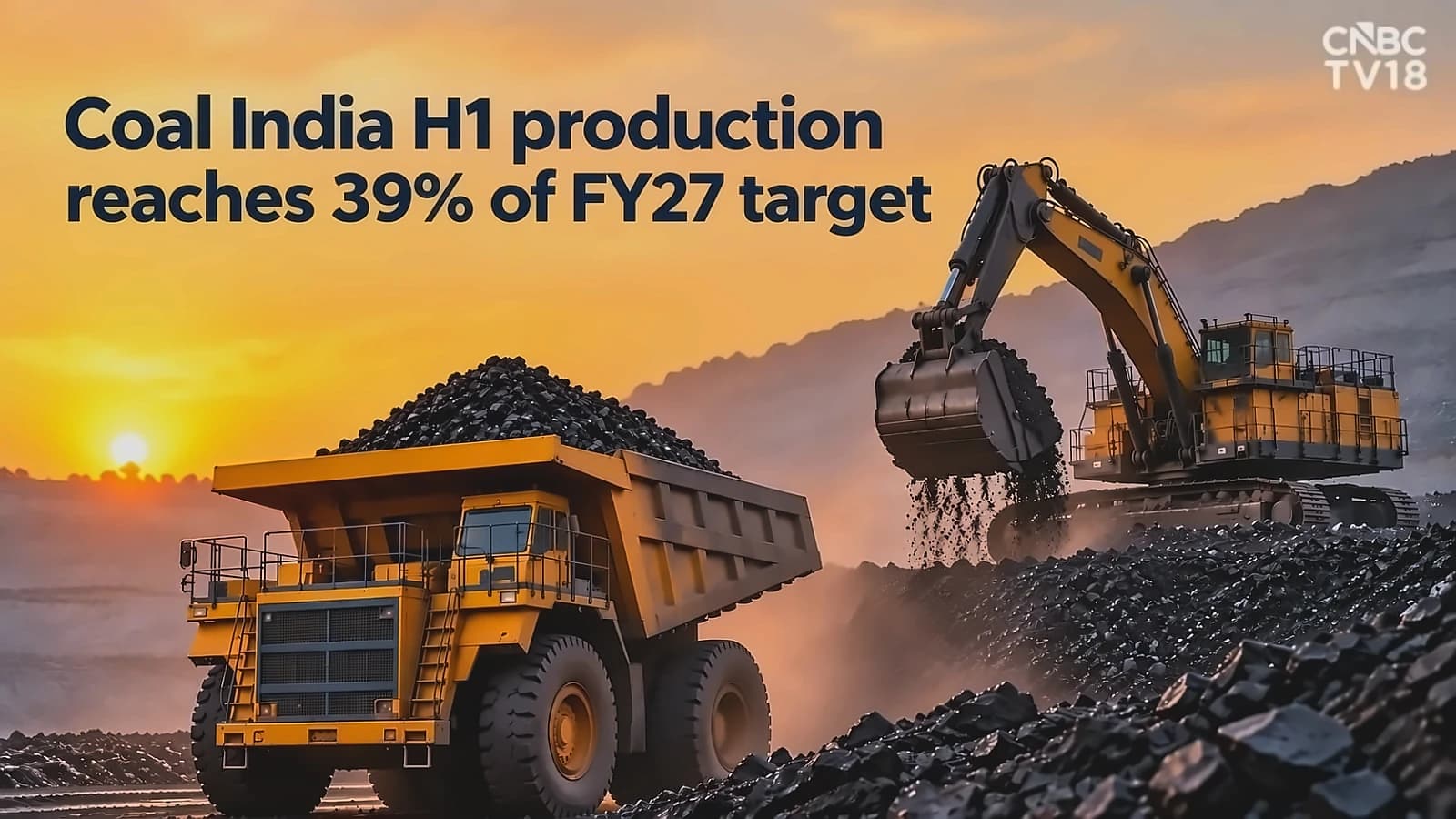
Coal India Limited presents a case study in government divestment without compromising financial strength. While specific details about a 12.32 crore share oversubscription option exercise were not found in available disclosures, the broader pattern of divestment reveals minimal impact on capital expenditure capabilities. The company maintains exceptional financial flexibility with ₹43,215 crore in operating cash flow, a debt-equity ratio of 0.07, and substantial reserves totaling approximately ₹1.41 lakh crore. AnnualReports
Coal India achieved ₹21,776 crore in capex during FY 2024-25 and has outlined ₹16,000 crore for FY 2025-26, with major allocations to coal transportation infrastructure, land acquisition, and heavy earth moving equipment. Expansion projects include coal gasification initiatives worth ₹24,835 crore and thermal power projects requiring ₹15,947 crore. Recent divestments, including subsidiary stake sales, appear to be strategic value-unlocking exercises rather than necessity-driven. The company's self-sufficient funding model, underpinned by robust internal accruals and minimal external dependence, ensures that government divestment decisions do not constrain its ability to pursue ambitious growth initiatives in coal gasification, renewable energy, and thermal power generation. AnnualReports