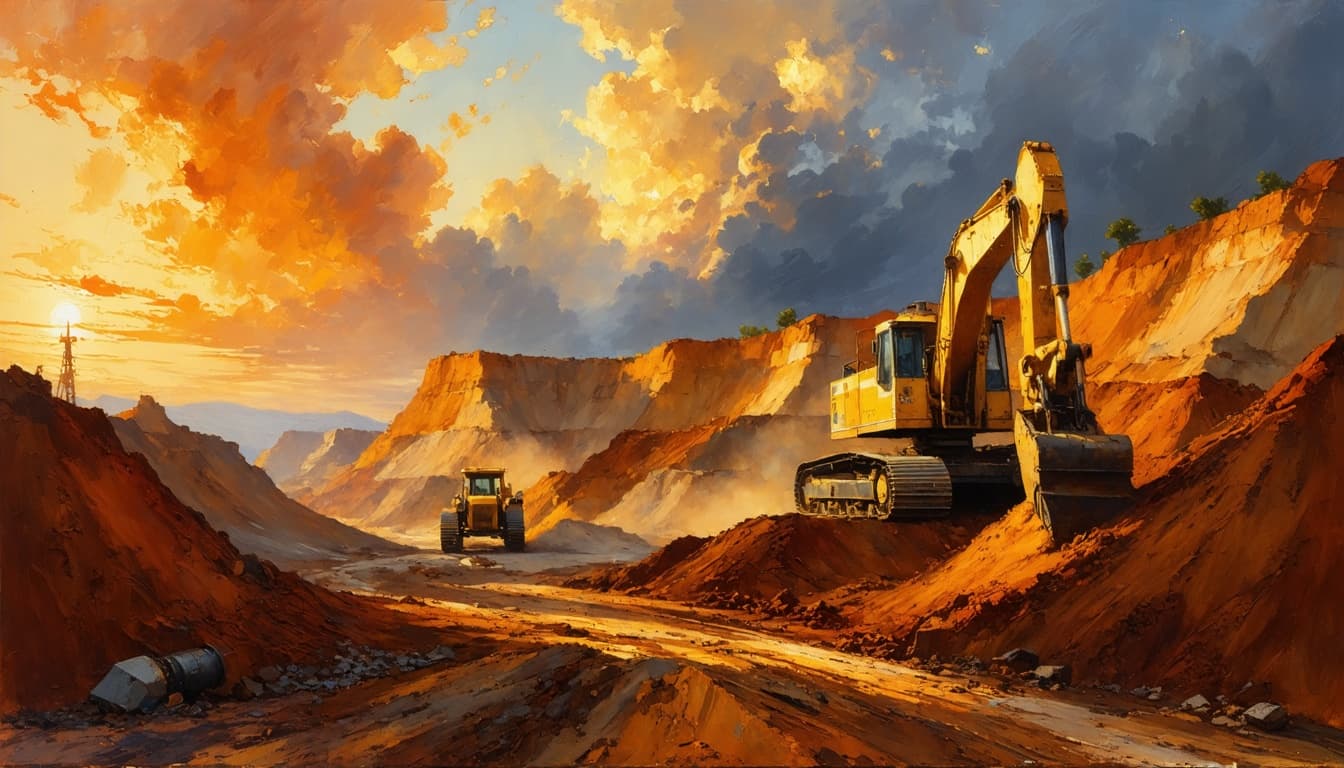
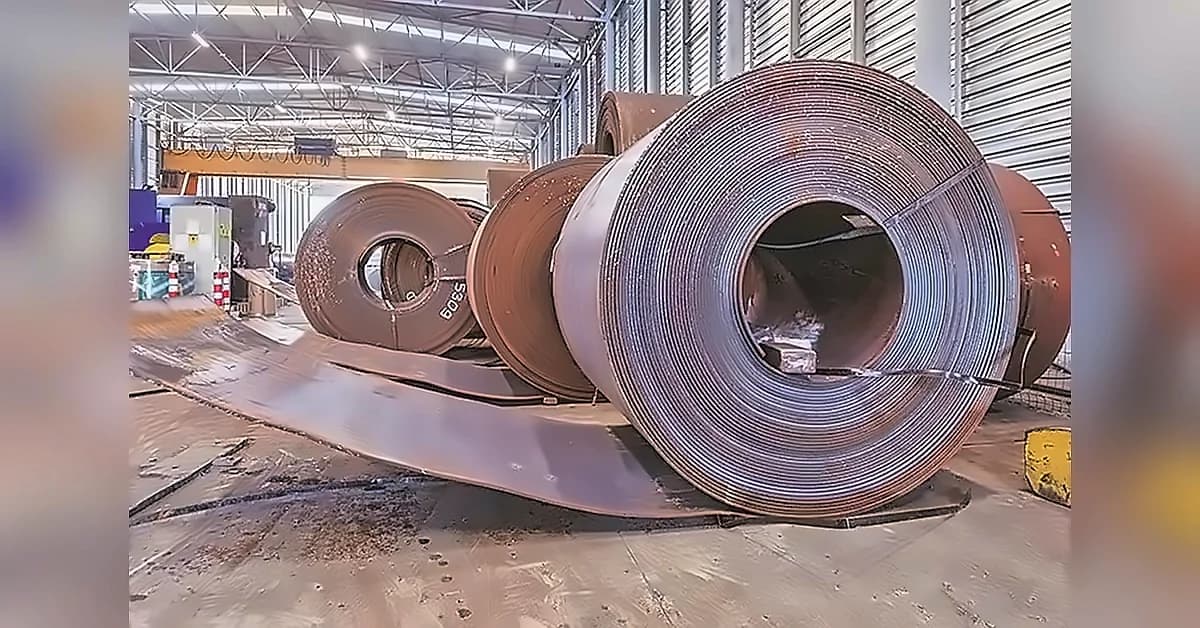
Coal India's decision to enter iron ore mining through the Gadadharpur block acquisition in Odisha represents a calculated bet on India's industrial future. The company, which accounts for over 80% of domestic coal output, is essentially hedging against the long-term energy transition while positioning itself to support the country's steel sector ambitions. India targets 300 million tonnes of steelmaking capacity by 2030, requiring substantial increases in domestic iron ore production. This diversification aligns with the government's push to strengthen domestic supplies of critical minerals and reduce import dependence.
The move isn't entirely new—Coal India has been exploring opportunities in non-coal minerals since at least 2017, when it first considered mining bauxite, nickel, and iron ore. The company has already amended its Memorandum of Association to include "non-ferrous and critical minerals" and is actively pursuing opportunities in graphite and vanadium blocks. The Gadadharpur acquisition, with its estimated 288 million tonnes of resources, marks the first concrete step in this broader diversification strategy. AnnualReports
Financial Impact and Capital Allocation
The economics of the Gadadharpur block are complex.
This premium, combined with substantial capex requirements estimated at ₹12,500-28,000 crore over 3-5 years, will pressure free cash flow in the near term. However, Coal India's strong financial position provides a buffer—the company generated ₹43,215 crore in operating cash flow in FY26 and maintains zero debt.
The dividend distribution capacity faces moderate pressure during the development phase.
Management's policy emphasizes balancing dividend distribution with internal reserves for growth. The phased implementation of iron ore capex over 5-7 years should allow the company to maintain sustainable dividend levels, though some moderation may be necessary during heavy investment years. AnnualReports
Revenue contributions from iron ore operations are projected to be modest initially—1.5-2.9% of total revenue at full capacity—but the margins could be attractive. Iron ore mining typically delivers EBITDA margins of 35-42%, compared to Coal India's coal mining margins of 26-41%. The challenge is achieving competitive returns on capital employed. Historical ROCE for coal mining has ranged from 20-27%, but the Gadadharpur block is projected to deliver 18-25% ROCE at maturity, potentially lower during the initial 5-7 years due to high upfront costs.
Operational Challenges and Execution Risks
The transition from coal to iron ore mining presents significant technical challenges. Iron ore requires complex beneficiation technologies including crushing, grinding, magnetic separation, and flotation processes—capabilities Coal India has limited experience with. The company will need to invest in specialized processing plants and develop new technical expertise. The G3 exploration stage of the Gadadharpur block means further detailed exploration is required before commercial mining can commence.
Infrastructure requirements are equally demanding. Odisha's iron ore mining districts face severe logistics constraints, with rail routes operating at 120% capacity utilization and congested road networks. Coal India will need to develop evacuation infrastructure, potentially including slurry pipelines, to transport ore efficiently. The company's experience with First Mile Connectivity projects in coal mining provides some transferable expertise, but iron ore logistics present unique challenges.
The timeline for commercial production is extended. While official projections suggest 3-5 years for mining lease execution and development, realistic estimates point to 7-10 years before meaningful revenue contribution. This extended timeline increases execution risk and delays the realization of strategic benefits. Regulatory approvals alone—environmental clearance, forest clearance, mining lease, pollution control board consents—can take 18-36 months.
Market Positioning and Competitive Dynamics
Coal India enters a highly competitive iron ore market dominated by established players like NMDC, which produced 53 million tonnes in FY26 and commands approximately 16% of India's iron ore output. The company will initially be a small player with projected production of 5-7 million tonnes annually, representing just 2-3% of the domestic market. The high auction premium creates a cost disadvantage compared to established miners who acquired blocks earlier at lower premiums.
The market positioning strategy will likely focus on domestic supply to Indian steel PSUs and private producers, leveraging Coal India's government PSU status for preferential treatment. Export opportunities are limited due to high export duties on quality iron ore (30%) and the government's emphasis on domestic resource utilization.
Iron ore price volatility presents another challenge. The commodity has experienced significant price swings, with historical ranges of $38.54-219.77 per tonne. This volatility is higher than coal's price fluctuations and will impact earnings predictability. However, India's strong steel demand growth—crude steel production reached 168.4 million tonnes in FY26, growing 10.7% year-on-year—provides a supportive demand backdrop.
Regulatory and ESG Obligations
Operating in Odisha's mining districts comes with substantial regulatory and ESG obligations. The Gadadharpur block requires multiple approvals including environmental clearance under EIA Notification 2006, forest clearance if applicable, mining lease execution, and consent from the Odisha State Pollution Control Board. The approval process typically takes 18-36 months for major mining projects.
Odisha's royalty structure imposes significant costs. Iron ore royalty is ad valorem—15% of IBMI benchmark price for lump ore and 10% for fines. Additionally, post-2015 mining leases require a District Mineral Foundation contribution of 30% of royalty and a National Mineral Exploration Trust contribution of 2% of royalty. This creates a total levy burden of approximately 35-40% of IBMI benchmark price, significantly impacting project economics.
ESG obligations are particularly demanding in Kendujhar district, which has documented severe air pollution and respiratory health issues among mining communities. Coal India will need to implement comprehensive environmental management plans, including dust suppression systems, air quality monitoring, and green belt development. Social obligations include rehabilitation and resettlement for displaced communities, with Odisha's tribal population (22.85% vs. 8.6% nationally) creating additional complexity.
Market Interpretation and Investor Perspective
The market's reaction to Coal India's iron ore foray has been cautiously optimistic to neutral. The stock closed 0.66% lower at ₹412.75 on the announcement day, suggesting investors are not pricing in significant immediate value from the diversification. The company currently trades at reasonable valuations—P/E ratios of 8.21-13.55x with a 6.42% dividend yield—but without a growth premium for the iron ore strategy.
Analyst recommendations are mixed, with a consensus target of ₹410 (slightly below the current price of ₹415.60). Kotak Securities maintains a Neutral rating with a ₹370 target, while Emkay Global has an Add rating with a ₹450 target. The range reflects genuine differences of opinion on demand recovery, margin trajectory, and execution risks.
From a risk perspective, the diversification moderately increases Coal India's overall risk profile. The company's current beta of 0.51 indicates lower volatility than the market, but iron ore exposure could push this higher. The cost of capital is expected to increase from 12.0% to 12.3-12.6%, primarily through a higher equity risk premium. However, this is acceptable if the company can achieve its projected ROCE of 18-25% from iron ore operations.
Investor sentiment shows increased retail interest—investment in Coal India shares grew 31.77% over the past 30 days on the INDmoney platform—but institutional positioning remains cautious.
The market appears to be adopting a prove-it-first approach, requiring visible execution success before re-rating the stock. The real value creation potential lies in the long-term strategic transformation of Coal India from a pure-play coal miner to a diversified resources company, but this will require patience and successful execution over a 7-10 year horizon.