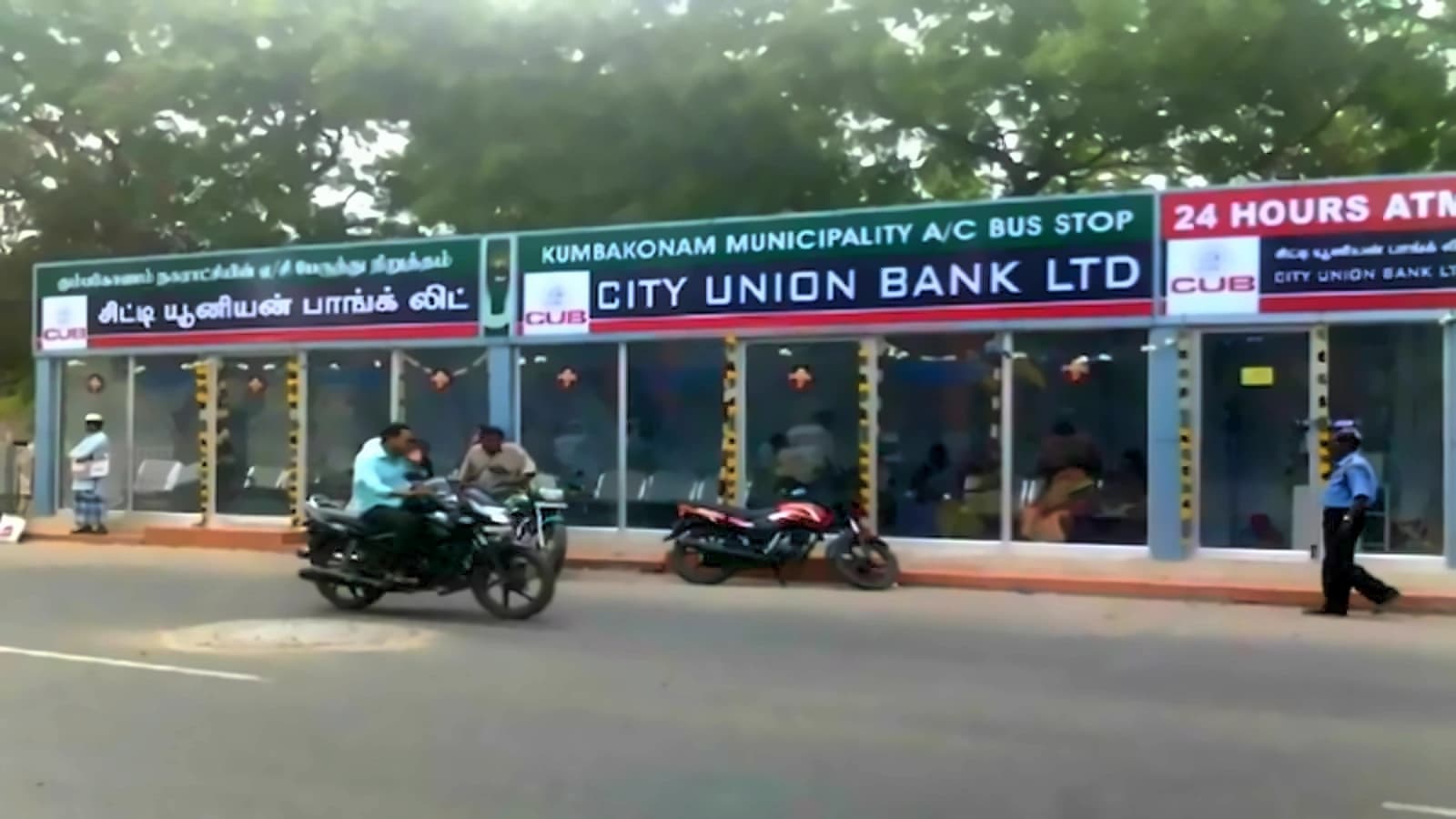
On November 16, 2026, City Union Bank detected an unauthorised transaction through the National Electronic Funds Transfer (NEFT) system in one customer account. The bank immediately shut down the NEFT and Real Time Gross Settlement (RTGS) gateways for that specific account and brought in external security experts to investigate. The disclosure to stock exchanges came on November 18, 2026, under Regulation 30 of the SEBI Listing Obligations and Disclosure Requirements (LODR) Regulations, 2015. Other
Here's the thing: the bank hasn't disclosed the amount involved, the identity of the customer, whether funds have been recovered, or what exactly caused the unauthorised transfer. It could be compromised credentials, a technical vulnerability, or something else entirely. The root cause is still being analysed, and corrective measures are underway. Other
Size and Capital Position
Without knowing the amount, we can't precisely measure the exposure against the bank's capital. But we can look at the scale.
Tier I CRAR was 20.43%. Total capital was ₹1,14,478 million against risk-weighted assets of ₹5,38,487 million. Investor Presentation
The bank reported FY26 net worth of about ₹10,565 crore and standalone Q2 FY27 net profit of ₹415.91 crore, up roughly 27% year-on-year. A single-account loss would need to be very large to move these numbers meaningfully. The bank has stated there is no material impact on its core business operations, financial performance, or business continuity. Other
Why Shut the Gateways?
The decision to shut down the NEFT and RTGS gateways for the affected account is a classic containment move. It stops any further unauthorised transfers from flowing out while the investigation figures out what went wrong. The shutdown applied only to that customer's account, not across the entire bank. Other
The trade-off is straightforward: the affected customer can't send NEFT or RTGS payments until the account is cleared. That could disrupt high-value, time-sensitive payments for that specific customer. For the bank, it sacrifices some service convenience for that account in exchange for limiting potential loss and preserving evidence. Settlement capability across the rest of the bank remains unaffected, according to the bank's statement. Other
Cost Impact
The bank hasn't disclosed any costs for the external experts or corrective measures. Q2 FY27 operating expenses were ₹682.06 crore, up from ₹561.15 crore in Q1 FY27. That increase happened before this incident, so it can't be attributed to it [stock_agent].
Even a significant security upgrade would likely be a small fraction of quarterly operating expenses.
Any fraud loss, if booked, would depend on the amount and on who bears the liability under the Reserve Bank of India's (RBI) customer protection framework. Under RBI rules, customers have zero liability if the loss is due to bank negligence or a third-party breach reported within three working days. Annual Report
Regulatory Requirements and RBI Scrutiny
The bank's filing cites only Regulation 30 of SEBI LODR and refers generally to "applicable statutory and regulatory requirements". It doesn't name specific RBI, CERT-In, or SEBI cyber rules. Other +1
Here's where it gets interesting. The RBI's Cyber Directions issued on July 31, 2026, require banks to report cyber incidents on the DAKSH platform within six hours of detection and proactively notify CERT-In. Banks must also analyse the root cause, take corrective measures, and maintain communication plans for the Board, senior management, and customers. Whether this incident qualifies as a "cyber incident" under those rules isn't clear yet—the bank hasn't described it as a cyber breach, and the cause is unknown.
The regulator has recently stepped up its focus on cyber risk in payment channels. Earlier this month, the RBI mandated API safeguards for bank-NBFC fund transfers and issued cyber resilience rules for non-bank payment system operators requiring incidents to be reported within six hours. Fraud through a payment gateway at a listed bank naturally invites supervisory questions on controls, timeliness of reporting, and customer liability. No RBI action or penalty has been reported so far.
Business Continuity
The bank says core functions "continue to operate normally without disruptions" and that there is no material impact on business continuity. The gateway shutdown was limited to the affected customer's account, so bank-wide NEFT and RTGS operations were not switched off. Other
No specific contingency measures—such as failover, manual processing, or alternate channels—have been disclosed. On the general framework, the bank's FY25 annual report mentions a Business Continuity Plan policy and an Operational Risk Management Committee. Separately, the bank's website carries a notice of possible intermittent NEFT/RTGS disruption due to a technology upgrade, but it hasn't linked this to the incident. Annual Report
Disclosure and Market Reaction
The filing came about two days after the incident date. The bank's own view is that the incident is not material to its operations or finances, yet it filed anyway—which is the more cautious approach. Other
On November 17, the stock closed at ₹232.40, down 0.34%. On November 18, it closed at ₹232.20, down 0.09%. On November 19 (a partial session as of 14:00 IST), it was at ₹232.53, up 0.14% [stock_agent]. The first full trading session after the disclosure is still in progress, but so far the stock is flat to slightly up, suggesting the market isn't treating the incident as material.
Comparing this to past incidents is tricky. Cosmos Bank, a cooperative bank with no listed stock, lost about ₹94 crore through ATM and SWIFT fraud in August 2018, and its online banking was offline for over a week. That was a far larger and more disruptive event. A Carnegie timeline notes that City Union Bank itself was hit by a SWIFT-related attack in February 2018, but stock reaction data and loss amounts aren't readily available.
Customer Impact and Long-Term Costs
The shutdown applies to one customer's account only, so there's no disclosed reason for it to affect new-customer acquisition or other customers' use of NEFT and RTGS. The main retention risk is reputational. It would arise if the root cause turns out to be a bank-side control failure, or if the loss is large or not recovered. None of that is known yet.
The long-term impact on the cost-to-income ratio depends on three unknowns: the size of any fraud loss, the scale of any technology overhaul, and any regulatory action. A reliable cost-to-income ratio isn't available for the quarters because the data doesn't separate net interest income and other income. For FY26, operating expenses were ₹2,090 crore against a revenue base (including other income) of about ₹7,909 crore, putting the ratio at roughly 26.4% [stock_agent].
What to Watch
The Q3 FY27 results and management commentary will be the first places to check for any cost impact or root-cause update. Any follow-up exchange filing with the amount involved and findings will be crucial. Regulatory communication from the RBI, if any, will also signal how seriously the central bank views this incident.
For now, this looks like a contained incident at a well-capitalised bank. But in digital banking, even a single-account breach can be a wake-up call. The real test isn't just what happened—it's how City Union Bank plugs the gap and what it tells the world about it.