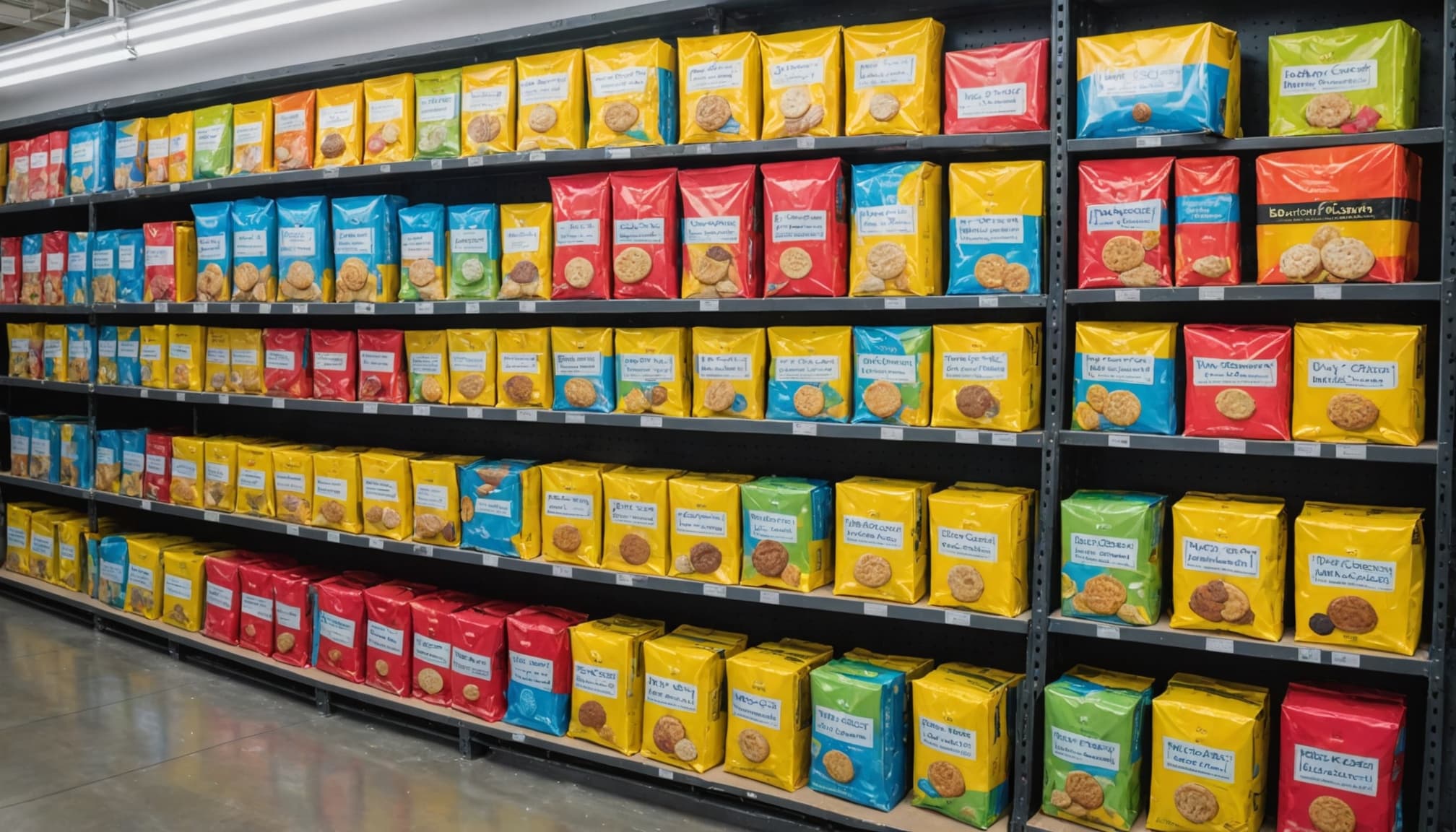
Reliance Industries just expanded its Independence biscuit range in Tamil Nadu, with packs starting at ₹5 and a motorsport tie-up with Ajith Kumar Racing for the Power Up variant. This comes days after Reliance named biscuits a "focus category" for its consumer business. The move naturally invites comparisons to Campa, the cola brand Reliance relaunched in 2023, which crossed ₹5,250 crore in sales in H1 FY27 by triggering a price war with Coca-Cola and PepsiCo.
But Britannia CEO Rakshit Hargave says the biscuit market is structurally different. "A large part of the market operates at ₹5 and ₹10, so the ability to disrupt those two price points... is much more difficult than you can do in a cola market by discounting by ₹5 or ₹10," he told investors on a post-earnings call. At those price points, a ₹1 discount is a 20% price cut, and the product can't be diluted much further. An external consultant agreed there's "very limited room for aggressive price reductions without compromising profitability".
Hargave acknowledged Britannia is "very watchful" of Reliance, whose biscuits "mirror existing products in the market". That's a rival's view, not a neutral finding, but it captures the core challenge: Reliance faces an incumbent already at the mass price points, with less room to undercut than in beverages.
Pricing power and the margin squeeze
Britannia's latest quarter shows it's not sitting idle. Q2 FY27 revenue grew 15.9% year-on-year to ₹5,598 crore, with volume up about 13%. Net profit rose 10.8% to ₹726 crore, but operating margin narrowed to 17.0% from 18.3% a year earlier. Material costs rose to 61.0% of sales from 59.4%, driven by industrial fuel (+45%), palm oil (+17%), milk (+16%) and laminate (+18%).
The company has already taken pricing action. It raised prices by 3.5% in Q2 FY27 and shrank pack sizes in Q1, with plans for more price rises and smaller packs. Management said pricing contributed only about 1% in Q1, mostly through shrinkflation in the ₹5/10 segment, which accounts for about 60-65% of biscuit volume. It had recovered only about half of input-cost inflation through pricing by then. Transcript +2
Reliance's entry complicates this math. If a rival holds price at ₹5 while Britannia raises it, the incumbent risks losing volume-sensitive consumers. But Britannia argues its ₹5/10 packs offer more biscuits per pack than rivals selling at ₹4.5/9, so the value-share difference is small. The dual-pricing episode earlier in FY26, when competitors printed ₹4.5 against Britannia's ₹5, showed wholesale and rural volumes can be disrupted. That issue has since ended, but it exposed the vulnerability at the mass price points. Transcript +1
Brand loyalty and the motorsport challenger
Brand strength is a real but partial barrier. Britannia has increased advertising spend after two years of cuts, and management says brand-tracking metrics like recall and "most used brand" have started to tick up after seven to eight months of better media investment. Milk Bikis is the largest biscuit brand in Tamil Nadu, Britannia's largest state, and a Thirukkural-themed campaign drew strong feedback. Marie Gold is a national tea-time brand consumed across regions. Transcript +2
But loyalty at ₹5/10 is typically weaker than in premium packs. Management itself said consumers notice price changes most on larger packs (₹50, 70, 100 and above), and less at ₹5/10. At small packs, shelf presence, availability and price points can matter as much as the brand. Transcript
Reliance's Independence Power Up biscuits, backed by Ajith Kumar Racing, aim to create a performance and energy angle rather than a copycat positioning. The association is limited to Power Up and focused on Tamil Nadu, where Ajith Kumar is a major film star. The sources describe the aim as "visibility and consumer awareness," not any measured result. Celebrity-led awareness typically needs repeat purchase and distribution to translate into share.
Distribution depth versus retail reach
Distribution is where Britannia's moat runs deepest. General trade is its largest and most profitable channel, and wholesale and rural channels carry most of the ₹5/10 volume. Britannia is moving rural distributors up to full-scale distributors. Key states account for over 50% of domestic revenue. Transcript +3
Reliance isn't starting from scratch. Its Tamil Nadu range is sold through general trade, modern trade, e-commerce, Reliance Retail and wholesale. It cites a 4 million-plus B2B customer base (kirana, HoReCa, institutions) and plans to use Reliance Retail and Metro infrastructure to reach tier-2+ and rural markets. In 2023, the retail arm reported over 16,500 own stores and over 2 million merchant partners. Transcript +1
The gap is in general-trade depth. Britannia has long-standing distributor and retailer relationships built over decades. Reliance must give retailers a reason to stock a new ₹5 pack, usually through margin or schemes. Neither company discloses trade margins, so this remains a key unknown.
Portfolio diversity and capital intensity
Britannia's portfolio provides some defensive value. Signature brands like Jim Jam, Treat and Little Hearts are growing about 3x faster than the company overall. Cake, rusk, wafers and dairy are growing at double digits, and adjacent bakery grew above 20% in Q2. Non-biscuit lines account for about 25% of revenue. Reliance's current Tamil Nadu range is concentrated in everyday and indulgent biscuits, leaving these adjacencies less exposed. Transcript +1
But the core ₹5/10 biscuit business is still the main exposure. Britannia's historical record shows resilience. EBITDA margin fell from 19.1% in FY21 to 15.6% in FY22 during a commodity-inflation year, then recovered to 18.5% by FY26. ROE was about 54% and ROCE about 67% in FY26. Revenue CAGR over five years is 7.8%, and net profit CAGR is 6.5%.
Reliance's scale-up will take time. Independence launched in December 2022, and the Maliban partnership was announced in January 2023. The expanded 28-SKU Tamil Nadu range arrived on 2 November 2026, nearly four years later, with plans to "gradually launch in other markets". RCPL said "increased production capacity" would support expansion but didn't disclose capacity, capex or plant locations. Biscuits need dedicated baking lines and supply chains, unlike Campa's largely bottling and co-packing model.
What to watch next
Britannia's Q3 FY27 results, due around mid-February 2027, will be the first to reflect any impact from Reliance's Tamil Nadu launch. Investors should watch for commentary on Tamil Nadu volume and price trends, any shift in "other expenses" or advertising spend, and whether Independence expands beyond the state.
The biscuit battle is just beginning. Britannia has the incumbent advantages of brand, distribution and a track record of absorbing cost shocks. Reliance has the financial muscle to accept margin pressure and a history of disrupting categories through aggressive pricing. The question isn't whether Reliance can compete—it's whether the biscuit market's price-point structure will let it replicate the Campa moment. Britannia's CEO says it won't be easy. The next few quarters will tell if he's right.