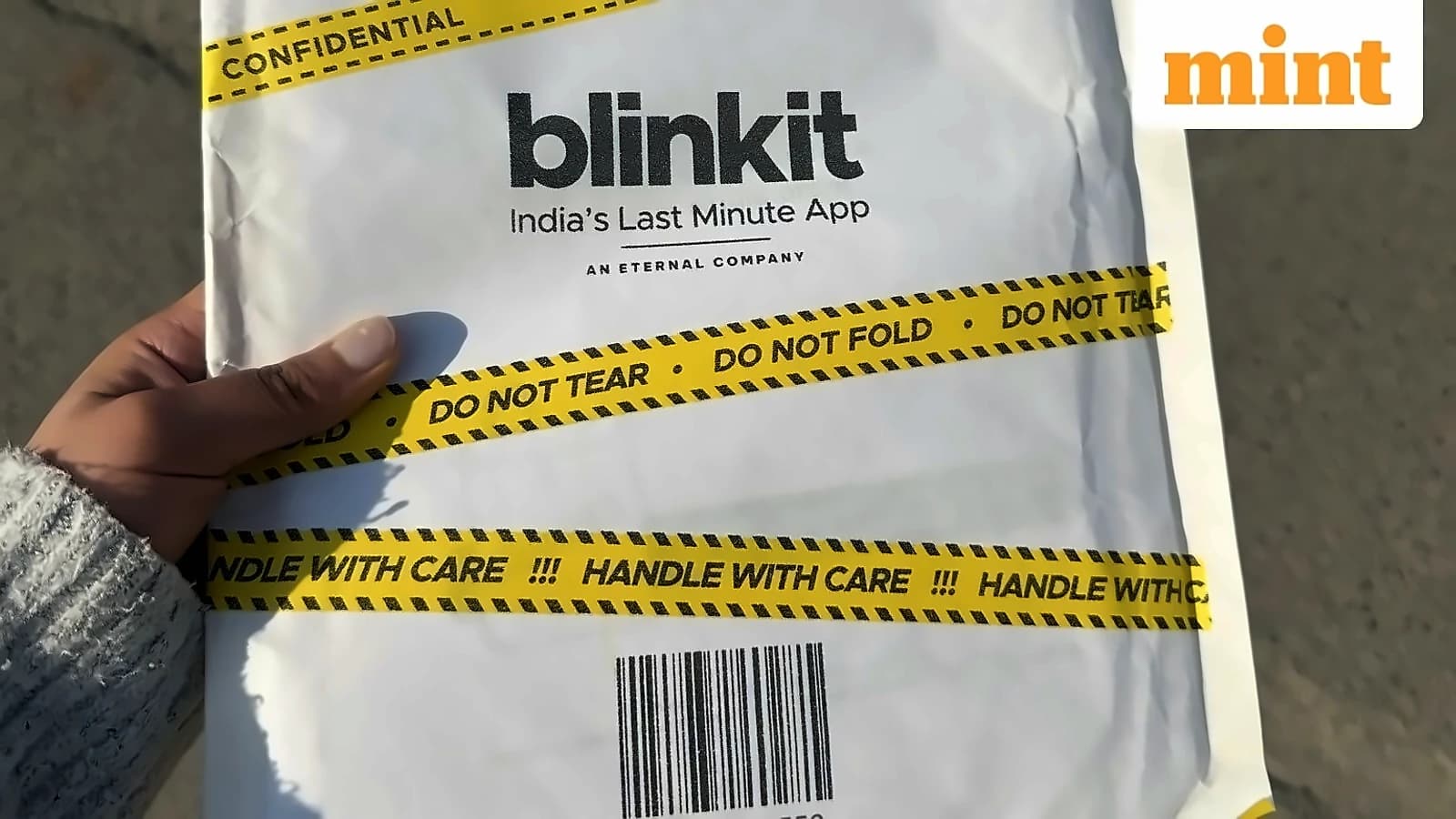
Blinkit has captured over 50% of India's quick commerce market as of September 2025, processing approximately 3 million daily orders across 2,243 dark stores. This dominance stems from a fundamentally different approach than traditional e-commerce.
The operational engine behind this dominance is massive. Zomato operates 17 million square feet of warehousing and dark store space, managing inventory with delivery measured in minutes and shelf space in centimeters. Mature markets like Delhi NCR already approach 5-6% steady-state Adjusted EBITDA margins, demonstrating execution capabilities that Amazon is still developing. This infrastructure scale creates immediate barriers—Blinkit's dark store network is 4.5 times larger than Amazon Now's, processing six times the daily order volume. InvestorPresentations +1
Profitability Without Burn-to-Earn Tactics
Remarkably, Blinkit achieved positive Adjusted EBITDA of ₹37 crore in Q4 FY26 while maintaining 50%+ market share, all with a monthly burn rate of just Rs 35 crore compared to competitor Zepto's Rs 2,200-2,300 crore per quarter.
The profitability journey accelerated through strategic pivots. Blinkit shifted from a marketplace commission model to an inventory-led (1P) model, enabled by Eternal Ltd attaining Indian-Owned and Controlled Company (IOCC) status in April 2025. This allows Blinkit to capture 15-30% retail margins by buying directly from brands and controlling pricing, fill rates, and margins completely. The company also expanded aggressively into high-margin categories like premium electronics, beauty, and pharmaceuticals—delivering a ₹70,000 phone costs the same in logistics as ₹700 worth of groceries, but margins are exponentially higher.
Unit Economics: A Different Game Than Amazon
Blinkit's unit economics reflect its specialized focus. Contribution margins improved steadily from 3.9% in Q4 FY25 to 5.4% in Q4 FY26. Key drivers include Average Order Value (AOV) of ₹627 (up 17% YoY) and delivery costs per order of ₹55 (down 14% YoY). Advertising revenue contributes 2.4-4% of Gross Order Value (GOV), providing pure-margin income that subsidizes physical logistics costs. InvestorPresentations
Amazon's approach differs fundamentally. Unlike Blinkit's owned-and-operated infrastructure, Amazon uses third-party operators like Inamo for dark stores and logistics providers such as Loadshare and Shadowfax. This asset-light model enables faster initial scaling but sacrifices control over customer experience and creates higher per-unit costs due to partner margins. While Amazon Now processes 450,000-500,000 daily orders across 500 dark stores, Blinkit's integrated model delivers superior unit economics at scale.
Strategic Trade-offs: Growth vs. Profitability
Goyal's philosophy prioritizes "durable, quality growth" over accelerated profitability milestones.
This contrasts with Amazon's traditional approach of aggressive market share expansion often at the cost of near-term profitability. InvestorPresentations
Specific trade-offs define Blinkit's strategy. The company chose to limit deep discounting despite competitive pressure, maintaining 50%+ market share with minimal cash burn while competitors burned Rs 5,000 crore quarterly across the industry. Blinkit expanded to 2,243 stores while improving contribution margins from 3.9% to 5.4% over four quarters. The company also expanded into high-margin categories, increasing AOV by 17% while decreasing delivery costs by 14%. InvestorPresentations
Local Market Insights Amazon Lacks
Zomato has developed sophisticated understanding of Indian consumer behavior that Amazon's standardized global approach struggles to replicate. The company employs a micro-market execution approach, making localized decisions on minimum order values, delivery charges, and free delivery based on specific market conditions. This granular agility reflects deep knowledge of India's diverse urban landscapes. Transcripts
Cultural insights drive operational decisions. As Aadit Palicha, Zepto's CEO, noted: "In India, there is a culture of buying hyper-locally... Customers in India buy small-ticket items multiple times a week hyper-locally". Zomato's data shows Indian households typically have one big monthly grocery haul in the first 10 days of the month, followed by frequent "top-ups" with lower basket values focused on indulgent purchases. Such nuanced behavioral patterns inform inventory management and marketing strategies that Amazon may miss.
Competitive Moats Against Amazon's Scale
Blinkit has built multiple sustainable advantages beyond just infrastructure scale. Proprietary AI forecasting at shelf-level predicts hyper-local demand, reducing stock-outs and waste by 15% while generating ~20% higher revenue per dark store than peers. This data advantage compounds as more order data improves prediction accuracy.
Network effects strengthen through the Smart Bachat Club loyalty program, creating a high-frequency cohort with ~30% better retention than non-members. Subscribers who join in the first month are significantly easier to retain, creating recurring revenue and switching costs. Cross-platform integration with Zomato Gold yields synergies that Amazon cannot replicate without building similar ecosystem integration.
Exclusive partnerships with Apple, Sony, and L'Oréal create high-margin non-grocery revenue and a differentiation flywheel. Direct sourcing via Blinkit Fresh collection centers improves quality and margins—a vertical integration barrier for tech-only competitors. These moats collectively create what Goyal calls a "better shot at winning" despite Amazon's global resources.
The Structural Challenge for Amazon
Goyal argues that Amazon's traditional e-commerce model differs fundamentally from quick commerce.
This represents more than just operational differences—it's a philosophical inversion. Amazon's asset-light, partnership-driven approach enables faster initial scaling but sacrifices the end-to-end control that Blinkit's owned infrastructure provides. Amazon's centralized decision-making and longer planning cycles struggle against quick commerce's requirement for micro-market agility and rapid experimentation.
While Amazon's financial firepower remains unmatched, Blinkit's specialized execution capabilities, first-mover advantages, and deep local market knowledge create meaningful barriers. The quick commerce battle in India will likely be won not by who has the most resources, but by who best balances growth investment with profitability while building differentiated value beyond just delivery speed.