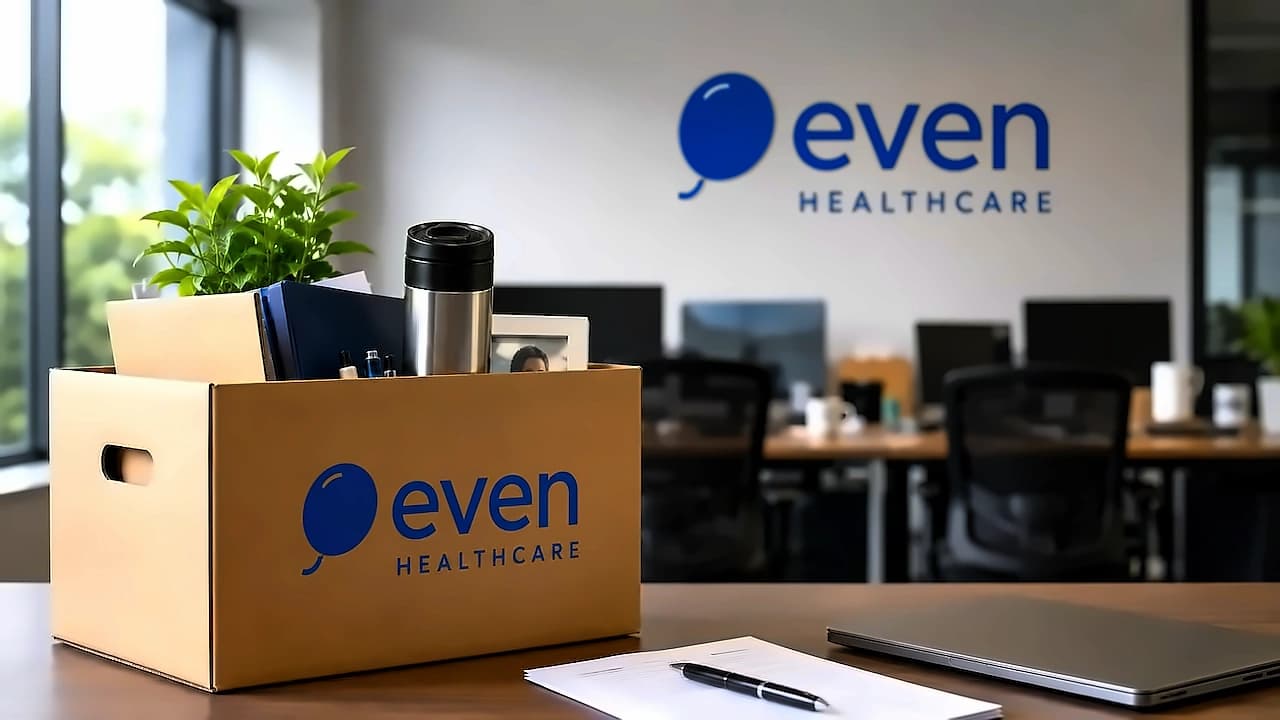
The Integration That Changed Everything
In March 2026, Biocon Limited completed a massive $5.5 billion integration—bringing Biocon Biologics fully under its wing as a wholly owned subsidiary. This wasn't just paperwork or a simple corporate restructuring. It created a unified global medicines company spanning biosimilars, generics, and peptides across 120+ countries .
But here's the thing about merging two large, established entities: you inevitably end up with two of everything. Two CEOs steering different ships. Two CFOs managing separate books. Two HR teams handling recruitment. Two quality assurance departments ensuring compliance. That's where the recent workforce changes come in—and why calling them "layoffs" misses the mark entirely.
What Actually Happened Behind the Headlines
Starting early March 2026, Biocon began what it calls "organizational rationalisation." About 300-500 employees across R&D, quality assurance, engineering, and support roles were affected . These weren't performance-based cuts. The company explicitly stated that actions were not linked to individual performance . Instead, affected employees received three months' salary plus variable pay as part of a "mutual separation" package .
But here's the context that really matters: Biocon Biologics had added more than 2,000 employees over the past year alone . So while some roles were being eliminated, the company was simultaneously hiring aggressively across strategic functions. This isn't a one-way reduction—it's a talent realignment. The workforce reduction represents only 15-25% of new hires, indicating that this is fundamentally about building capabilities, not shrinking the organization.
The Leadership Shake-Up: From Dual to Unified
The most visible changes happened at the very top. Previously, Biocon Limited had Siddharth Mittal as CEO & MD, while Biocon Biologics was led by Dr. Shreehas Tambe. Both entities had separate CFOs—Mukesh Kamath serving as Interim CFO of Biocon Limited, while Kedar Upadhye was CFO of Biocon Biologics .
From April 1, 2026, that dual structure changed dramatically. Dr. Tambe became the unified CEO & Managing Director of the integrated entity, with Kedar Upadhye taking over as CFO. Siddharth Mittal transitioned to another leadership role within the Biocon Group . This wasn't just about titles—it was about eliminating coordination overhead between separate leadership teams.
Dr. Tambe put it bluntly: "You don't need two CEOs or two CFOs. That is an outcome—not the objective" . The elimination of duplicate leadership roles simplifies decision-making, creates a single chain of accountability, and ensures unified strategic direction across all business units.
The Financial Reality: More Than Meets the Eye
Let's talk numbers because that's what investors care about. Biocon's FY25 employee costs stood at ₹3,144 crore—about 25.9% of total operating expenses, up from 23.2% in the previous year . The workforce reduction is estimated to save ₹75-175 crore annually, representing 0.6-1.4% of total operating expenses .
There's a one-time cost too: roughly ₹20-40 crore in severance payments that will hit Q4 FY26 as an exceptional item. But given Biocon's strong cash position—₹4,061 crore in operating cash flow for FY25 and ₹4,150 crore from a January 2026 Qualified Institutions Placement (QIP)—this is easily absorbable . The severance cost represents just 0.5-1.0% of annual operating cash flow.
The bigger financial story? Biocon expects ₹300 crore in annual savings from reduced interest costs by FY27 through debt reduction . Workforce rationalization adds to this, but it's not the primary driver. Combined, the company could see annual benefits of ₹375-475 crore from workforce and interest savings starting FY27.
Strategic Alignment Over Cost-Cutting
Management has been crystal clear: this isn't about cost synergies. "The rationale behind the merger is not cost synergy driven on the back of headcount reduction," Dr. Tambe stated . He also emphasized, "Using the word 'layoff' implies a one-way reduction. That's not the case" .
The company deliberately framed this as "organizational rationalisation" rather than layoffs for good reason. It's about aligning talent and capabilities with a new unified strategy—not reacting to financial distress or individual performance issues. This distinction matters for how employees, investors, and markets perceive the company's health and direction.
Capabilities: What's Staying and What's Going
The restructuring isn't a blanket reduction. Biocon is being strategic about what it keeps and what it consolidates. Core differentiators like complex biosimilars development, AI/ML in protein engineering, and global quality management systems are being retained and strengthened . The company continues to invest 10-12% of revenue in R&D and is actively hiring for specialized roles in IPQA, quality control, and engineering .
What's being eliminated? Duplicate R&D teams working on similar therapeutic areas. Overlapping quality assurance teams across dual entities. Redundant administrative and corporate support functions. These are the inefficiencies that naturally arise when two separate organizations operate independently before integration.
What This Means for the Future
The integration creates a simplified organizational structure with unified R&D, quality systems, and commercial infrastructure. This should accelerate decision-making, improve operational efficiency, and enable faster execution across all three business segments—biosimilars, generics, and peptides.
For the biosimilars business, which reported Q3FY26 revenue of ₹2,497 crore with a 28% EBITDA margin , consolidated expertise should accelerate development of complex biosimilars and global commercialization. The generics segment, growing 24% YoY with Q3FY26 revenue of ₹851 crore , benefits from unified R&D and manufacturing. And the peptides business, where Biocon is positioned as the only company offering both biosimilar insulins and generic GLP-1 peptides , gains integrated capabilities for the growing "diabesity" market.
Biocon is positioning itself as a globally competitive biopharma enterprise with optimized talent architecture aligned with its strategic vision. The workforce changes are part of building that foundation—not a cost-cutting exercise disguised as strategy.
The real story here isn't about job losses. It's about a company that added 2,000+ people while eliminating 300-500 duplicate roles, all to create a unified structure capable of competing on the global stage. That's not a layoff. That's evolution. And in the pharmaceutical industry, where innovation and efficiency determine survival, evolution isn't optional—it's essential.