The Turnaround Tale
Bharat Heavy Electricals Limited (BHEL) just delivered the kind of quarter that makes markets sit up and take notice. Q4 FY26 net profit rocketed 155% year-on-year to ₹1,290 crore, while revenue climbed 36.9% to ₹12,310 crore . But the real story isn't just the numbers—it's the margins. EBITDA margins expanded a stunning 500 basis points to 14.2%, up from 9.2% a year ago . For a company that's been struggling for years, this isn't just improvement—it's a transformation.
The full-year numbers paint an even clearer picture. Net profit for FY26 surged 200% to ₹1,600 crore, with revenue growing 19% to ₹33,782 crore . This wasn't a fluke quarter—it was the culmination of a multi-year turnaround. Operating cash flow more than doubled to ₹5,837 crore, and cash reserves swelled to ₹1,435 crore from ₹439 crore at the start of the year . The board rewarded shareholders with a ₹1.40 per share dividend—the highest since FY19—signaling confidence that this recovery is sustainable .
What Drove the Margin Magic?
So, what actually changed? Three factors converged to create this margin expansion. First, operating leverage kicked in. When revenue grows 37% but expenses only rise 28%, that's leverage in action . The company's massive fixed cost base got spread across much higher revenue, automatically boosting profitability.
Second, the order mix improved significantly. BHEL secured ₹75,000 crore in fresh orders during FY26, with the power segment contributing ₹59,000 crore and industrial segments adding ₹16,000 crore . The ₹13,500 crore Telangana supercritical thermal project from NTPC was a game-changer—these high-value contracts typically carry better margins than legacy orders . Third, execution finally accelerated. BHEL commissioned 8.9 GW of power capacity during the year, demonstrating that the order book is finally converting to revenue at a faster pace .
The stock market noticed. BHEL shares surged 13.2% on results day to hit a 52-week high of ₹399, completing a remarkable 62% one-month rally . The stock is now up 36% year-to-date and has delivered 334% returns over three years . At approximately ₹1.38 lakh crore market capitalization, investors are clearly pricing in continued growth.
The Diversification Play
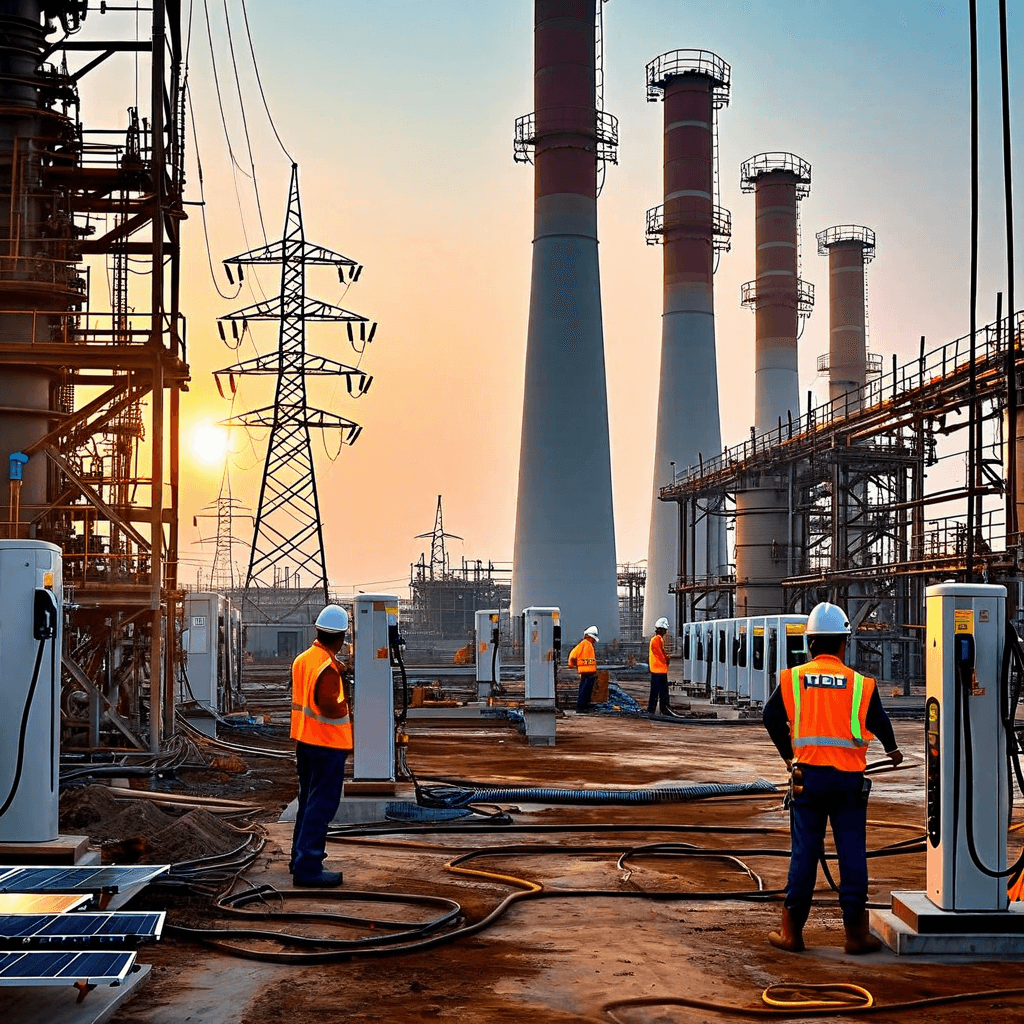
Here's where it gets interesting. BHEL isn't just betting on thermal power anymore. The company is leading the government's ambitious PM E-Drive scheme to deploy 72,300 EV charging stations nationwide with a ₹10,900 crore outlay . This isn't just infrastructure—it's a strategic entry into the mobility ecosystem. BHEL will also develop a unified digital platform for the charging network, creating potential for recurring software and service revenue.
On the energy storage front, India's battery market is expected to reach 87 GW by 2035—more than 300 times current capacity . While BHEL isn't manufacturing battery cells directly, it's positioning itself in battery energy storage systems and grid integration solutions. The company is also developing electrolyser technology for green hydrogen production and has signed a DRDO partnership for naval systems . These emerging segments currently contribute less than 1% of revenue but could reach 25-30% by FY30, fundamentally changing BHEL's business mix.
The margin implications are significant. Traditional thermal power equipment typically generates 9-10% EBITDA margins. EV charging infrastructure and battery storage systems command 15-25% margins. As these higher-margin businesses scale up, they'll pull BHEL's overall profitability higher. Analysts project EBITDA margins expanding from 9.9% in FY26 to 12-12.5% by FY30 .
The Competitive Moat
BHEL's advantages aren't just about size—they're about scale and strategic positioning. With 17 manufacturing units across India and 90% market share in thermal power equipment, BHEL enjoys economies of scale that competitors can't match . The company can deliver up to 20 GW of power capacity annually, a capability that creates significant barriers to entry.
The government relationship matters too. As a PSU, BHEL benefits from Make in India procurement mandates and alignment with national energy security priorities . This isn't just about preferential treatment—it's about being the default choice for critical infrastructure. The company's R&D investment of ₹1,000 crore in FY24 is building a patent portfolio that supports technology leadership .
Perhaps most importantly, BHEL offers integrated solutions—from design and engineering to manufacturing, project execution, and after-sales service. This vertical integration reduces project risk for customers and creates opportunities for recurring revenue through maintenance contracts and spare parts sales . In a market where execution delays have historically been a challenge, this end-to-end capability is becoming a competitive differentiator.
The Policy Tailwinds
The macro environment couldn't be more favorable. India's infrastructure spending hit ₹11.11 lakh crore in FY26, representing 3.1% of GDP . The power sector specifically is seeing massive investment—NTPC alone plans to add 9.8 GW of capacity in FY26 and has earmarked ₹90,000 crore for conventional and renewable segments over the next three years .
The renewable energy transition is creating new opportunities. India added a record 44.51 GW of renewable capacity in 2025, nearly double the previous year's additions . Solar capacity reached 132.85 GW, while wind crossed 50 GW. While this might seem like a threat to a thermal-focused company, BHEL is positioning itself across the value chain—from solar EPC to wind turbines to grid integration and energy storage.
The Second Asset Monetization Plan aims to reinvest ₹10 lakh crore in new infrastructure projects from 2025-30 . This pipeline, combined with the National Infrastructure Pipeline and PM Gati Shakti portal, creates unprecedented visibility for capital goods companies. For BHEL, this means a multi-year order book that provides revenue visibility through FY29 and beyond.
The Risks Ahead
Of course, no turnaround story is complete without risks. The most significant challenge is execution. BHEL's ₹2.4 lakh crore order book is impressive, but converting it to revenue requires flawless project management . The company has historically struggled with execution delays, and any slip-ups here could derail the margin expansion story.
Working capital intensity is another concern. Large EPC projects require significant funding, and while BHEL's cash generation has improved, the company still needs to manage receivables from state utilities carefully . Industrial gas shortages at manufacturing facilities in Trichy and Haridwar caused an estimated ₹2,500-3,000 crore revenue shortfall in Q4, highlighting operational vulnerabilities .
Valuation is the elephant in the room. At 151x trailing P/E, BHEL is pricing in near-perfect execution and sustained high growth . Any disappointment could trigger a sharp correction. The stock's 62% one-month rally significantly outpaced the 200% annual earnings growth, suggesting momentum has gotten ahead of fundamentals.
The energy transition presents both opportunity and risk. While BHEL is diversifying into renewables and storage, thermal power still accounts for 75% of revenue . As India accelerates toward its 500 GW non-fossil fuel target by 2030, the company needs to balance its thermal dominance with emerging opportunities without cannibalizing its core business.
The Verdict
BHEL's FY26 performance marks a genuine operational turnaround, not just a cyclical upswing. The 500 bps margin expansion, record order book, and strong cash flow generation demonstrate that the company has addressed its historical execution challenges. The diversification into EV charging, battery storage, and defence positions BHEL for sustainable growth beyond the thermal power cycle.
However, the stock's 62% one-month rally and rich valuation mean expectations are sky-high. The company now needs to deliver flawless execution on its ₹2.4 lakh crore order book while successfully scaling emerging businesses. The margin expansion path to 12-12.5% by FY30 is achievable, but it requires sustained operational excellence.
For investors, the story has shifted from "can BHEL turn around?" to "can BHEL sustain this momentum?" The answer lies in execution—specifically, whether the company can convert its massive order book into revenue while maintaining the margin discipline that made FY26 so exceptional. If BHEL can deliver, the current valuation might look reasonable in hindsight. If not, the stock could face a sharp correction. Either way, the boring, steady BHEL of the past is gone—replaced by a diversified infrastructure player with significant upside potential and equally significant execution risk.