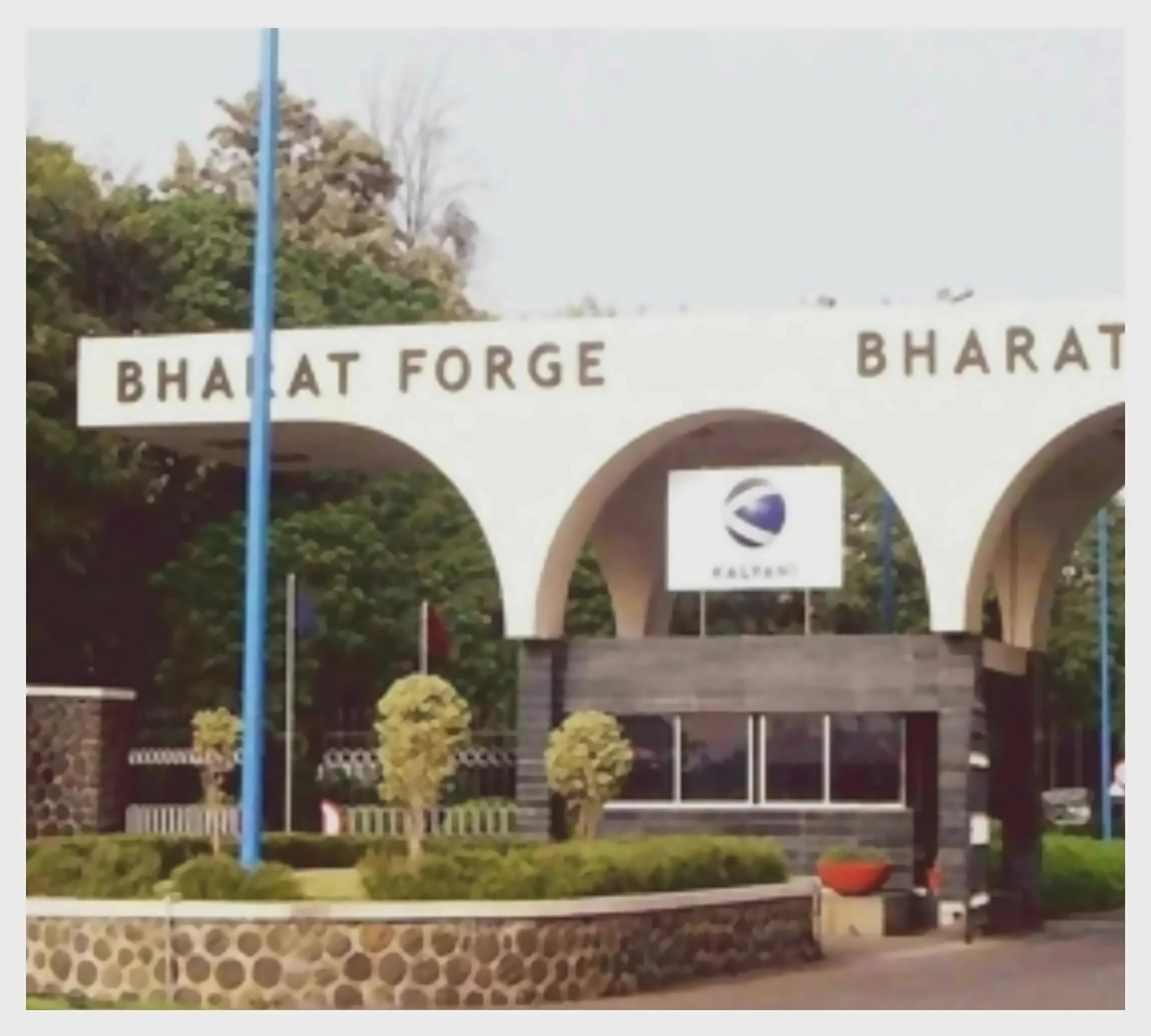
Bharat Forge has long been synonymous with automotive and industrial forging, but a recent Rs 425 crore contract with the Ministry of Defence signals a dramatic strategic shift. Signed on June 19, 2026, this five-year agreement to supply 1.25 MW marine gas turbine generators for Kolkata-class destroyers represents more than just a new order—it's a calculated bet on transforming the company from a components manufacturer into a systems integrator in India's defence-industrial base. Others
The contract, awarded under the Buy (Indian) category of the Defence Acquisition Procedure (DAP) 2020, requires minimum 60% indigenous content and marks Bharat Forge's entry into the marine gas turbine business. For a company where forgings still generate 76-91% of quarterly revenue, this deal adds approximately Rs 85 crores annually—roughly 5.4% to its existing defence revenue base of Rs 1,562 crores in FY26. While modest in absolute terms, it accelerates a deliberate diversification strategy that management believes could eventually make defence "as big as our overall business today". Others +2
Revenue Diversification in Motion
The automotive forging business, while substantial, operates in a cyclical market vulnerable to economic downturns and technological disruption. Defence offers a different value proposition: long-term contracts, government backing, and strategic importance that transcends economic cycles. Bharat Forge's defence order book already stands at Rs 10,961 crores as of FY26, providing substantial revenue visibility. InvestorPresentations
The marine gas turbine contract specifically targets the "Move" category of naval systems—propulsion and power generation—which has achieved only 60% indigenization compared to 90% for hull structures ("Float") and 50% for combat systems ("Fight"). This gap represents opportunity. The Indian Navy's Vision 2047 aims for complete self-reliance, and propulsion systems remain a critical vulnerability. By establishing capabilities here, Bharat Forge positions itself at the intersection of national priority and market opportunity.
Margin Dynamics and Indigenous Content
Defence margins have consistently demonstrated "strong double-digit" performance according to management, outperforming the forgings segment's 10.75-13.61% operating margins in FY26. The 60% indigenous content requirement under DAP 2020, while challenging, actually supports margin expansion by reducing import costs, customs duties, and foreign exchange exposure. Transcripts +1
Higher domestic content creates a virtuous cycle: as Bharat Forge localizes more components, it gains pricing power and reduces dependency on foreign suppliers. The company's Gas Turbine Technology Development Centre in Bengaluru, which validated an indigenous 45 kgf thrust engine in January 2023, demonstrates its ability to develop proprietary technology. This intellectual property represents a significant competitive advantage—companies with their own design and product IP cannot be restricted by others, as management has emphasized. Transcripts
Working Capital and the Five-Year Horizon
The five-year execution timeline fundamentally shapes Bharat Forge's working capital requirements. Unlike the lump-sum recognition typical of commercial contracts, defence agreements typically follow milestone-based billing patterns. This structure improves cash flow predictability, with advance payments at contract signing and progress payments linked to delivery milestones.
However, the contract also requires establishment of a dedicated integration and testing facility. While Bharat Forge hasn't disclosed specific capital expenditure figures, comparable investments suggest a range of Rs 450-750 crores over the development period. This includes Phase 1 (repair and overhaul complex) and Phase 2 (development assembly hall and hot test cell). The company's current debt-to-equity ratio of 0.89 and strong cash generation from defence business provide financial flexibility, but the investment will pressure working capital in the near term. Others +1
The strategic location in Visakhapatnam, co-located with the Naval Dockyard and Eastern Naval Command, offers operational advantages that translate to financial benefits. The 72-hour turnaround capability for maintenance reduces ship downtime and improves the Navy's operational readiness—value that Bharat Forge can capture in pricing.
Building Competitive Moats
The gas turbine facility represents more than physical infrastructure—it's a formidable barrier to entry. Developing manned platform jet engines takes 5-10 years, according to management, and requires specialized expertise in high-temperature materials, precision manufacturing, and thermal systems. Bharat Forge's 12-year investment in indigenous IP, combined with manufacturing capabilities for single-piece components up to 35 tons, creates capabilities few competitors can match. Transcripts +2
The decision to build in-house testing capabilities rather than outsource to defence PSUs reflects strategic calculation. While outsourcing would reduce upfront capital, it would also cede control over schedules, quality, and intellectual property. DRDO offers test facilities on a payment basis, but dependency on government infrastructure creates vulnerability. By owning the testing ecosystem, Bharat Forge secures faster iteration cycles, protects proprietary technology, and positions itself as a complete solutions provider.
Operational Impact on Naval Readiness
The replacement of lower-capacity units with 1.25 MW generators delivers tangible operational benefits. Modern naval combatants rely heavily on electrical power for radar systems, weapons, sensors, and communication networks. The Kolkata-class destroyers feature sophisticated systems including the EL/M-2248 MF-STAR radar and EMCCA Mk4 combat management system—all requiring reliable, high-capacity power generation.
Indigenous generators provide enhanced power reserve margins, improved combat system reliability, and extended operational endurance. The 72-hour maintenance turnaround at Visakhapatnam dramatically improves servicing efficiency compared to weeks or months for imported systems. Perhaps most importantly, end-to-end life-cycle support eliminates dependency on foreign specialists, reducing both costs and vulnerability to supply chain disruptions.
Regulatory Alignment and Future Expansion
The contract award reflects broader policy shifts under Aatmanirbhar Bharat. The Defence Acquisition Council has prioritized indigenous procurement, with 177 of 193 contracts worth Rs 1,68,922 crore awarded to domestic industry in FY 2024-25. Private sector companies now account for 24% of defence production, up from historical lows, and contributed Rs 15,233 crore of exports compared to PSUs' Rs 8,389 crore.
The draft DAP 2026 introduces provisions that could accelerate Bharat Forge's expansion into larger propulsion systems. Indigenous content requirements are increasing from 50% to 60% in the Buy (Indian-IDDM) category, with incentives for exceeding minimums. Technology Readiness Level (TRL) based categorization provides clearer development pathways, while provisions for single-vendor procurement of mature technology (TRL 6-9) could position Bharat Forge as the sole supplier for established capabilities.
Ecosystem and Export Potential
Bharat Forge is building more than a factory—it's creating an ecosystem. The Visakhapatnam facility will generate 750 direct and indirect jobs, develop MSME suppliers, and establish skill centers for gas turbine maintenance. This ecosystem supports both domestic requirements and export ambitions. India's defence exports have grown 5500% over twelve years to reach Rs 38,424 crore in FY 2025-86, with the government targeting Rs 50,000 crore by 2029.
The commercial marine market offers additional opportunities. India's marine engines market, valued at $1.68 billion in 2023, is projected to reach $2.2 billion by 2030, driven by the Maritime India Vision 2030, Sagarmala initiative, and growing cruise industry. Bharat Forge's military technology can be adapted for commercial applications including offshore oil and gas, shipping, and port operations.
The Long Game
Bharat Forge's marine gas turbine contract represents a strategic beachhead rather than a standalone opportunity. The company is positioning itself for the Indian Navy's fleet expansion from 150 to 230+ vessels by 2037, with four aircraft carriers and ten nuclear propulsion systems planned. Each platform requires power generation and propulsion systems—addressable markets for a company with established capabilities.
The competitive landscape includes global giants like General Electric, Mitsubishi Heavy Industries, and Rolls-Royce, but Bharat Forge's advantages are distinct: cost-competitive manufacturing, indigenous technology free from export controls, government policy support, and strategic alignment with India's defence modernization priorities. In a world where geopolitical disruptions increasingly threaten supply chains, these advantages matter.
The Rs 425 crore contract is small relative to Bharat Forge's Rs 96,569 crore market cap, but its strategic significance outweighs its financial magnitude. It represents the first step in a transformation from components manufacturer to systems integrator, from cyclical automotive supplier to strategic defence partner, from domestic player to potential exporter. The question isn't whether Bharat Forge can successfully execute this contract—it's whether this marks the beginning of a much larger journey into India's defence-industrial future. Others