The Tech Hub Challenge
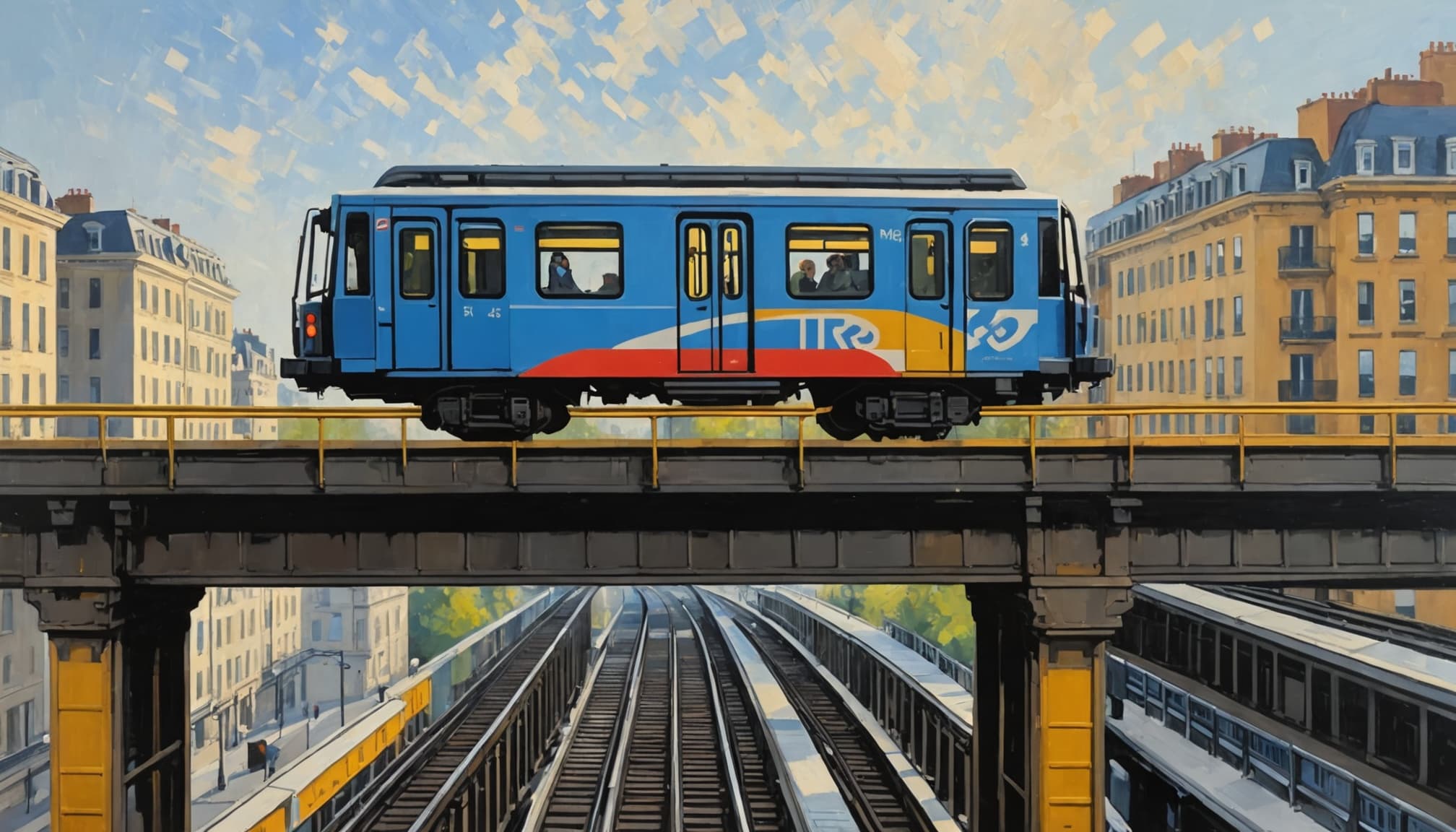
Bengaluru's Outer Ring Road (ORR) isn't just another metro corridor—it's India's most prominent technology corridor, hosting the highest concentration of Fortune 500 companies in the city. When BEML Limited rolled out India's first indigenous driverless metro train prototype on December 11, 2025, it wasn't merely delivering rolling stock; it was proving capability to handle one of urban India's most demanding mobility challenges. The ORR corridor serves tech giants like Intel, Google, and Accenture, where peak-hour congestion and corporate expectations for reliability create operational pressures that traditional train configurations struggle to meet.
The ₹3,177 crore contract (later expanded to ₹3,996 crore through top-up orders) for 396 coaches across Bengaluru Metro's Phase 2, 2A, and 2B corridors represents the largest rolling stock acquisition by BMRCL. BEML won this competitive bid against seven international manufacturers including Alstom, Bombardier, and CRRC, securing the contract at a record-low per-coach price of ₹7.74 crore. This victory wasn't just about pricing—it demonstrated BEML's ability to deliver Grade of Automation 4 (GoA4) technology, the highest level of unattended train operation, entirely through in-house design, engineering, and manufacturing at its Bengaluru facility.
Production Capacity and Manufacturing Efficiency
BEML's ability to deliver multiple train sets across different Bengaluru Metro corridors reflects substantial manufacturing infrastructure built over decades. The company's Rail Coach Factory in Bangalore, established in 1948 as India's first all-steel integrated rail coach factory, has manufactured over 18,000 mainline passenger coaches and 850+ Electrical Multiple Units for Indian Railways. In the metro segment alone, BEML has supplied over 2,000 coaches to systems in Delhi, Jaipur, Kolkata, Mumbai, and Bengaluru.
The delivery schedule for Bengaluru Metro—averaging 2-3 trainsets per month from June 2025 through December 2026—demonstrates sophisticated production planning. This sequential delivery pattern creates quarterly revenue variability, with BEML showing a distinct H2-heavy execution pattern. Q4 FY26 revenue reached ₹1,794 crore, a multi-quarter high confirming the company's ability to execute large deliveries during seasonally strong periods. The company's capital work in progress nearly tripled from ₹10,699 lakh to ₹27,633 lakh, signaling active capacity investment ahead of anticipated order inflows in Metro, Defence, and Railways segments.
Technological Capabilities in Autonomous Rolling Stock
The successful delivery of driverless trains showcases BEML's advanced technological capabilities. These trains operate on Communication-Based Train Control (CBTC) systems, which eliminate fixed-block signaling and enable trains to communicate their exact position, speed, and direction continuously via wireless networks. This technology allows for moving blocks that travel with each train, enabling 30% increased capacity on existing tracks without new infrastructure.
BEML's driverless trains incorporate sophisticated safety features including redundant onboard equipment to avoid single points of failure, Automatic Train Protection (ATP) systems with SIL-4 certification (the highest safety integrity level), and advanced diagnostics with continuous connection to control centers. Additional safety systems include CCTV surveillance with recording and transmission to central control rooms, emergency ground-to-train passenger communication systems, fire detection systems in cars and technical areas, and hidden emergency driver desks for recovery during major automation failures.
The competitive advantages of driverless configurations over traditional trains are substantial. They deliver up to 45% less energy consumption through regenerative braking and optimized acceleration, 30% operational cost reduction demonstrated by Paris Métro's GoA4 implementation, and enhanced safety through elimination of human error. For Bengaluru's tech corridor, these advantages translate directly to improved punctuality, shorter dwell times at stations, and consistent service quality that meets corporate commuter expectations.
Revenue Recognition and Order Book Execution
The sequential delivery of train sets for Bengaluru's Outer Ring Road Metro, Blue Line, and Airport Metro projects creates a distinctive revenue recognition pattern. BEML follows a percentage completion method typical for long-term manufacturing contracts, with revenue tied to delivery milestones and customer acceptance rather than linear progression. This creates quarterly revenue variability—the Q3 FY26 sequential revenue collapse of ~40% pointed to lumpy government order-driven recognition, while Q4 FY26 surged 66% sequentially.
The ₹3,996 crore total contract value will be recognized over approximately 24 months (June 2025 to December 2026), implying an average of ~₹166 crore per month or ~₹500 crore per quarter during peak execution periods. With the Pink Line planned opening in July-December 2026 and Blue Line Phase 2A in December 2026, H2 FY27 will see the most significant revenue recognition from these contracts.
However, margin profiles present challenges. BEML's FY26 EBITDA margin compressed to 7.5% from 13.1% in FY25, while net margin fell to 3.2% from 7.3%. Other expenses surged 38.8% year-on-year on only 8.2% revenue growth—the single largest margin erosion driver. Driverless train contracts likely have lower initial margins due to competitive pricing and high R&D costs, though the 15-year maintenance contracts provide recurring revenue that may improve long-term margin stability.
Competitive Positioning for Future Projects
BEML's successful delivery for Bengaluru Metro's key corridors significantly strengthens its bidding position for future metro rail projects across India. The company commands a dominant market share with 68% of its ₹15,896 crore order book in Rail & Metro segments. India's metro network is expanding from 1,013 km across 23 cities (May 2025) with an annual budget of ₹34,807 crore—six times the 2013-14 level—creating substantial opportunities.
The ORR corridor serves as a powerful reference case. This high-visibility deployment ensures continuous exposure to decision-makers across government, industry, and international funding agencies like JICA and ADB. Successfully delivering driverless trains for this corridor demonstrates BEML's capability to handle high-frequency operations with minimal headways, peak capacity management during rush hours, reliability requirements of corporate commuters, and integration challenges with existing urban infrastructure.
Near-term opportunities include Chennai Metro Phase 1 expansion (tender closing February 19, 2026), Pune Metro Phase 2 (12.75 km approved), and Nagpur Metro Phase 2. Medium-term prospects include Surat Metro (41.93 km, opening 2027), Thane Metro (29.5 km, opening 2029), and Ahmedabad Metro Extension (6.032 km airport connection). BEML's proven GoA4 capability positions it as the only Indian manufacturer with indigenous driverless train technology, creating a significant competitive moat against international players who must import technology.
Regulatory Certifications and Compliance Challenges
Deploying driverless trains requires navigating a complex regulatory framework. BEML must secure multiple certifications including Safety Integrity Level (SIL) certifications, with SIL-4 being the highest safety certification in Indian Railways for Automatic Train Control Systems and CBTC signaling. The company also needs RDSO vendor approval for supplying products to Indian Railways and metro systems, Commissioner of Metro Railway Safety (CMRS) statutory safety inspection and final clearance, and Railway Board approval for new rolling stock.
The certification timeline significantly impacts delivery schedules. The complete process from contract award to passenger operations spans 30-46 months, compared to 18-24 months for conventional trains. Key phases include prototype development (6-12 months), RDSO certification (3-6 months), CMRS inspection (2-4 months), integration testing (6-8 months), and service trials (12-14 months). For Bengaluru Metro's Yellow Line, there was an 18-month gap between train arrival and CMRS clearance, with the inspection taking place over three days.
Compliance requirements substantially affect production costs. SIL-4 certification demands investments in redundant systems, fault-tolerant mechanisms, and rigorous testing procedures. Additional costs include RDSO vendor approval documentation and assessment fees, prototype development before series production, engagement of approved Independent Safety Assessors, and extended testing periods. These factors contribute to BEML's margin compression, though the company can achieve economies of scale across multiple driverless train projects and technology reuse to manage costs over time.
The Road Ahead
BEML's execution of Bengaluru Metro's driverless train contracts represents more than just order fulfillment—it's establishing technological leadership in India's urban mobility transformation. The company's ability to deliver complex autonomous rolling stock for the country's most demanding tech corridor creates referenceable success that strengthens competitive positioning across India's expanding metro network.
With management targeting ₹20,000 crore in order book by FY27-end and 3-4 significant metro rail orders expected during FY27, BEML is positioned to capture substantial share of the ₹15,000-20,000 crore rolling stock opportunity over the next five years. The key monitorables include H2 FY27 delivery acceleration and revenue recognition, provision reversal of the ₹80 crore metro project provision, other expense normalization as a percentage of revenue, and trade receivables conversion to cash.
As India's metro network accelerates toward 1,500+ km by 2030, BEML's proven driverless train capability—demonstrated on Bengaluru's tech hub corridors—provides the technological differentiation and execution credibility needed to compete effectively against international players while maintaining the cost advantages that have made it India's premier metro rolling stock manufacturer.