The ₹62,000 Crore Problem and Its Digital Solution
As of August 31, 2026, India's three public sector Oil Marketing Companies—Indian Oil Corporation, Bharat Petroleum Corporation, and Hindustan Petroleum Corporation—faced accumulated under-recoveries exceeding ₹62,000 crore on domestic LPG sales. The government had approved compensation packages totaling ₹30,000 crore each for FY 2025-26 and FY 2026-27 to address this mounting burden. The Biometric Aadhaar Authentication (BAA) mandate, effective October 1, 2026, represents a structural reform designed to address the root causes of these under-recoveries rather than merely treating symptoms.
The mechanism is straightforward yet powerful: BAA creates a one-to-one mapping between Aadhaar-authenticated individuals and LPG connections. This eliminates duplicate connections held by single beneficiaries, removes ineligible households from the subsidy net, and prevents diversion of subsidised cylinders to commercial and industrial use. With 27.43 crore consumers (89.9% of active domestic LPG users) already authenticated as of September 19, 2026, the impact has been immediate and dramatic. The implicit subsidy per 14.2 kg cylinder plummeted from ₹721 in June 2026 to ₹210 in September 2026—a 71% reduction in just three months.
The Economics of Eliminating Leakage
The causal chain linking BAA completion to subsidy reduction operates through volume effects rather than price effects alone. By eliminating duplicate and ineligible connections, the total number of subsidised cylinders sold decreases significantly. If we assume that the 3.03 crore consumers newly authenticated between June and September 2026 included even 20% ineligible or duplicate connections, this would eliminate approximately 60 lakh connections from the subsidy net. With average annual refill rates of 6-8 cylinders per consumer, the volume reduction translates directly into subsidy savings.
The government's compensation burden of ₹30,000 crore annually could potentially decline by ₹10,000-15,000 crore (33-50%) as BAA implementation stabilizes. This reduction stems from two factors: fewer subsidised cylinders sold overall, and a lower per-cylinder subsidy amount made possible by improved targeting. The accumulated under-recoveries of ₹62,000 crore will be addressed through a combination of reduced new under-recoveries (due to BAA) and continued government compensation, creating a more sustainable fiscal framework for LPG subsidies.
Cost-Benefit Analysis: Implementation Versus Savings
The nationwide BAA outreach drive, operational since October 2023, involved substantial operational costs. OMCs sent more than 12 crore SMS and WhatsApp messages, conducted outreach through distributors and delivery personnel, organized special camps, and deployed IVRS prompts and digital campaigns. The total outreach investment is estimated at ₹70-130 crore. Technology implementation costs—including mobile app enhancements, biometric device deployment at 19,000+ distributor showrooms, and training for 1.5-2 lakh delivery personnel—add another ₹350-550 crore in annualized costs.
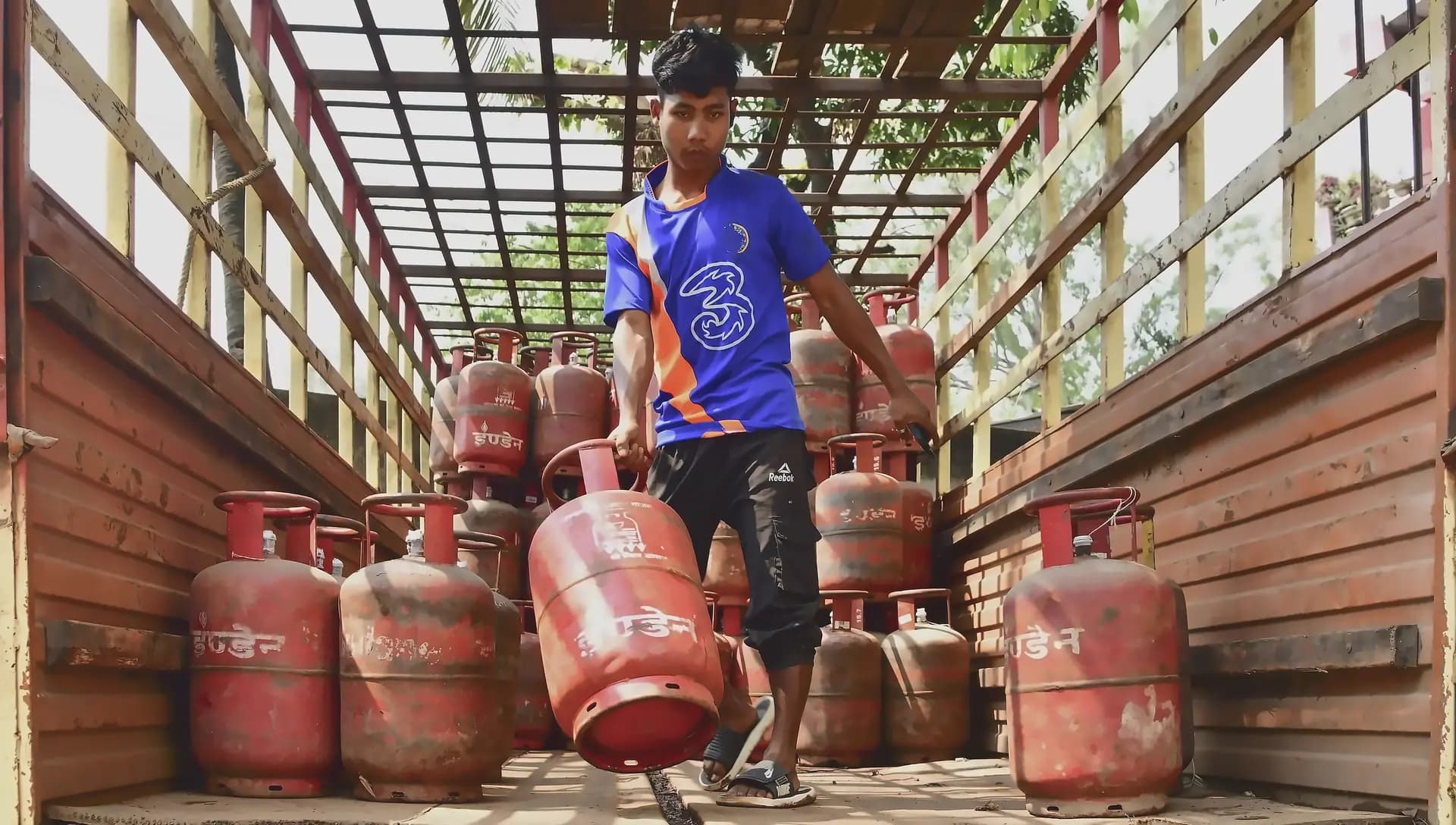
Last-mile delivery impacts are equally significant. The additional 1-2 minutes required per delivery for biometric authentication, across 51 lakh daily domestic LPG deliveries, creates approximately 12,750 hours of additional operational time daily. After accounting for route optimization and efficiency gains, the net last-mile cost increase ranges from ₹199-389 crore annually.
However, these costs pale in comparison to projected benefits.
The return on investment ranges from 2,070-6,390%, with complete cost recovery within 5-17 days. This represents an exceptionally favorable investment by any corporate standard.
Market-Priced Options: Revenue Mix Transformation
The BAA mandate introduces a strategic opportunity through market-priced 5 kg and 10 kg cylinders for consumers unwilling to complete biometric authentication. Approximately 3.1 crore consumers (10.1% of the total) may opt out of BAA, creating a new revenue stream for OMCs. If 60-80% of these consumers transition to market-priced options, OMCs could generate ₹6,708 crore in additional revenue annually while simultaneously reducing subsidy burdens by ₹3,800-5,600 crore.
This transition fundamentally alters cross-subsidy dynamics within OMCs' domestic LPG business. Currently, profitable commercial LPG segments cross-subsidize loss-making domestic subsidised LPG. The introduction of market-priced domestic cylinders creates a third segment with positive margins, reducing the burden on commercial LPG and improving overall business profitability. The net economic impact could reach ₹2,152-6,552 crore annually, depending on opt-out rates and pricing strategies.
Regulatory Compliance and Financial Risk Transformation
The BAA mandate significantly alters the regulatory compliance risk profile for OMCs. Pre-BAA, CAG audits revealed substantial vulnerabilities: 4.07 lakh duplicate PMUY connections, 21% KYC data mismatches in sampled records, and 6.94% missing installation certificates. Post-BAA, the audit focus shifts from subsidy leakage detection to BAA implementation compliance, biometric data security, and service denial governance.
Consumer churn presents another financial risk. If 20-60% of unauthenticated consumers opt out of BAA, OMCs face potential revenue losses of ₹1,804-7,216 crore annually, partially offset by subsidy savings. LPG consumption trends already show vulnerability to demand compression, with April 2026 witnessing a 13% decline in consumption due to supply disruptions and affordability stress.
The accumulated under-recoveries of ₹48,220 crore across the three public sector OMCs pose significant balance sheet risks. If BAA-driven subsidy savings fail to materialize as projected, capital allocation constraints could emerge, potentially delaying critical infrastructure projects. Credit rating agencies may view under-recovery accumulation negatively, potentially increasing borrowing costs by 25-40 basis points. Others +2
Differential Impact Across OMCs
The three OMCs exhibit significant structural differences that create differential operational burdens and cost structures for BAA implementation. Indian Oil Corporation (Indane) faces the highest operational burden with the largest customer base (15.46 crore), most extensive distributor network (13,000+), and greatest rural outreach requirements. However, its superior digital adoption—9 million app downloads and 30+ lakh daily digital transactions—provides significant efficiency advantages. AnnualReports +3
Bharat Petroleum Corporation (Bharatgas) maintains competitive efficiency with the lowest per-customer under-recovery (₹1,302 versus ₹1,494 for Indian Oil) and high digital adoption including commercial segments. Hindustan Petroleum Corporation (HP Gas) faces the greatest implementation challenges due to lowest domestic LPG digital adoption (10.3%) and highest per-customer BAA implementation cost (₹49.64). AnnualReports +3
The net economic benefit of BAA implementation varies significantly: Indian Oil stands to gain ₹4,825-7,325 crore annually, BPCL ₹2,231-3,531 crore, and HPCL ₹2,319-3,719 crore. This differential impact will likely reshape competitive dynamics in the Indian LPG market, with Indian Oil strengthening its market leadership position while BPCL and HPCL need to accelerate their digital transformation to close the efficiency gap.
The Path Forward
The BAA mandate represents a transformative opportunity for OMCs to address structural subsidy leakage and improve financial sustainability. However, success requires careful management of new compliance risks related to biometric data privacy, authentication system reliability, and service denial governance. Consumer retention strategies, including market-priced cylinder options and enhanced authentication support, will be critical to minimizing churn.
The net impact will depend on execution effectiveness and consumer response. With potential benefits ranging from ₹15,590-24,805 crore annually against implementation costs of ₹388-805 crore, the economic rationale is compelling. The question now shifts from whether BAA implementation makes financial sense to how effectively OMCs can execute this complex digital transformation while maintaining service quality and consumer trust.