Axis Bank achieved a remarkable operational feat in FY26: reducing its workforce by approximately 3,000 employees while simultaneously adding 400 new branches. This counterintuitive outcome stems from a deliberate, long-term strategy of consistent technology investment. The bank has maintained technology spending at 9-10% of its operating expenditure for the past three to four years, irrespective of economic cycles. This commitment has finally begun yielding productivity dividends, enabling headcount optimization without compromising business expansion or customer service .
The Technology Investment Engine
The foundation of this workforce transformation lies in Axis Bank’s unwavering technology spend. Data shows the bank consistently allocated approximately 10% of total operating expenses to technology across multiple quarters, including Q1 FY25 (~10.4%), Q3 FY25 (~10.2%), and Q4 FY26 (~10%). This represents roughly 30-33% of the total operating expense breakdown dedicated to Technology & Growth. Management views this not as discretionary spending but as a long-term strategic advantage, building capabilities that are now maturing into tangible efficiency gains InvestorPresentations +2.
Automation at Scale
The impact of these investments is visible in the sheer scale of automation deployed. The bank has implemented over 4,400 robotic process automation (RPA) bots and digitized more than 300 employee tool journeys. This automation handles repetitive, rule-based tasks that previously required significant manual effort. Additionally, the bank targets 65% of its operations for zero-touch automation. The result is a dramatic reduction in manual workload, allowing employees to focus on higher-value activities while the bank expands its physical footprint with leaner teams InvestorPresentations +1.
AI-Powered Productivity Tools
While AI has not yet directly replaced jobs, it is fundamentally changing how employees work. The bank’s ADI (Gen AI Chatbot) exemplifies this augmentation approach. In FY26, 87,000 employees used ADI—a 1.9x increase from the previous year—processing 32.5 lakh queries. This represents 86% of the employee base accessing instant product and policy information, reducing dependency on subject matter experts. Similarly, the RM Copilot tool has processed 23 million voice-to-text transcriptions and generated 0.5 million insights, covering 66% of branch sales through AI-assisted pitch practice. These tools enhance productivity rather than replace headcount, a philosophy management emphasizes consistently InvestorPresentations +1.
Digital-First Branch Model
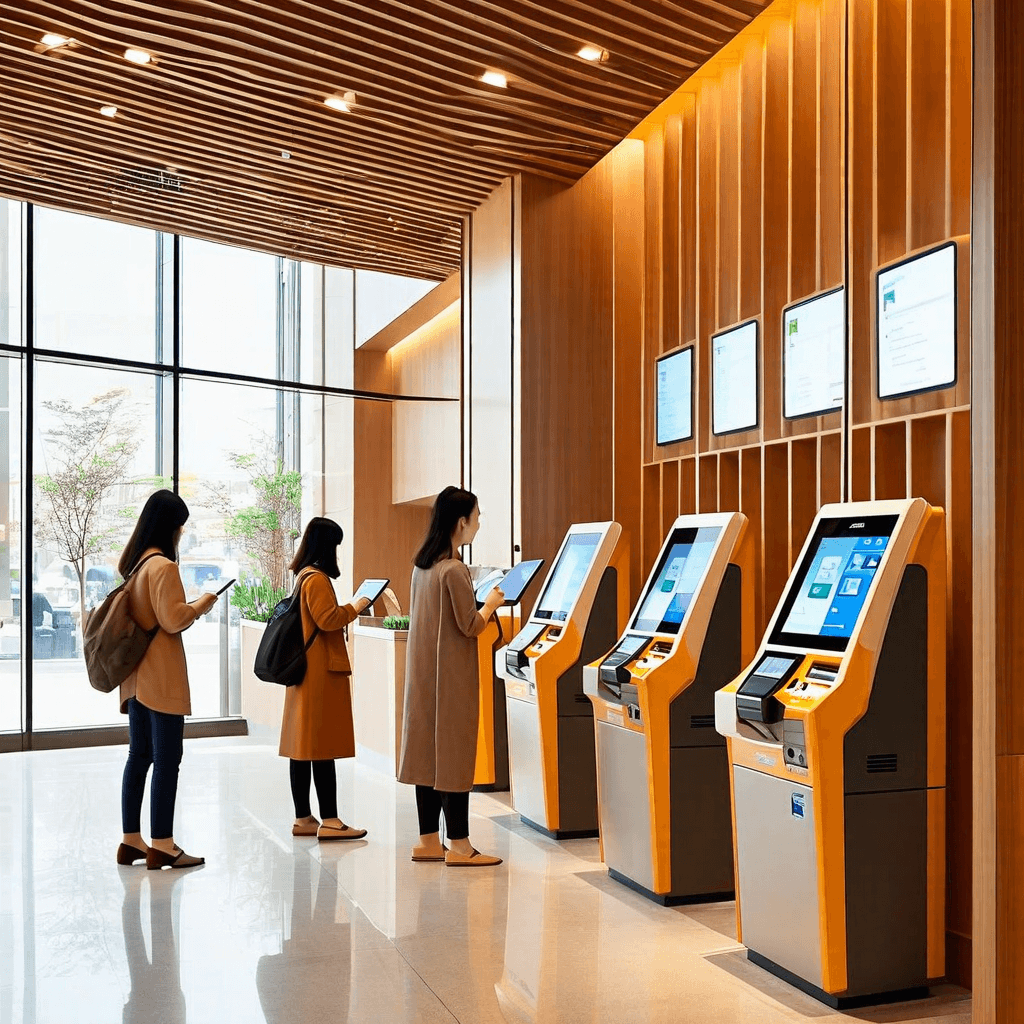
The addition of 400 branches alongside a 3,000-employee reduction was made possible by reimagining the branch operating model. New branches are designed as digital-first units. Approximately 74% of customer requests are now serviced digitally as part of the "Branch of the Future" initiative. The bank’s Siddhi super app, with 95%+ frontline adoption, empowers staff to handle more customer interactions effectively. Furthermore, the Axis Virtual Centre connects with 4.8 million customers monthly, providing centralized support that reduces the burden on individual branches. This model allows the bank to expand its network while reducing employees per branch from approximately 17.7 to 16.1—a 9% productivity improvement InvestorPresentations +2.
The financial results for Q4 FY26 reflect this transitional phase. The bank reported a net profit of ₹7,071 crore, marginally down 0.6% from the previous year. However, this flat performance was significantly impacted by a one-time provision of ₹2,001 crore on standard assets due to global macroeconomic uncertainties. Stripping out this provision, the underlying business shows resilience. Core Operating Profit grew 0.4% year-on-year, Net Interest Income rose 5%, and Fee Income increased 4% InvestorPresentations.
More importantly, efficiency metrics improved. The Cost-to-Assets ratio declined by 18 basis points to 2.28%, demonstrating that technology investments are enhancing operational efficiency. Total operating expenses grew only 6% year-on-year to ₹10,466 crore, despite the bank adding branches and investing heavily in technology. Technology & Growth expenses themselves increased by 7% to ₹3,244 crore, yet the overall cost structure improved, validating the productivity dividend InvestorPresentations +2.
Dividend and Strategic Outlook
Despite the investments and one-time provision, Axis Bank’s Board recommended a dividend of ₹1 per share for FY26. This signals confidence in the bank’s core cash flow generation and the sustainability of its efficiency gains. The full-year net profit stood at ₹24,457 crore, down 7% year-on-year primarily due to a one-time tax benefit in the prior year. Excluding these anomalies, the trajectory is positive InvestorPresentations.
Management acknowledges that AI’s structural impact on headcount is not yet fully reflected. Currently, AI tools accelerate processing and improve data usage rather than replace roles. Executive Director Subrat Mohanty indicated that the benefits of AI on headcount, if any, will become clearer over the next year as capabilities mature. The bank’s strategy remains focused on employee augmentation—shifting the workforce mix toward technology and customer-facing roles over the next five years rather than net job reduction .
The Road Ahead
Axis Bank’s FY26 performance illustrates a bank in transformation. The reduction of 3,000 jobs is not a cost-cutting exercise but the outcome of a multi-year digital investment strategy finally bearing fruit. The bank has successfully decoupled physical expansion from linear headcount growth. As AI capabilities mature from process acceleration to end-to-end automation, further productivity gains are expected. The current flat profit performance is a temporary artifact of prudential provisions and ongoing investment. The improving efficiency metrics and strong core business growth suggest that the technology dividend is only just beginning, positioning Axis Bank for sustainable profitability in the coming years.