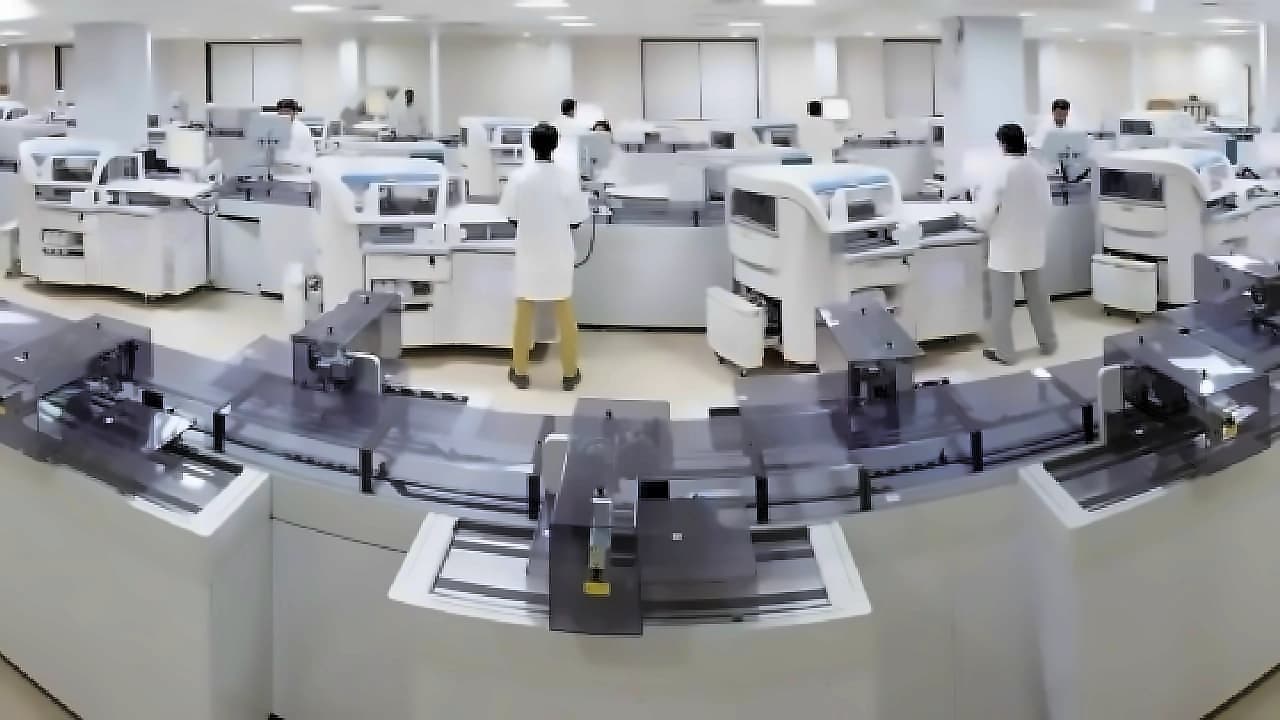
The repayment was funded through proceeds from the sale of 9.90% of Thyrocare shares and internal accruals, representing a strategic shift from survival mode to sustainable growth. This transformation fundamentally altered the company's capital structure, eliminated leverage constraints, and positioned the integrated healthcare platform for value creation across its portfolio of businesses.
Strategic Rationale: Debt Repayment Over Refinancing
API Holdings' decision to repay debt rather than refinance was driven by a deliberate capital allocation philosophy prioritizing balance sheet strength over leverage optimization.
The company had previously put its IPO plans on hold to focus on operational turnaround, making debt elimination a prerequisite for returning to growth mode.
Refinancing would have maintained the debt burden and associated interest costs, perpetuating negative interest coverage ratios that had constrained profitability. With finance costs declining from ₹1,055 crore in FY24 to ₹394.7 crore in FY26, the debt repayment delivers immediate annual savings of approximately ₹150-200 crore. This cash flow liberation can now be redeployed for growth initiatives rather than debt servicing, fundamentally improving the group's financial flexibility.
Balance Sheet Transformation and Leverage Impact
The debt repayment dramatically improved API Holdings' financial metrics. The debt-to-equity ratio dropped from 1.13x to zero, while the interest coverage ratio moved from negative territory to positive territory. The company's total liabilities of ₹3,704 crore were eliminated, creating a clean balance sheet with net worth of ₹3,272 crore. This transformation removes financial covenants that had restricted operational decisions and enhances the company's ability to pursue strategic opportunities without lender approval.
The elimination of debt also triggered the complete release of pledges on Docon Technologies' remaining 51.02% Thyrocare holding. Previously, 60.92% of Thyrocare shares were pledged as collateral for the ₹1,050 crore NCDs. The pledge release eliminates equity overhang, removes the risk of forced share sales, and provides Docon with complete strategic flexibility for future capital raising or corporate actions.
Promoter Control Preservation Through Precision Execution
Docon Technologies executed a sophisticated stake management strategy, reducing its Thyrocare holding from 60.92% to precisely 51.02%—just above the critical control threshold. The sale of 1.57 crore shares generated approximately ₹986 crore, representing the majority of debt repayment proceeds. This precision was enabled by Thyrocare's 2:1 bonus issue in December 2025, which tripled the share count and provided greater granularity for stake management while maintaining percentage control.
The 51.02% stake preservation was strategic rather than accidental. Maintaining majority control enables API Holdings to pass special resolutions, guarantee promoter board representation, and retain strategic options including potential reverse merger with Thyrocare. The control premium exceeded the additional proceeds that could have been generated from a larger stake sale, reflecting management's long-term value creation perspective.
This outperformance was driven by exceptional operational execution under API Holdings' ownership. Thyrocare's revenue grew to ₹829 crore in FY26 with EBITDA of ₹280 crore at a 33.8% margin, making it the group's profitability engine.
The turnaround was enabled by specific operational factors: hub-and-spoke logistics efficiency processing 100,000+ samples daily, dual-channel expansion through franchise-led Tier 2/3 growth and HealthTech platform growth in metros, and technology investments including automation and AI-driven systems. Thyrocare's franchise network expanded to 10,100 partners (+20% YoY), while tests processed grew to 16.79 million in FY25. Quality improvements saw complaints per million tests drop 67% YoY to 3.8, approaching Six Sigma standards.
Group Profitability Transition and Internal Accruals
API Holdings achieved a remarkable operational turnaround in FY26, transitioning from an EBITDA loss of ₹231 crore in FY25 to a positive EBITDA of ₹62.5 crore—a turnaround of ₹293.5 crore. This improvement was broad-based across business segments. The B2B pharmaceutical distribution business (Ascent) achieved EBITDA breakeven with revenue of ₹4,089 crore (+15% YoY), while PharmEasy B2C reduced EBITDA losses significantly with revenue of ₹1,334 crore (+17.9% YoY).
The internal accruals contribution, though modest at approximately ₹64 crore, revealed improving cash flow generation capabilities. Thyrocare's strong operating cash flow of ₹127 crore in H1 FY26 (+43% YoY) provided the primary internal funding source. Working capital optimization released substantial cash, with working capital days improving from 53 days in FY24 to 39 days in FY26. These operational improvements created the foundation for debt repayment without external financing.
Disciplined Cost Management and Revenue Growth
API Holdings achieved significant margin expansion through disciplined execution. Gross margins improved from 18.6% in FY25 to 19.8% in FY26, with Q4 FY26 reaching 21.0%. Operating expenses declined 4.5% YoY to ₹1,288 crore despite revenue growth, reducing the operating expense ratio from 22.4% to 18.7%. This reflected management's focus on productivity improvements, logistics optimization, marketing expenditure rationalization, and operational efficiency gains.
The B2B business demonstrated the power of scale, with revenue growing ₹535 crore YoY while operating expenses fell ₹45 crore. PharmEasy's unit economics improved through delivery density optimization, AI-driven demand forecasting reducing out-of-stock rates by 30%, and product mix optimization toward higher-margin diagnostics and private-label wellness products. These improvements created sustainable profitability foundations across the portfolio.
Strategic Trade-offs and Future Growth Opportunities
API Holdings evaluated multiple scenarios before choosing the 9.90% stake sale while maintaining 51.02% control. Alternative options included aggressive stake sale (15% for ~₹1,500 crore) that would have lost control, minimal sale (5% for ~₹500 crore) requiring partial debt repayment, or no sale maintaining leverage. The chosen approach optimized the balance between immediate debt reduction and long-term strategic flexibility.
The debt-free position positions API Holdings to pursue acquisitions and investments in the digital healthcare space without balance sheet constraints. The company can now access M&A opportunities with unconstrained capacity, flexible deal structures, and immediate decision-making speed. In the competitive healthcare M&A landscape, API Holdings' clean balance sheet provides advantages in deal size capacity, transaction speed, valuation premiums, and integration focus.
Virtuous Cycles of Value Creation
The debt-free status creates powerful feedback loops enhancing strategic capabilities. Reduced interest costs of ₹150-200 crore annually enhance cash flow generation, enabling increased investment capacity for strategic M&A and growth initiatives. This drives revenue growth and margin expansion, improving profitability and strengthening the balance sheet further—a self-reinforcing virtuous cycle.
Improved profitability also enhances investor confidence and valuation multiples, improving capital access for future growth. The integrated ecosystem benefits from enhanced cross-business synergies, with PharmEasy-Thyrocare integration targeting 15-20% ARPU uplift through diagnostic bundling. These compounding advantages position API Holdings for sustainable competitive advantage in India's rapidly evolving digital healthcare landscape.
With debt eliminated, profitability achieved, and proven execution capability, API Holdings is positioned to build India's leading integrated digital healthcare ecosystem through disciplined capital allocation and operational excellence.